
Lokanātha
Lokanātha, born Salvatore Cioffi, was an Italian Buddhist missionary and monk who dedicated his life to spreading Buddhist teachings globally. After embracing Buddhism and undergoing ordination in Burma, he undertook extensive missionary journeys across Asia, Europe, and the United States, advocating for vegetarianism and Buddhist philosophy. His efforts significantly influenced figures like B. R. Ambedkar and contributed to the global dissemination of Buddhist thought.
Key Facts
- ›Born Salvatore Cioffi in Italy in 1897, he later became the Buddhist monk Lokanātha.
- ›Ordained in Burma in 1925, he spent years in deep study and meditation in monasteries and Himalayan caves.
- ›Undertook three missionary expeditions from Southeast Asia to Bodh Gaya, India.
- ›Conducted a global Buddhist survey in 1947, visiting the USA, Europe, and Asia.
- ›His writings and missionary work were significantly impacted by World War II, leading to the loss of his work and internment.
- ›He was a strict vegetarian and lectured for the Malayan Vegetarian Society.
Important Relationships
- B. R. Ambedkar
- Karl Tõnisson
Girdling the Globe With Truth, the Light of Truth Sermons
Burma, India, Ceylon, United States, Singapore, Malaya, Hong Kong, Shanghai, Manila, Himalayan Caves and Forests, Bodh Gaya
English
Buddhist Monk, 13 Dhutangas
About Lokanātha
Lokanātha: An Italian Buddhist Missionary
Lokanātha, born Salvatore Cioffi on December 26, 1897, near Naples, Italy, was a prominent Italian Buddhist missionary and monk. Raised in a culturally rich environment, he initially pursued scientific studies, earning a B.Sc. in chemistry and briefly attending medical school. His scientific curiosity eventually led him to Buddhism, which he embraced and was ordained into as a monk in Burma in 1925.
Life and Missionary Work
After his ordination, Lokanātha resolved to dedicate his life to propagating Buddhist teachings worldwide. He spent significant periods in deep study and meditation in monasteries and Himalayan caves, strictly observing the thirteen dhutangas. Following his return to Italy, where he found the atmosphere unfavorable to Buddhism, he embarked on a journey back to India on foot, traversing Southern Europe and Asia Minor.
His missionary efforts were marked by extensive travel. He launched three Buddhist missionary expeditions from Burma, Thailand, and Ceylon to Bodh Gaya. Despite plans for a Western tour being disrupted by World War II, which also led to the loss of his writings and his internment in India, Lokanātha continued his work. In 1946, he returned to Burma and subsequently undertook a global Buddhist survey in 1947, visiting the United States, Europe, and various parts of Asia.
Influence and Legacy
Lokanātha was a prolific writer, publishing several booklets and a significant volume on his missionary work. His sermons delivered in Singapore were compiled into a book titled "The Light of Truth." He was also a staunch advocate for vegetarianism, lecturing for the Malayan Vegetarian Society. His influence extended to prominent figures, notably B. R. Ambedkar, the Indian Dalit leader, who was greatly inspired by Lokanātha and converted to Buddhism. Lokanātha passed away on May 25, 1966, in Maymyo, Burma, after a battle with cancer. His life exemplified a dedicated commitment to spreading Buddhist philosophy across diverse cultures.
Source: Wikipedia ↗
Frequently Asked Questions
What was Lokanātha's birth name and origin?
Lokanātha was born Salvatore Cioffi near Naples, Italy, in 1897. He came from a family known for its cultural background.
How did Lokanātha become a Buddhist monk?
After studying chemistry and working in scientific fields, Salvatore Cioffi embraced Buddhism. He was ordained as a monk in Burma in 1925.
What were Lokanātha's major missionary activities?
Lokanātha launched missionary expeditions from Burma, Thailand, and Ceylon to Bodh Gaya. He also traveled extensively, preaching in the USA, Europe, and across Asia, including Singapore, Hong Kong, and Shanghai.
Who was B. R. Ambedkar and how did Lokanātha influence him?
B. R. Ambedkar was an Indian Dalit leader. Lokanātha's correspondence with Ambedkar in the early 1930s reveals that Lokanātha greatly influenced Ambedkar's inclination towards Buddhism, which he later embraced with his followers.
What were the circumstances of Lokanātha's death?
Lokanātha developed a cancerous sore on his forehead. He died on May 25, 1966, after reportedly succumbing to indigenous treatment rather than seeking expert medical care in the US.
Related Buddhists
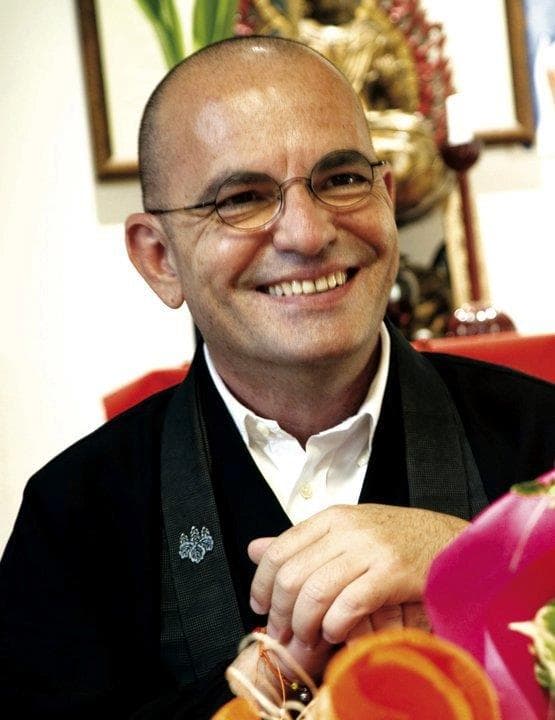
Carlo Zendo Tetsugen Serra
Carlo Zendo Tetsugen Serra is an Italian missionary Soto Zen master recognized as a Buddhist authority in Europe. He is known for founding the Sangha della foresta di Bambü, establishing monasteries in Italy, and integrating Zen Shiatsu practice into his teachings. Serra has also applied Zen principles to management and personal development, becoming a significant figure in bringing Buddhist traditions to Western society.
Sayadaw U Pannavamsa
Sayadaw U Pannavamsa, also known as the Penang Sayadaw, was a highly respected Burmese Buddhist monk recognized for his extensive missionary activities. He served as the chief abbot of the Dhammikarama Burmese Temple in Penang, Malaysia, and played a significant role in spreading Buddhist teachings in Sri Lanka, Malaysia, and beyond. His contributions include establishing monasteries worldwide and authoring numerous books on Buddhist philosophy and practice.

Hammalawa Saddhatissa
Hammalawa Saddhatissa Maha Thera was an influential Sri Lankan Buddhist monk, missionary, and author who spent much of his life in the West, holding academic positions in London, Toronto, and Oxford. He is known for his work in Buddhist ethics, synthesizing traditional teachings with Western philosophical discourse, and for his accessible writings on Buddhist practice and philosophy.