
Kaundinya
India·Buddhist·Male·5th century BC
Kaundinya, also known as Ajñātakauṇḍinya, was a principal disciple of Gautama Buddha and the first to achieve Arahantship. He was a scholar who accurately predicted the Buddha's future enlightenment and followed him through years of ascetic practice. Kaundinya played a crucial role in the early Sangha, spreading the Dhamma and converting many, including his nephew Punna.
Key Facts
- ›Kaundinya was one of the first five Buddhist monks (Pancavaggiya) and the first to attain Arahantship.
- ›He was a royal court scholar in Kapilavastu who predicted Prince Siddhartha's destiny as an enlightened Buddha.
- ›Kaundinya followed Siddhartha in six years of ascetic practice and was the first to comprehend the Buddha's first Dhamma talk.
- ›He is credited with a poem of sixteen verses in the Theragatha, admonishing monks and acknowledging his struggles against Mara.
- ›In his later years, Kaundinya retreated to the Himalayas and predeceased the Buddha.
- ›A hand-balancing yoga asana, Koundinyasana, is named in his honor.

Important Relationships
- Gautama Buddha
- King Suddhodana
- Bhaddiya
- Vappa
- Mahanama
- Assaji
- Puṇṇa
- Āḷāra Kālāma
- Uddaka Rāmaputta
- Mara
- Sariputra
- Moggallana
- Anuruddha
- Padumuttara Buddha
- Vipassī Buddha
Poem In the Theragatha
Kapilavastu, Sarnath, Varanasi, Himalayas, Gangetic Plains, Chaddanta Forest, Veluvana
Sanskrit
Disciple of An Enlightened Buddha, Bhikkhu
First Enlightened Disciple, Senior Monk
About Kaundinya
Kaundinya, also known by the epithet Ājñātakauṇḍinya, was a pivotal figure in early Buddhism, recognized as one of the first five monks to follow Gautama Buddha and the first to achieve the state of Arahantship. He lived during the 5th century BCE in the region that now comprises Uttar Pradesh and Bihar in India.
Life and Historical Context
Kaundinya initially served as a scholar in the royal court of King Suddhodana of the Sakya kingdom in Kapilavastu. Upon the birth of Prince Siddhartha, Kaundinya was among the scholars invited to predict the prince's future. While others offered a dual prediction of either becoming a great king or a spiritual leader, Kaundinya uniquely and unequivocally predicted that Siddhartha would renounce the world to become a Buddha. He vowed to follow Siddhartha as a disciple once this occurred.
When Siddhartha, as the ascetic, began practicing extreme self-mortification, Kaundinya and four other scholars—Bhaddiya, Vappa, Mahanama, and Assaji—joined him. They endured six years of rigorous asceticism alongside Siddhartha. However, when Siddhartha abandoned this path, Kaundinya and his companions became disillusioned and left him, believing he had become a glutton. They relocated to Sarnath near Varanasi to continue their own practices.
Following his enlightenment, Gautama Buddha sought out Kaundinya and his companions to share his teachings. Initially skeptical due to Siddhartha's abandonment of asceticism, they were eventually won over by the Buddha's transformed demeanor and profound wisdom. The Buddha delivered his first sermon, the Dhammacakkappavattana Sutta, to them. Kaundinya was the first to comprehend the Four Noble Truths and the Noble Eightfold Path, thereby attaining the first stage of Arahantship. Five days later, after hearing the Anattalakkhana Sutta, he achieved full Arahantship, becoming the first bhikkhu (monk) in the Buddha's dispensation.
Major Contributions and Legacy
As the first Arahant, Kaundinya played a significant role in the early Sangha. He traveled with the Buddha, spreading the Dhamma throughout the Gangetic plains. A notable convert he brought into the Sangha was his nephew, Puṇṇa, who was later acknowledged by the Buddha as foremost in preaching skills. Kaundinya is credited with a poem of sixteen verses in the Theragatha, which offers insights into his spiritual journey, his admonishments to other monks, and his struggles against Mara.
In his later years, Kaundinya retired to the Himalayas for the final twelve years of his life. This retirement, according to tradition, was to avoid causing inconvenience to the chief disciples, Sariputra and Moggallana, and to pursue more solitary religious practice. He passed away in the Chaddanta forest, predeceasing the Buddha. His cremated ashes were later enshrined in a silver stupa at Veluvana.
Kaundinya's profound spiritual realization and his role as the first Arahant have cemented his place in Buddhist history. His legacy is also recognized in modern times, with a hand-balancing yoga asana, Koundinyasana, named in his honor.
Source: Wikipedia ↗
Frequently Asked Questions
Who was Kaundinya?
Kaundinya, also known as Ajñātakauṇḍinya, was one of Gautama Buddha's foremost disciples and the first to achieve the state of Arahantship. He was a scholar and played a pivotal role in the early Buddhist community.
What was Kaundinya's role in Gautama Buddha's enlightenment?
Kaundinya was a scholar in Kapilavastu who, at the birth of Prince Siddhartha, was the only one to predict that the prince would become an enlightened Buddha. He later joined Siddhartha in ascetic practices and was the first to understand the Buddha's first sermon after his enlightenment.
What is Kaundinya known for after becoming an Arahant?
After attaining Arahantship, Kaundinya traveled with the Buddha to spread the Dhamma throughout India. He helped convert many followers, notably his nephew Punna, and is recognized as one of the senior monks of the Sangha.
What happened to Kaundinya in his later life?
In his final years, Kaundinya retired to the Himalayas for twelve years to dedicate himself to quiet religious practice. He predeceased the Buddha, passing away in the Chaddanta forest.
Are there accounts of Kaundinya's previous lives?
Yes, Buddhist literature describes numerous previous rebirths of Kaundinya, often highlighting his religious inclinations and his encounters with previous incarnations of the Buddha and his other chief disciples. These accounts emphasize his long-standing aspiration to be the first to realize the Dharma.
Related Buddhists
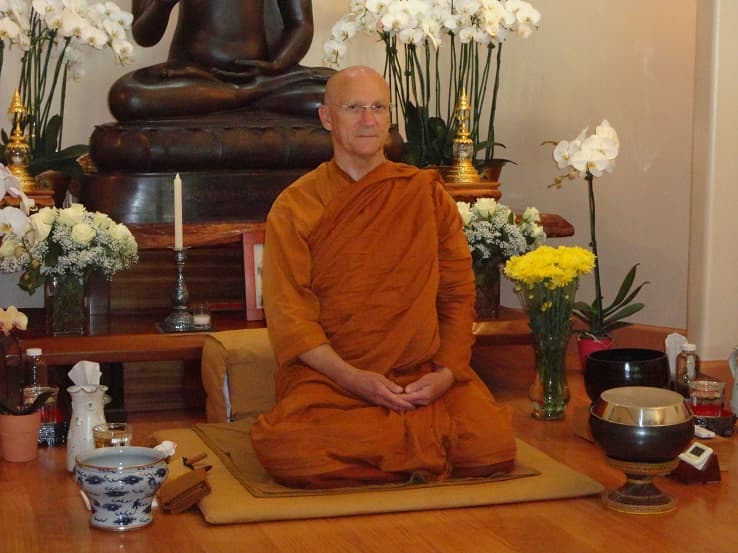
Ajahn Pasanno
Ajahn Pasanno is a highly respected Western Buddhist monk and disciple of Ajahn Chah, known for his extensive service as abbot of Wat Pah Nanachat International Forest Monastery in Thailand and later Abhayagiri Monastery in California. He has been instrumental in training monks and supporting monastic traditions in both countries, receiving significant Thai honorific titles for his contributions.
Phra Dhammavisuddhikavi
Somdet Phra Mahāmunīwong was a distinguished Thai Buddhist monk of the Dhammayuttika Nikaya, known for his extensive writings on Buddhism and meditation. He held significant leadership roles within the Thai Sangha, including serving as the abbot of Wat Somanas Rajavaravihara and as an advisor to the Supreme Sangha Council. His contributions to Buddhist education and missionary work extended internationally.
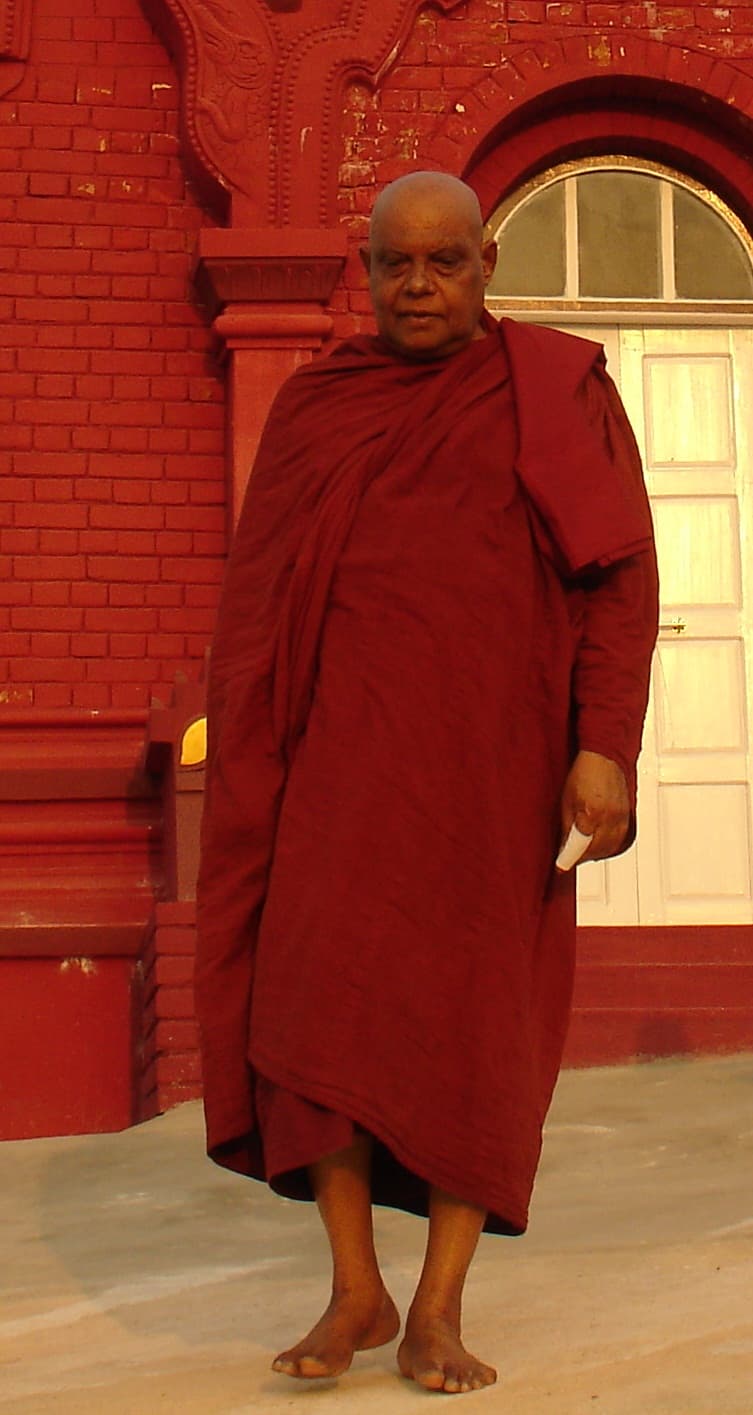
Nauyane Ariyadhamma Mahathera
Most Venerable Nauyane Ariyadhamma Mahāthēra was a Sri Lankan bhikkhu and a senior meditation teacher. He was the spiritual advisor of the Śrī Kalyāṇī Yogāśrama Saṃsthā and significantly contributed to the propagation of meditation practices, including the Pa-Auk method, in Sri Lanka. Recognized for his extensive knowledge and teaching, he authored over 100 books and booklets.