
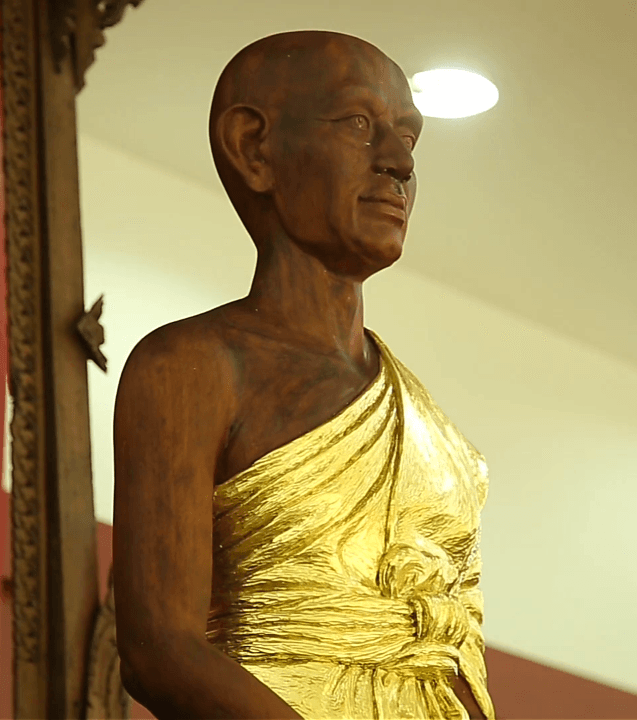
Kadawedduwe Jinavamsa Mahathera
Sri Lanka·Rāmañña Nikāya·Male·20th century
Most Ven. Kaḍaveddūve Shrī Jinavaṁsa Mahāthera was a Sri Lankan Bhikkhu and the founder of Sri Kalyani Yogasrama Samstha, a reformist movement within the Sri Lankan Rāmañña Nikāya. He was instrumental in establishing monastic education and forest monastic traditions, leaving a significant legacy through his teachings and the organizations he founded.
Key Facts
- ›Born Don Dinesh on April 1, 1907, in Kadawedduwa village, Matara, Sri Lanka.
- ›Ordained as a monk at age 14, taking the name Kadawedduwe Jinavamsa.
- ›Founded the Granthakara Pirivena in 1932, which later received government recognition.
- ›Established the Sri Kalyani Yogasrama Samstha on June 18, 1951, a significant forest monastic organization.
- ›Became a leading figure in the Rāmañña Nikāya, known for his reformist efforts.
- ›Died peacefully on July 13, 2003, at the age of 96.
Important Relationships
- Ven. Kadawedduwe Siri Sugunatissa Mahathera (Upajjhaya)
- Ven. Kothmale Siri Saddhammavamsa Mahathera (Teacher)
- Ven. Sri Ñāṇindasabha Mahathera (Preceptor)
- Ven. Gatamanne Vimalavamsa Thera (Disciple)
- Ven. Matara Sri Nanarama Mahathera (Chief Preceptor)
- Ven. Nauyane Ariyadhamma Mahathera (Foremost Student)
- Nyanadassana Mahathera (Student)
Kadawedduwa Village, Matara, Yatiyana Vernacular School, Srivardhanaramaya Temple, Yatawara, Gunawardena Yogasrama In Galduva, Ambalangoda
Pabbajja, Upasampada
About Kadawedduwe Jinavamsa Mahathera
Most Ven. Kaḍaveddūve Shrī Jinavaṁsa Mahāthera was a highly respected Sri Lankan Bhikkhu (Buddhist monk) and a pivotal figure in the reform of monastic traditions within the Rāmañña Nikāya. Born Don Dinesh on April 1, 1907, in Kadawedduwa village, Matara, he displayed an early inclination towards monastic life, receiving novice ordination at age 14 and full ordination at 20.
Life and Ministry
Jinavamsa Mahathera's monastic career was marked by a commitment to education and rigorous practice. In 1932, he founded the Granthakara Pirivena, an educational institution that later gained government recognition. A significant turning point in his life and ministry came in 1950 when he adopted a forest monastic lifestyle. The following year, on June 18, 1951, he co-founded the Sri Kalyani Yogasrama Samstha with Ven. Matara Sri Nanarama Mahathera. This organization became a central hub for forest monasteries, promoting a disciplined approach to monastic life and eventually managing its own ordinations.
Legacy
Under Jinavamsa Mahathera's guidance, the Sri Kalyani Yogasrama Samstha flourished, with him eventually settling at its headquarters in Galduva, Ambalangoda. He was known for his close association with prominent disciples such as Ven. Nauyane Ariyadhamma Mahathera and Nyanadassana Mahathera, the latter authoring significant works on monastic practice. Jinavamsa Mahathera received several prestigious titles and honors from Sri Lankan Buddhist councils, including 'Śrī Āryavilāsa Vaṃsālaṇkāra Saddharmavāgīśvarācārya' and 'Mahopādhyāya'. Despite being invited to lead the Rāmañña Nikāya, he politely declined, preferring to focus on his established work. He passed away peacefully on July 13, 2003, leaving behind a lasting influence on Sri Lankan Buddhism.
Source: Wikipedia ↗
Frequently Asked Questions
Who was Kadawedduwe Jinavamsa Mahathera?
Kadawedduwe Jinavamsa Mahathera was a prominent Sri Lankan Buddhist monk (Bhikkhu) and a significant reformist figure within the Rāmañña Nikāya. He is widely recognized as the founder of the Sri Kalyani Yogasrama Samstha, an organization that played a crucial role in promoting forest monasticism and monastic education.
When and where was Kadawedduwe Jinavamsa Mahathera born?
Kadawedduwe Jinavamsa Mahathera was born on April 1, 1907. His birth name was Don Dinesh, and he was born in the village of Kadawedduwa, located in Matara, Sri Lanka.
What notable organizations did Kadawedduwe Jinavamsa Mahathera found or lead?
He founded the Granthakara Pirivena in 1932, an educational institution for monks. Later, in 1951, he established the Sri Kalyani Yogasrama Samstha, which became a major center for forest monastic practice and oversaw its own ordinations.
What was the significance of the Sri Kalyani Yogasrama Samstha?
The Sri Kalyani Yogasrama Samstha was a reform movement within the Sri Lankan Rāmañña Nikāya that emphasized forest monasticism. Under Jinavamsa Mahathera's leadership, it grew to encompass a network of forest monasteries and became known for its rigorous practice and administrative autonomy.
When did Kadawedduwe Jinavamsa Mahathera pass away?
Kadawedduwe Jinavamsa Mahathera died peacefully on July 13, 2003. He was 96 years old at the time of his passing and had given a final Dhamma talk to his students just two days prior.
Related Buddhists
Ampitiye Rahula Maha Thero
Venerable Ampitiye Rahula Maha Thero was a prominent Sinhalese Buddhist monk, recognized by the honorific "Loku Hamuduruwo." He served as the Chief incumbent at the Maharagama Sri Vajiragnana Dharmayathanaya and was a senior advisor to the Supreme Council of the Amarapura Dharmarakshitha Maha Nikaya until his passing in 2020 at the age of 106.
Ñāṇavīra Thera
Ñāṇavīra Thera, born Harold Edward Musson, was an English Theravāda Buddhist monk ordained in Sri Lanka in 1950. He is primarily known for his profound writings on Dhamma, most notably "Notes on Dhamma," which offered an intellectual framework for understanding Buddhist teachings. His work, characterized by its direct engagement with Western philosophy and its critical yet insightful approach, has significantly influenced subsequent Buddhist thought.
Upali Thera
Upali Thera was a distinguished Thai Theravāda monk and royal missionary who played a pivotal role in the revival of Buddhist monasticism in Sri Lanka. He is most renowned for founding the Siam Nikaya, a prominent Buddhist monastic order in Sri Lanka, and for re-establishing the upasampadā (higher ordination) lineage in 1753, which had been absent for centuries. His reforms emphasized strict adherence to the Vinaya and reoriented important Buddhist festivals, solidifying his legacy as a key figure in transnational Theravāda unity.