
Jnanayasas
Jnanayasas was a Buddhist monk from Magadha, eastern India, who was recognized by Emperor Wen of Sui China. He is known for teaching monks such as Yasogupta and Jnanagupta and for translating seven Buddhist scriptures into Chinese.
Key Facts
- ›Buddhist monk from Magadha, eastern India.
- ›Recognized by Emperor Wen of Sui China.
- ›Taught monks Yasogupta and Jnanagupta.
- ›Translated 7 scriptures into Chinese, comprising 51 fascicles.
- ›Authored translations include the Sutra of Great Compassion and the Sutra of Moon Store.
Important Relationships
- Emperor Wen of Sui
- Yasogupta
- Jnanagupta
Sutra of Great Compassion, Sutra of Moon Store
Magadha, China
Sanskrit, Chinese
About Jnanayasas
Jnanayasas was a Buddhist monk who hailed from Magadha, a region in eastern India. His significance extends to his recognition by Emperor Wen of the Sui Dynasty in China, where he also played a role in the transmission of Buddhist scriptures.
Life and Work in China
During his time in China, Jnanayasas was a respected teacher, notably instructing monks such as Yasogupta and Jnanagupta. His most enduring contribution was the translation of Buddhist texts. Historical records indicate that he translated a total of seven scriptures, which were compiled into 51 fascicles. Among these translated works are the well-known Sutra of Great Compassion (大悲經) and the Sutra of Moon Store (月藏經).
Scholarly Contributions
The translations undertaken by Jnanayasas were instrumental in making these important Buddhist teachings accessible to a wider audience in China. His efforts contributed to the rich body of translated Buddhist literature that flourished during the Sui and Tang Dynasties.
Source: Wikipedia ↗
Frequently Asked Questions
Who was Jnanayasas?
Jnanayasas was a Buddhist monk originating from Magadha in eastern India. He gained recognition in China during the Sui Dynasty.
What was Jnanayasas known for in China?
In China, Jnanayasas was known for his recognition by Emperor Wen of Sui and for his teaching activities. He also translated Buddhist scriptures into Chinese.
Which scriptures did Jnanayasas translate?
Jnanayasas translated seven scriptures into Chinese, totaling 51 fascicles. Notable among these translations are the Sutra of Great Compassion and the Sutra of Moon Store.
Who were Jnanayasas's notable students?
Jnanayasas taught several monks, including Yasogupta and Jnanagupta, who were significant figures in the transmission of Buddhist teachings.
Related Buddhists
Aniruddha Mahathera
Aniruddha Mahathera was a prominent Nepalese Buddhist monk and the Sangha Nayak (Patriarch) of Nepal from 1998 until his death in 2003. He was instrumental in the revival of Theravada Buddhism in Nepal and the development of Lumbini, the Buddha's birthplace, into a significant international pilgrimage site. His extensive work included developing Lumbini, translating Buddhist texts, and authoring numerous books.
Ashin Thittila
Ashin Thittila was a distinguished Burmese Theravada Buddhist monk, scholar, and meditation teacher. He is renowned for being a pioneer in Buddhist missionary work abroad, notably spending extended periods in England. His contributions include translating key Abhidhamma texts into English and lecturing widely on Buddhist philosophy and meditation across multiple continents.
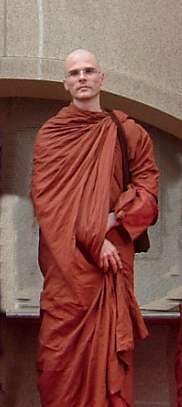
Bhikkhu Anālayo
Bhikkhu Anālayo is a contemporary Buddhist monk, scholar, and meditation teacher, born in Germany in 1962. He is renowned for his extensive comparative studies of early Buddhist texts preserved across various traditions, contributing significantly to the understanding of early Buddhist thought and practice. His work often focuses on meditation, historical developments, and textual analysis, making him a key figure in modern Buddhist scholarship.