
Hatthaka of Alavi
Lay disciple of the Buddha·Male
Hatthaka of Ālavī, also known as Hastaka Āṭavaka, was a prominent lay male disciple of the Buddha, recognized for his ability to attract followers through the "four bases of sympathy." He achieved the state of an Anāgāmi, or Non-Returner, and was reborn in the Pure Abodes. Hatthaka is celebrated for his deep faith, virtue, and wisdom, and his efforts in propagating the Dharma.
Key Facts
- ›Chief lay male disciple of the Buddha, alongside Citta.
- ›Foremost in gathering a following using the "four bases of sympathy."
- ›Achieved the state of an AnāgāMI (Non-Returner).
- ›Reborn in the Avṛha heaven in the Pure Abodes as a deity.
- ›Praised by the Buddha for eight specific qualities including faith, virtue, and wisdom.
- ›Mentioned in the Buddhavamsa as a chief layman disciple.
Important Relationships
- Buddha
- Citta
AvṛHa Heaven, Pure Abodes
Disciple, Householder
AnāGāMi, Deity
About Hatthaka of Alavi
Hatthaka of Ālavī
Hatthaka of Ālavī, also known by his Sanskrit name Hastaka Āṭavaka, was a significant lay male disciple of the Buddha. He is particularly recognized for his exceptional ability to attract followers and bring them to the teachings of Buddhism, primarily through the skillful application of the "four bases of sympathy." These compassionate methods included giving gifts, speaking kindly, performing kind deeds, and treating all individuals with equality.
Spiritual Attainments
Hatthaka achieved the advanced spiritual state of an Anāgāmi, meaning he was a "Non-Returner." This signifies that he would be reborn only one more time before attaining final liberation (Nirvana). Following his earthly life, he was reborn as a deity in the Avṛha heaven, located within the Pure Abodes. The Buddha himself praised Hatthaka for possessing eight core qualities: faith, virtue, conscientiousness, fear of blame, attentive listening, charity, wisdom, and modesty.
Life and Legacy
According to the Pali Commentary, Hatthaka was consistently accompanied by a following of five hundred lay disciples, highlighting his influence and leadership within the lay Buddhist community. He is mentioned in the Buddhavamsa alongside Citta as a chief layman disciple. Despite his advanced spiritual attainment, Hatthaka expressed three regrets upon his passing: not having spent enough time with the Buddha, not having heard enough of the Dharma, and not having served the Sangha sufficiently. A Jataka story found in the Chinese Vinayavibhaṅga also relates one of Hatthaka's past lives, illustrating his long-standing dedication to spiritual practice.
Source: Wikipedia ↗
Frequently Asked Questions
Who was Hatthaka of Ālavī?
Hatthaka of Ālavī, also known as Hastaka Āṭavaka, was a principal lay male disciple of the Buddha. He is renowned for his skill in attracting others to the Buddhist teachings through the "four bases of sympathy."
What does it mean that Hatthaka was an Anāgāmi?
An Anāgāmi, or Non-Returner, is a being who has attained a high level of spiritual realization and will be reborn only once more in the sense-sphere before reaching final liberation (Nirvana). Hatthaka achieved this state and was reborn in the Avṛha heaven in the Pure Abodes.
What were the 'four bases of sympathy' Hatthaka used?
The four bases of sympathy that Hatthaka employed to gather followers were: 1) giving gifts, 2) speaking with kindly words, 3) doing kindly deeds, and 4) treating people with equality.
What qualities did the Buddha praise Hatthaka for?
The Buddha praised Hatthaka for possessing eight qualities: faith, virtue, conscientiousness, fear of blame, ability to listen well, charity, wisdom, and modesty.
Did Hatthaka have any regrets upon death?
Yes, Hatthaka stated that he died with three regrets: not having seen enough of the Buddha, not having heard enough of the Dharma, and not having served enough to the Sangha.
Related Buddhists
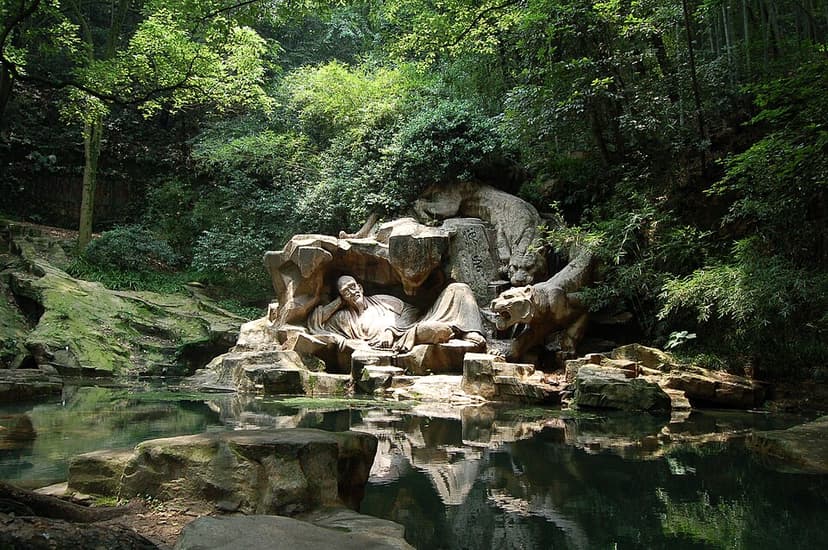
Ji Gong
Ji Gong, born Li Xiuyuan, was a Chan Buddhist monk of the Southern Song dynasty, renowned for his purported supernatural abilities used to aid the poor and combat injustice. Despite his compassionate deeds, he defied monastic rules by consuming alcohol and meat, leading to his expulsion. By his death, he had become a legendary figure in Chinese culture and a deity in folk religion, revered as the incarnation of the Dragon Subduing Arhat.

Ānanda
Ānanda was a principal attendant and one of the ten principal disciples of the Buddha, renowned for his exceptional memory. He is credited with recalling and reciting the Buddha's teachings, forming the basis of the Sutta-Piṭaka, and is thus known as the Treasurer of the Dhamma. Ānanda also played a significant role in the establishment of the order of bhikkhunīs (female monastics).
Aśvajit
Aśvajit was one of the first five arhants, or enlightened disciples, of Gautama Buddha. He is particularly known for his role in converting Śāriputra and Maudgalyāyana, who became the Buddha's chief male disciples. Aśvajit lived in northern India during the 6th century BCE.