
Ernest de Silva
Sir Albert Ernest de Silva was a prominent Ceylonese philanthropist, businessman, and public figure of the 20th century, widely regarded as the most significant philanthropist of his era. He was the founder-chairman of the Bank of Ceylon and made extensive contributions to education, healthcare, and Buddhist institutions in Ceylon (now Sri Lanka). Despite his immense wealth and influence, he declined the honor of becoming the first Ceylonese Governor-General.
Key Facts
- ›Founder-chairman of the Bank of Ceylon and founder-governor of the State Mortgage Bank.
- ›Considered the most prominent Ceylonese philanthropist of the 20th century.
- ›Established the first free Buddhist English school in the south of Ceylon, earning the moniker 'Grandfather of free education'.
- ›A world-class philatelist, his Ceylonese stamp collection was second only to King George V's.
- ›Knighted in 1946 for his public services and offered the position of the first Ceylonese Governor-General, which he declined.
- ›He was a close friend of Jawaharlal Nehru during their time at Cambridge.

Important Relationships
- Jawaharlal Nehru
- Ven. Nanatiloke
- Ven. Nyanaponika
- Senator Lady Evadne de Silva
- S.W.R.D. Bandaranaike
- King George V
- King George VI
- Sir Cyril de Zoysa
- A.E. de Silva Snr.
Ceylon, Royal College, Colombo, Clare College, Cambridge, Inner Temple, Kandana, Katunayake, Polgasduwa, Saligala, Rajagiriya, Welisara, Wanni Athpaththu Kurunegala, Colombo, Cinnamon Gardens, Sirimathipaya Mansion
Philanthropist, Business Magnate, Banker, Barrister, Public Figure, Philatelist
Wealthy, Influential, Respected
About Ernest de Silva
Sir Albert Ernest de Silva (1887–1957)
Sir Albert Ernest de Silva was a towering figure in 20th-century Ceylonese society, renowned as a leading businessman, banker, barrister, and most notably, as the premier philanthropist of his time. He was a wealthy and influential polymath whose contributions spanned finance, social welfare, and culture.
Life and Contributions
Born into one of Ceylon's most affluent families, de Silva received a distinguished education, graduating from Clare College, Cambridge, and being called to the bar at the Inner Temple. He was a close friend of Jawaharlal Nehru, whom he met at Cambridge.
De Silva's business acumen led him to found the Bank of Ceylon, the largest bank in Ceylon, and serve as the founder-governor of the State Mortgage Bank. He was also chairman of the Ceylon All-Party committee and was considered the wealthiest Ceylonese of his generation.
His philanthropic endeavors were extensive. He funded the construction of numerous schools, including the Devapathiraja Vidyalaya, where he pioneered free Buddhist English education. He and his wife, Senator Lady Evadne de Silva, established the first orphanage in Ceylon and funded the nation's first tuberculosis sanatorium. He also made significant donations to hospitals, children's homes, and monasteries.
Faith and Philately
As a devout Buddhist, Sir Ernest de Silva was instrumental in advancing Buddhist causes. He purchased an island to establish a hermitage for Buddhist monks and supported various Buddhist organizations, serving as President of the Young Men's Buddhist Association (YMBA) and the Kalutara Bodhi Trust. His wife was the Inaugural President of the Ceylon Women's Buddhist Congress.
Beyond his public service, de Silva was a world-class philatelist. His collection was considered second only to that of King George V, and he owned the legendary Mauritius 'Post Office' stamp. He was also an accomplished billiards player and president of the Ceylon Turf Club.
Honors and Legacy
For his public services, Ernest de Silva was knighted in 1946. He was offered the prestigious position of the first Ceylonese Governor-General upon Ceylon's independence but declined for personal reasons. His passing was mourned by national leaders, who acknowledged his profound contributions to Sri Lanka. The street where he resided was renamed Sir Ernest de Silva Mawatha in his honor, and a commemorative stamp was issued.
Source: Wikipedia ↗
Frequently Asked Questions
Who was Sir Ernest de Silva?
Sir Albert Ernest de Silva was a highly influential Ceylonese businessman, banker, barrister, and philanthropist. He was known for his immense wealth, his significant contributions to society, and his role in establishing key financial institutions and charitable organizations.
What were Sir Ernest de Silva's major contributions to Ceylonese society?
De Silva made substantial contributions to education by funding schools and providing scholarships, earning him the title 'Grandfather of free education'. He also advanced healthcare by establishing Ceylon's first tuberculosis sanatorium and donating the first X-ray machine to the National Hospital. Furthermore, he was a strong supporter of Buddhist institutions.
What was Sir Ernest de Silva's role in finance?
He was the founder-chairman of the Bank of Ceylon, which became the largest bank in Ceylon. He also served as the founder-governor of the State Mortgage Bank, an institution established to support low-income earners.
What was Sir Ernest de Silva known for outside of business and philanthropy?
Sir Ernest de Silva was also a renowned philatelist, possessing a world-class Ceylonese stamp collection. He was also a notable billiards player and the president of the Ceylon Turf Club, winning multiple Governor's Cups.
Was Sir Ernest de Silva offered a high political office?
Yes, upon Ceylon's independence, Sir Ernest de Silva was asked to become the first Ceylonese Governor-General, a role representing the King and serving as the de facto head of state. He declined this honor for personal reasons.
Related Buddhists

Ajahn Buddhadasa Bhikkhu
Ajahn Buddhadasa Bhikkhu was a Thai Buddhist monk renowned for his innovative interpretations of Buddhist doctrine and Thai folk beliefs. He sought to reform conventional religious perceptions, advocating for a view that all religions are inwardly the same and that the highest understanding of dhamma leads to the realization that "there is no religion." Buddhadasa was also recognized for his political engagement and development of "Dhammic socialism."
Cyril de Zoysa
Sir Cyril de Zoysa was a prominent Sri Lankan industrialist, senator, and philanthropist who played a significant role in the 20th-century Buddhist revival movement in Ceylon (now Sri Lanka). He served as the President of the Senate of Ceylon from 1960 to 1965, demonstrating a commitment to both public service and the preservation of Buddhist heritage.
Anathapindika
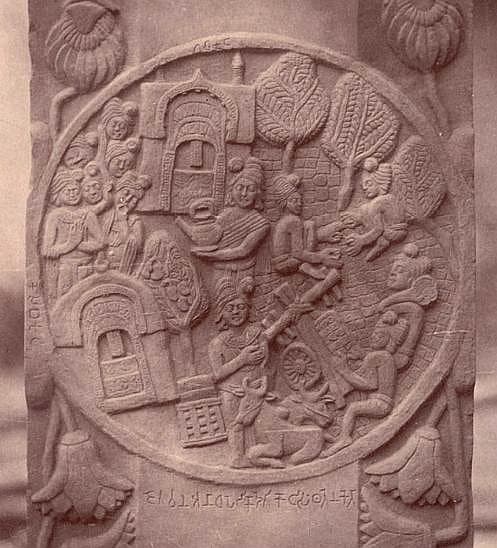
Anathapindika, born Sudatta, was a prominent wealthy merchant and philanthropist in ancient Savatthi during the time of Gautama Buddha. He is renowned as the chief male patron of the Buddha and is celebrated for his exceptional generosity, earning him the name "one who gives alms to the unprotected." His most significant contribution was founding the Jetavana Monastery, a vital center for Buddhist practice.