
Anagarika Munindra
Anagarika Munindra was an Indian Vipassanā meditation teacher renowned for guiding many influential meditation instructors. He held a significant role as the superintendent of the Mahabodhi Temple at Bodh Gaya and was authorized to teach Vipassanā by Mahasi Sayadaw in Burma. Munindra's open-minded teaching style encouraged students to explore diverse traditions, and he spent his final years at the Vipassana Research Institute in India.
Key Facts
- ›Anagarika Munindra was born in Chittagong, British India (present-day Bangladesh).
- ›He served as the superintendent of the Mahabodhi Temple at Bodh Gaya from 1953 to 1957.
- ›He was a close disciple of Mahasi Sayadaw in Burma, who authorized him to teach Vipassanā meditation.
- ›Munindra studied the PāLI Canon thoroughly while in Burma.
- ›He encouraged his students to study with other teachers and explore different Buddhist traditions.
- ›He spent his final years as a guest at the Vipassana Research Institute's Dhamma Giri center in Igatpuri, India.

Important Relationships
- Mahasi Sayadaw
- S. N. Goenka
- Dipa Ma
- Joseph Goldstein
- Sharon Salzberg
Bodh Gaya, Burma, Dhamma Giri
Mahasi Sayadaw, Ledi Sayadaw, S. N. Goenka, Sayagyi U Ba Khin
Pali
Anagarika Vows
About Anagarika Munindra
Anagarika Munindra (1915 – 2003)
Anagarika Munindra, also known as Munindraji by his disciples, was a significant Indian Vipassanā meditation teacher. His life was dedicated to the practice and dissemination of Buddhist teachings, exemplified by his adherence to the Anagarika path, which involves a nomadic lifestyle free from attachments to facilitate focus on the Dhamma.
Early Life and Buddhist Practice
Born in Chittagong, British India (now Bangladesh) in 1915, Anagarika Munindra's lineage traced back to Indian Buddhists displaced by historical events. He was an active member of the Maha Bodhi Society, an organization dedicated to reviving Buddhism in India and restoring its ancient shrines. His commitment to Buddhist heritage led him to serve as the superintendent of the Mahabodhi Temple at Bodh Gaya from 1953 to 1957, a notable position as the first Buddhist to hold it in modern times.
Teaching and Lineage
From 1957 to 1966, Anagarika Munindra resided in Burma, where he became a close disciple of Mahasi Sayadaw and received authorization to teach Vipassanā meditation. During his time in Burma, he also undertook a thorough study of the Pāli Canon. Upon returning to India, he taught Vipassanā for many years, primarily in Bodh Gaya. His teaching style was characterized by open-mindedness and flexibility, encouraging students to explore other teachers and traditions.
Anagarika Munindra also had significant interactions with other prominent figures in the Vipassanā tradition. He engaged in Dhamma discussions with S. N. Goenka and wished to study Vipassanā in the tradition of Sayagyi U Ba Khin. Though Sayagyi U Ba Khin initially declined to teach him directly due to his prior training, Munindra later found fulfillment by participating in a 10-day course taught by S. N. Goenka at Bodhgaya, reporting his profound impression of the technique.
Final Years
Anagarika Munindra spent the concluding phase of his life as a guest at Dhamma Giri, the main meditation center of the Vipassana Research Institute, located in Igatpuri, India. He resided there as a close friend of S. N. Goenka. He passed away on October 14, 2003.
Source: Wikipedia ↗
Frequently Asked Questions
What does the title 'Anagarika' signify?
Anagarika is a term for a practicing Buddhist who lives a nomadic life without attachments to focus on the Dhamma. This lifestyle is adopted to deepen their spiritual practice.
What was Anagarika Munindra's role at the Mahabodhi Temple?
Anagarika Munindra served as the superintendent of the Mahabodhi Temple at Bodh Gaya from 1953 to 1957. He was the first Buddhist to hold this position in modern times.
Who authorized Anagarika Munindra to teach Vipassanā meditation?
Munindra was authorized to teach Vipassanā meditation by Mahasi Sayadaw. This occurred during his time in Burma, where he was a close disciple of Sayadaw.
Who were some notable students of Anagarika Munindra?
Anagarika Munindra taught many influential meditation teachers, including Dipa Ma, Joseph Goldstein, and Sharon Salzberg. These students have since become prominent figures in meditation instruction.
What was Anagarika Munindra's approach to teaching?
He was known for his open-minded and relaxed teaching style. Munindra actively encouraged his students to study with other teachers and investigate different Buddhist traditions.
Where did Anagarika Munindra spend his final years?
Anagarika Munindra spent the last part of his life at the Vipassana Research Institute's main meditation centre, Dhamma Giri, located in Igatpuri, India. He was a guest of his close friend, S. N. Goenka.
Related Buddhists
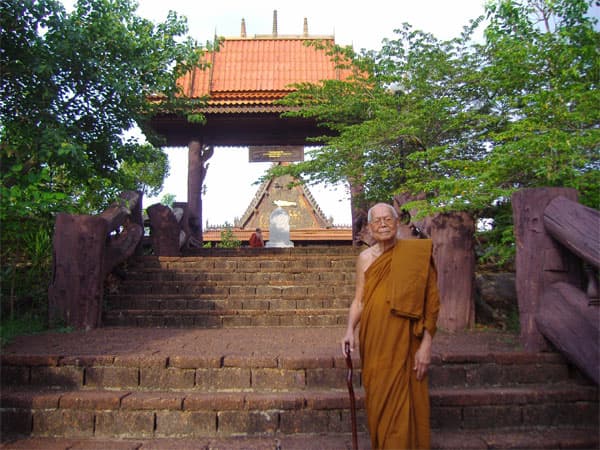
Achan Sobin S. Namto
Achan Sobin S. Namto is a Thai Buddhist monk renowned for his extensive teaching of Vipassanā meditation and Buddhist psychology across Southeast Asia and North America for over five decades. He played a significant role in establishing Buddhist temples and meditation centers in the United States, notably in Los Angeles and Denver.

14th Dalai Lama
The 14th Dalai Lama, born Lhamo Thondup, is the current spiritual leader of Tibetan Buddhism and the former temporal leader of Tibet. He is widely regarded as an emanation of Avalokiteśvara, the Bodhisattva of Compassion, and has led the Tibetan government in exile since 1959. Known for his advocacy for peace and interfaith dialogue, he was awarded the Nobel Peace Prize in 1989.
Balangoda Ananda Maitreya Thero
Balangoda Ananda Maitreya Thera was a highly revered Sri Lankan Buddhist monk and scholar of the twentieth century, recognized for his profound understanding and exposition of Theravada Buddhism. Sri Lankan Buddhists held him in high esteem, believing he had attained a significant spiritual development and was a Bodhisattva destined for Buddhahood. He dedicated his life to the propagation of Buddhist philosophy, earning prestigious titles for his service to the religion.