
Wat Ratchaburana
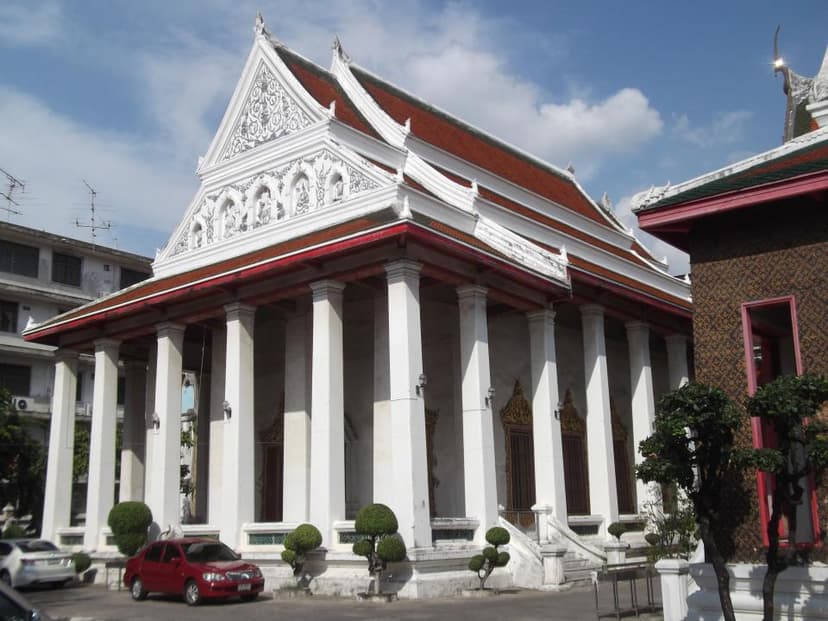
Wat Ratchaburana, also known as Wat Liap, is a significant Buddhist temple in Bangkok, Thailand, dating back to the late Ayutthaya period. Originally built by a wealthy merchant, it was later restored by royalty, earning its name "Ratchaburana" meaning "restored by the king." The temple is notable for its traditional architecture, including a Khmer-style prang, and its interior wall paintings by the renowned artist Khrua In Khong.
Key Facts
- ›Founded in the late Ayutthaya period by a wealthy Chinese merchant named Liap.
- ›Restored and named "Ratchaburana" by Prince Krom Luang Thepharirak during the reign of King Rama I.
- ›Features a prominent prang (Khmer-style pagoda) built during the reign of King Rama III.
- ›The ubosot (ordination hall) contains wall paintings by the celebrated monk-artist Khrua in Khong.
- ›Suffered significant damage during World War II and was rebuilt by the abbot and local community.
- ›The current ubosot was constructed in 1960.
Important Relationships
- Khrua In Khong
- Prince Krom Luang Thepharirak
- King Rama I
- King Rama II
- King Rama III
- King Rama IV
- Khmer-Style Prang
- Wall Paintings By Khrua In Khong Inside the Ubosot
- Restoration and Naming During the Reign of King Rama I
- Serious Damage During World War Ii
- Rebuilding By Abbot and Local People After World War Ii
- Construction of the Present Ubosot In 1960
- Restoration of the Prang In 1962 and 2007
Traditional Thai, Khmer-Style
About Wat Ratchaburana
Wat Ratchaburana: A Royal Temple of Artistic and Historical Significance
Wat Ratchaburana, also known by its informal name Wat Liap, is a historically significant Buddhist temple located in Bangkok, Thailand. Established in the late Ayutthaya period by a prosperous Chinese merchant named Liap, the temple's importance grew substantially when it was restored by Prince Krom Luang Thepharirak during the reign of King Rama I. This royal intervention led to its renaming as "Ratchaburana," signifying "restored by the king," and its designation as a royal temple.
Historical Context and Architectural Highlights
The temple has witnessed several periods of development and restoration. During King Rama II's reign, numerous Buddha images were added, and a sanctuary was constructed to house them. A critical period in its history was World War II, which caused severe damage, leading to its temporary removal from official lists. However, the dedication of the then abbot, Phra Khuna Charawat, and the local community facilitated its rebuilding. The current ubosot, or ordination hall, was completed in 1960.
Perhaps the most striking architectural feature of Wat Ratchaburana is its prang, a pagoda in the Khmer style, which was erected during King Rama III's reign and has undergone restoration in 1962 and 2007. Complementing its grand structures are the exquisite wall paintings within the ubosot. These artworks are attributed to Khrua In Khong, a highly regarded monk and artist from the era of King Rama IV, adding a layer of artistic merit to the temple's profound historical and religious value.
Source: Wikipedia ↗
Frequently Asked Questions
What is the origin of Wat Ratchaburana's name?
Wat Ratchaburana, meaning "restored by the king," was named during the reign of King Rama I when Prince Krom Luang Thepharirak restored the temple with royal support. This name signifies its royal patronage and restoration.
Who was the artist responsible for the wall paintings inside the ubosot?
The wall paintings inside the ubosot are the work of Khrua In Khong, a monk and a talented artist who lived during the reign of King Rama IV. His art is a notable feature of the temple.
What happened to Wat Ratchaburana during World War II?
During World War II, Wat Ratchaburana sustained serious damage and was temporarily removed from the official list of temples. The then abbot and local people later collaborated to rebuild the temple.
What is the architectural significance of the prang at Wat Ratchaburana?
The prang at Wat Ratchaburana is a prominent Khmer-style pagoda, considered its most outstanding building. It was originally constructed during the reign of King Rama III and has undergone several restorations, most recently in 2007.
When was the current ordination hall (ubosot) built?
The present ubosot at Wat Ratchaburana was built in 1960. It houses the notable wall paintings by Khrua In Khong.
Related Buddhist Temples
Wat Paknam Phasi Charoen
Wat Paknam Phasi Charoen is a significant royal Buddhist temple in Bangkok, Thailand, known for its historical importance dating back to 1610 and its role as the origin of the Dhammakaya tradition. The temple experienced a major revival in the 20th century under the meditation master Luang Pu Sodh Candasaro and later under Somdet Chuang Varapuñño, gaining prominence for its charitable works, international outreach, and notable architectural additions.
Wat Chakkrawat
Wat Chakkrawat, formerly known as Wat Sam Pluem, is a historic Buddhist monastery located in Bangkok's Chinatown. It holds significance as an ancient temple established during the early days of the Rattanakosin Kingdom, predating the development of the Yaowarat road, and was later designated a royal temple.

Wat Hong Rattanaram
Wat Hong Rattanaram Ratchaworawihan, often shortened to Wat Hong Rattanaram, is an ancient Thai Buddhist temple situated along the Khlong Bangkok Yai canal in Bangkok. Classified as a second-rank royal temple, it holds significant historical importance, having been patronized by King Taksin and later restored by King Nangklao and King Mongkut. The temple is renowned for its sacred Buddha statues and artistic murals.