
That Sikhottabong
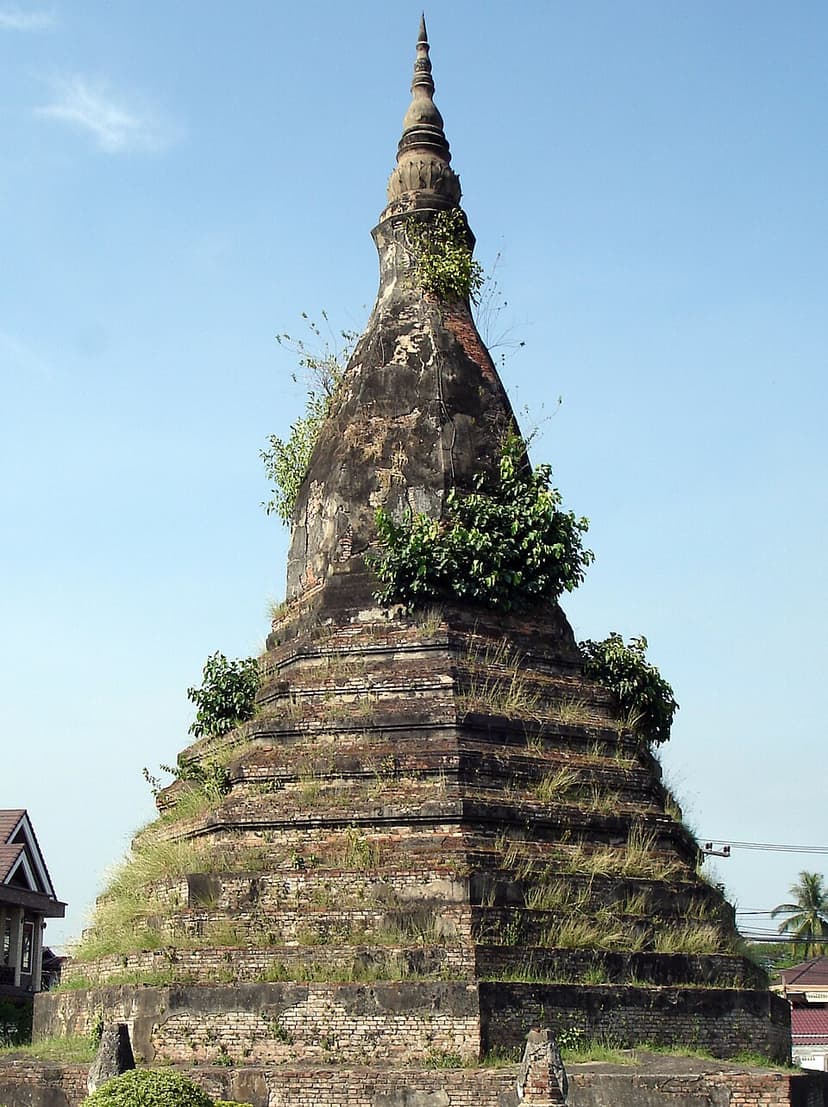
That Sikhottabong is a significant Buddhist stupa located in Thakhek, Khammouane Province, Laos, on the bank of the Mekong River. It is believed to contain the bones of Buddha and was originally built by King Nanthasene for King Soummitham during the historical Sikhottabong Kingdom. The stupa underwent refurbishment in the 16th century.
Key Facts
- ›Located in Thakhek, Khammouane Province, Laos, on the Mekong River.
- ›Believed to house the bones of Buddha, along with that Inhang and that Phanom.
- ›Originally built by King Nanthasene for King Soummitham.
- ›Refurbished in the 16th century under King Setthathirath.
- ›Features a stupa with a square base and a pinnacle shaped like a banana flower.
- ›Hosts a festival during the third month of the lunar calendar.

Important Relationships
- King Nanthasene
- King Soummitham
- King Setthathirath
- That Inhang
- That Phanom
Pinnacle Shaped Like A Banana Flower
Refurbished In the 16th Century
About That Sikhottabong
That Sikhottabong is a prominent Buddhist stupa located in Thakhek, Khammouane Province, Laos. Situated on the bank of the Mekong River, this significant religious structure is contemporary to other important stupas built under the historical Sikhottabong Kingdom, including That Inhang in Savannakhet and That Phanom in Thailand. It is traditionally believed that the bones of Buddha are consecrated within these sacred monuments.
Historical Context and Construction
The stupa was originally commissioned by King Nanthasene, who built it for King Soummitham. This construction places That Sikhottabong within the historical framework of the Sikhottabong Kingdom. Later, in the 16th century, the stupa underwent a significant refurbishment during the reign of King Setthathirath, indicating its continued importance over centuries.
Architectural Significance
The architecture of That Sikhottabong is notable for its scale and distinct features. The stupa possesses four square sides, with each side measuring approximately 25.03 meters in length. Its base covers an area of 14.33 square meters, and it rises to an impressive height of 29 meters. A defining characteristic is its pinnacle, which is shaped to resemble a banana flower.
Religious and Cultural Importance
That Sikhottabong is considered an important pilgrimage site, particularly due to the belief that it houses relics of the Buddha. A significant cultural event associated with the stupa is the festival held there during the third month of the lunar calendar, drawing devotees and visitors.
Source: Wikipedia ↗
Frequently Asked Questions
Where is That Sikhottabong located?
That Sikhottabong is situated in Thakhek, Khammouane Province, Laos, on the bank of the Mekong River.
What is the significance of That Sikhottabong?
It is considered a sacred site believed to contain the bones of Buddha, making it an important religious monument from the Sikhottabong Kingdom era.
When was That Sikhottabong built and refurbished?
The stupa was originally built by King Nanthasene. It was later refurbished in the 16th century during the reign of King Setthathirath.
What are the architectural features of That Sikhottabong?
The stupa has a square base and rises to a height of 29 meters. Its pinnacle is distinctively shaped like a banana flower.
Is there a festival associated with That Sikhottabong?
Yes, a festival is held at the location of That Sikhottabong during the third month of the lunar calendar.
Related Buddhist Temples

Pha That Luang
Pha That Luang is a prominent gold-covered Buddhist stupa located in Vientiane, Laos. Originally believed to have been established in the 3rd century AD, it has undergone significant reconstructions throughout its history, most notably in the 1930s. The stupa is a major national symbol and a significant site for religious and cultural events in Laos.
That Dam
That Dam, meaning "Black Stupa," is a significant stupa located in the center of a roundabout in Vientiane, Laos. It is a site of local belief, with many Lao people crediting a seven-headed nāga residing within it for protection against the Siamese invasion of 1827.

Wat Ong Teu Mahawihan
Wat Ong Teu Mahawihan, meaning "Temple of the Heavy Buddha," is a significant Buddhist monastery in Vientiane, Laos, renowned for housing the largest Buddha image in the city. Originally built by King Setthathirath I in the 16th century, it has undergone several reconstructions after being destroyed by invasions, notably in the 19th century and then restored by the French in the early 20th century, maintaining its role as a center for Theravada Buddhist learning.