
Still Point Zen Buddhist Temple
Still Point Zen Buddhist Temple was a Zen Buddhist center located in Detroit, Michigan, founded by P'arang Geri Larkin. It served as a welcoming community for people of all backgrounds to engage in Buddhist practices and teachings, tracing its lineage to Korean Buddhism.
Key Facts
- ›Founded by P'arang Geri Larkin in Detroit, Michigan.
- ›Traces its lineage to Korean Buddhism.
- ›Her ordination as a dharma teacher occurred on July 2, 1995.
- ›P'arang Geri Larkin was a student of Korean Zen Master Venerable Samu Sunim.
- ›The current guiding teacher is Koho Vince Anila, the first dharma successor of P'arang Geri Larkin.
- ›The temple welcomed people from all walks of life and faiths to its meetings, retreats, and workshops.
Important Relationships
- P'arang Geri Larkin
- Venerable Samu Sunim
- Koho Vince Anila
- Ordination of P'Arang Geri Larkin On July 2, 1995.
- Ordination of Koho Vince Anila In May 2003.
About Still Point Zen Buddhist Temple
Still Point Zen Buddhist Temple was a Zen Buddhist center located at 4347 Trumbull in Detroit, Michigan. Founded by P'arang Geri Larkin, the temple aimed to create an inclusive community, welcoming individuals from all backgrounds and faiths to participate in its activities.
Founding and Lineage
P'arang Geri Larkin's ordination as a dharma teacher took place on July 2, 1995, following three years of dedicated Buddhist study at Maitreya Buddhist Seminary. Prior to establishing Still Point, she served as a dharma teacher at the Zen Buddhist Temple in Ann Arbor, Michigan. Her spiritual journey and the temple's lineage are rooted in Korean Buddhism, with her own training under the guidance of Venerable Samu Sunim, a Korean Zen Master who was instrumental in establishing numerous Buddhist temples across North America.
Guiding Teachers and Community
Currently, Koho Vince Anila serves as the guiding teacher for Still Point Zen Buddhist Temple. Koho Vince Anila is recognized as the first dharma successor of P'arang Geri Larkin and was ordained in May 2003. The temple fostered a community that extended invitations for Sunday meetings, retreats, and workshops to everyone, emphasizing accessibility and shared practice across diverse spiritual paths.
Source: Wikipedia ↗
Frequently Asked Questions
Where was Still Point Zen Buddhist Temple located?
Still Point Zen Buddhist Temple was located at 4347 Trumbull in Detroit, Michigan.
Who founded Still Point Zen Buddhist Temple?
The temple was founded by P'arang Geri Larkin.
What is the lineage of Still Point Zen Buddhist Temple?
Still Point Zen Buddhist Temple traces its lineage to Korean Buddhism.
Who is the current guiding teacher?
The current guiding teacher of Still Point Zen Buddhist Temple is Koho Vince Anila, who is the first dharma successor of P'arang Geri Larkin.
What kind of community was it?
It was a community of Zen Buddhists that welcomed people from all walks of life and faiths to its Sunday meetings, retreats, and workshops.
Related Buddhist Temples

Furnace Mountain
Furnace Mountain, officially known as Kwan Se Um San Ji Sah, is an American Zen Buddhist retreat center located in Clay City, Kentucky. Co-founded in 1986, it was initially part of the Kwan Um School of Zen but is now unaffiliated. The center is situated on 850 acres within a section of the Daniel Boone National Forest, modeled after traditional Korean Buddhist temples.

Zen Center of Los Angeles
The Zen Center of Los Angeles (ZCLA), also known as Buddha Essence Temple, is a significant Zen Buddhist center established in 1967 by Hakuyu Taizan Maezumi. Practicing within the White Plum lineage, ZCLA is dedicated to the mission of knowing the Self, upholding Buddhist precepts, and serving others through the teaching and transmission of Zen Buddhism.
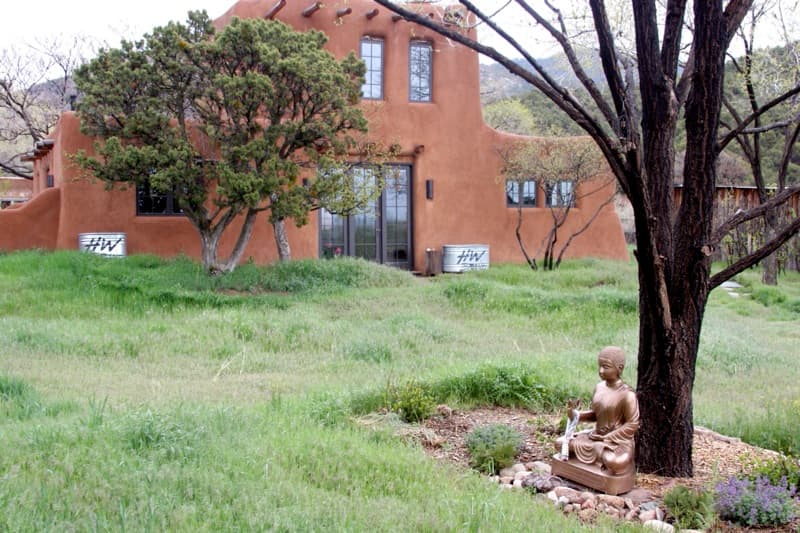
Upaya Institute and Zen Center
Upaya Institute and Zen Center is a residential Zen practice center in Santa Fe, New Mexico, founded by Joan Halifax Roshi. It emphasizes the integration of Zen practice with social action, cultivating wisdom and compassion, and providing services in areas such as death and dying, prison work, and environmental and women's rights advocacy.