
Sri Maha Bodhi Viharaya
Sri Maha Bodhi Viharaya is a Theravada Buddhist temple situated in Kandy, Sri Lanka, renowned for its towering Buddha statue. Established in the early 1970s, the temple faced early opposition but eventually gained legal recognition and has since become a significant landmark and tourist attraction.
Key Facts
- ›Located in Bahirawakanda, Kandy, about 2 km from the city center.
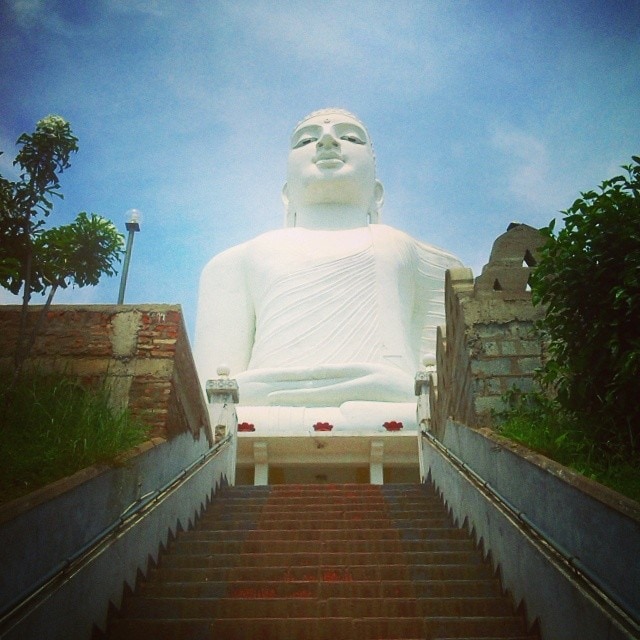
- ›Features a giant Buddha statue, 26.83 meters (88.0 ft) tall, in the Dhyana Mudra meditation posture.
- ›The Buddha statue is visible from most parts of Kandy and is one of the tallest in Sri Lanka.
- ›Land was donated in the early 1970s by Minister Hector Kobbekaduwa to Ven. Ampitiye Dammarama Thero.
- ›Construction of the Buddha statue was completed in 1992 and officially opened on January 1, 1993.
- ›The temple is a popular tourist attraction in Kandy.
Important Relationships
- Hector Kobbekaduwa
- Ven. Ampitiye Dammarama Thero
- Amarapura Nikaya
- Sri Dalada Maligawa
- Siyam Nikaya
- Hinatiyana Dhammaloka
- President Ranasinghe Premadasa
Giant Buddha Statue, Dhyana Mudra Posture of the Buddha Statue
- Land Donated In the Early 1970s.
- Legal Grant of Land In the 1980s.
- Construction of Buddha Statue Completed In 1992.
- Official Opening On January 1, 1993.
About Sri Maha Bodhi Viharaya
Sri Maha Bodhi Viharaya is a Theravada Buddhist temple situated in the scenic Bahirawakanda area of Kandy, Sri Lanka. Located approximately 2 kilometers from the city center, the temple is primarily recognized for its imposing and iconic giant Buddha statue. This colossal statue, standing at 26.83 meters (88.0 ft) high, depicts the Buddha in the Dhyana Mudra, the posture of meditation associated with his first Enlightenment. Its sheer scale makes it one of the tallest Buddha statues in Sri Lanka and ensures it is visible from nearly every vantage point within Kandy.
History and Establishment
The origins of Sri Maha Bodhi Viharaya date back to the early 1970s when the land for the temple was generously donated by Hector Kobbekaduwa, the then Minister of Lands. The recipient of this land was Ven. Ampitiye Dammarama Thero, a monk affiliated with the Amarapura Nikaya. Initially, Ven. Dammarama lived in temporary accommodations while dedicating his efforts to soliciting funds for the temple's construction. The temple's establishment was not without its challenges; it encountered opposition from senior monks associated with the Sri Dalada Maligawa (Temple of the Sacred Tooth Relic), who expressed concerns that the new temple might detract from the prominence of their own revered site, a center of the Siyam Nikaya. This opposition persisted until the 1980s, when Hinatiyana Dhammaloka, a chief monk of the Amarapura Nikaya, successfully petitioned President Ranasinghe Premadasa to intervene. The President's intervention led to the legal granting of the land to Ven. Dammarama, solidifying the temple's foundation.
Construction of the Buddha Statue and Later Development
In the latter half of the 1980s, under the guidance of Ven. Dammarama, the construction of the monumental Buddha statue commenced. The ambitious project was completed in 1992, and the temple, with its magnificent centerpiece, was officially inaugurated on January 1, 1993, by President Ranasinghe Premadasa himself. Following its completion and official opening, Sri Maha Bodhi Viharaya has grown to become a significant religious site and a popular destination for tourists visiting Kandy, drawing visitors with its spiritual ambiance and awe-inspiring statue.
Source: Wikipedia ↗
Frequently Asked Questions
Where is Sri Maha Bodhi Viharaya located?
Sri Maha Bodhi Viharaya is located in Bahirawakanda, Kandy, Sri Lanka, approximately 2 kilometers (1.2 miles) from the city center.
What is the most prominent feature of Sri Maha Bodhi Viharaya?
The most prominent feature is its giant Buddha statue, which stands at 26.83 meters (88.0 ft) high and is depicted in the Dhyana Mudra, the posture of meditation. This statue is one of the tallest in Sri Lanka and is visible from almost everywhere in Kandy.
When was the temple established and the statue built?
The land for the temple was donated in the early 1970s. The construction of the giant Buddha statue began in the late 1980s and was completed in 1992, with the temple officially opening on January 1, 1993.
Did the temple face any opposition during its establishment?
Yes, the temple faced opposition from senior monks of the Sri Dalada Maligawa, who believed it would overshadow the main temple. Legal intervention was required, with President Ranasinghe Premadasa ultimately granting the land to Ven. Ampitiye Dammarama Thero.
What Buddhist tradition is Sri Maha Bodhi Viharaya associated with?
Sri Maha Bodhi Viharaya is a Theravada Buddhist temple. Ven. Ampitiye Dammarama Thero, the monk who established it, belonged to the Amarapura Nikaya.
Related Buddhist Temples
Daihonzan Chozen-ji
Daihonzan Chozen-ji is a Rinzai Zen temple established in 1972 in Kalihi Valley, Oahu, Hawaii, by Omori Sogen and Tenshin Tanouye. It is notable as the first Rinzai headquarters temple established outside of Japan, integrating meditation with martial and fine arts in its spiritual training.
Green Gulch Farm
Green Gulch Farm Zen Center, also known as Sōryu-ji (Green Dragon Temple), is a Soto Zen practice center near Muir Beach, California, established in 1972. It serves as a residential monastery and retreat center, offering Zen training alongside organic farming and gardening workshops, and is recognized for its model of living on the land in conjunction with Buddhist practice.

Ridi Viharaya
Ridi Viharaya, or the Silver Temple, is a significant Theravada Buddhist temple in Ridigama, Sri Lanka, dating back to the 2nd century BCE. It holds historical importance as the site where the silver ore was discovered, which was crucial for the completion of the Ruwanwelisaya stupa. The temple complex was built in gratitude for this discovery and has undergone various expansions and renovations throughout its history.