
Shuanglin Temple
Shuanglin Temple, also known as the "museum of coloured sculptures," is a significant Buddhist temple located southwest of Pingyao in Shanxi Province, China. Founded in the 6th century, it is celebrated for its extensive collection of over 2,000 decorated clay statues dating from the 12th to 19th centuries, making it a crucial site for understanding Chinese Buddhist sculpture.
Key Facts
- ›Founded in 571 AD during the Northern Qi dynasty.
- ›Notable for over 2,000 decorated clay statues from the 12th–19th centuries.
- ›Part of the 'Ancient City of Pingyao' UNESCO World Heritage Site.
- ›Original name was Zongdu, later renamed Shuanglin during the Northern Song dynasty.
- ›The temple complex features ten halls arranged within three courtyards, resembling a fortress.
- ›Many statues were damaged or stolen during the Cultural Revolution.

Important Relationships
- Ancient City of Pingyao
- Collection of Over 2,000 Decorated Clay Statues
- Hall of the Devas
- Arhat Hall
- Hall of A Thousand Buddhas
- Bodhisattva Hall
- Fortress-Like Compound Wall and Gate
- Ten Halls Arranged In Three Courtyards
- Founded In 571 Ad During the Northern Qi Dynasty.
- Renamed Shuanglin During the Northern Song Dynasty.
- Many Statues Stolen Or Damaged During the Cultural Revolution.
Ming Dynasty, Qing Dynasty
About Shuanglin Temple
Shuanglin Temple, located in Qiaotou village approximately six to seven kilometers southwest of the ancient city of Pingyao in China's Shanxi Province, is a significant Buddhist temple renowned for its exceptional collection of colored sculptures. Originally named Zongdu, it was renamed Shuanglin during the Northern Song dynasty and is often referred to as the "museum of coloured sculptures." Its founding dates back to 571 AD, during the Northern Qi dynasty, though the extant structures primarily date from the Ming and Qing dynasties.
Historical Context and Significance
The temple's primary historical and artistic importance lies in its extensive collection of over 2,000 decorated clay statues, which span from the 12th to the 19th centuries. These sculptures are considered among the finest examples of Chinese colored sculpture, reflecting the artistic traditions of the Song, Jin, and Yuan periods. The themes depicted are varied, encompassing religious figures such as Buddhas, Bodhisattvas, Arhats, and heavenly generals, as well as depictions of common people, set against richly detailed backgrounds.
Architectural Features and Sculptural Displays
The temple complex is arranged within three courtyards, featuring ten halls that contribute to its fortress-like appearance, emphasized by a high compound wall and gate. Key halls include the Hall of the Devas, the Arhat Hall with its eighteen sculptured Arhats and a notable Guanyin sculpture, the Hall of a Thousand Buddhas housing a dharmapala Weituo statue, and the Bodhisattva Hall, which contains a striking thousand-armed Guanyin figure. The sculptures are displayed in tableaux behind caged chambers, with backgrounds designed to create immersive scenes.
Preservation and Cultural Heritage
Shuanglin Temple is a vital component of the 'Ancient City of Pingyao' UNESCO World Heritage Site, inscribed in 1997. Despite its cultural significance, the preservation of its valuable sculptures has been a challenge. Historical accounts indicate that many statues were lost or damaged during the Cultural Revolution, and contemporary reports suggest poor maintenance and a lack of ongoing preservation efforts have led to the deterioration of many of these ancient artworks.
Source: Wikipedia ↗
Frequently Asked Questions
When was Shuanglin Temple founded?
Shuanglin Temple was founded in 571 AD, during the second year of the Wuping period of the Northern Qi dynasty. This places its origins in the 6th century.
What is Shuanglin Temple most famous for?
The temple is most famous for its extensive collection of over 2,000 decorated clay statues, dating from the 12th to the 19th centuries. It is often nicknamed the 'museum of coloured sculptures' due to this remarkable assembly.
What is the historical significance of the statues at Shuanglin Temple?
The sculptures are considered among the finest examples of Chinese coloured sculptures, reflecting artistic traditions from the Song, Jin, and Yuan periods. They depict religious themes and aspects of daily life, with figures ranging from Buddhas and Bodhisattvas to common people.
Is Shuanglin Temple a UNESCO World Heritage Site?
Yes, Shuanglin Temple is a component of the 'Ancient City of Pingyao' UNESCO World Heritage Site, which was inscribed in 1997. It is one of the three key elements of this designation.
What condition are the sculptures in today?
The condition of the sculptures varies, with historical accounts noting that many were stolen or damaged during the Cultural Revolution. Poor maintenance and lack of preservation have also led to a bad condition for many statues, and the temple's external surface appears musty due to coal dust.
Related Buddhist Temples

Songyue Pagoda
The Songyue Pagoda, constructed in 523 CE, is a significant Buddhist monument located on Mount Song in Henan province, China. It is recognized as the earliest known Chinese brick pagoda and one of the few intact pagodas from the sixth century, making it a crucial example of early Chinese Buddhist architecture and a UNESCO World Heritage site.

Daxingguo Temple
Daxingguo Temple is a renowned Chinese Buddhist temple located in Kaifeng, Henan province, China, historically significant for its role in the development of Chinese Buddhism. It reached its zenith during the Song dynasty, serving as a royal temple, a major monastic center, and an international hub for cultural exchange, though it suffered destruction and subsequent reconstructions.
Dinghui Temple
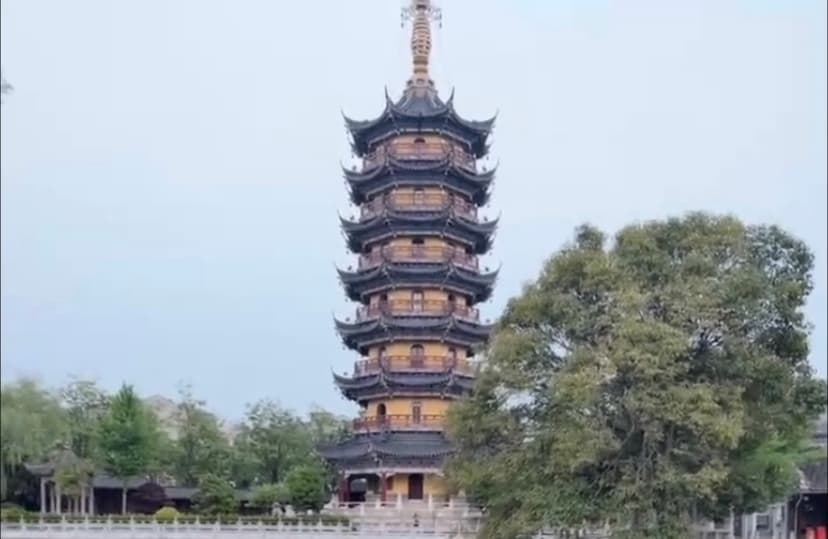
Dinghui Temple, established in 591 AD during the Sui dynasty, is a significant Buddhist temple located in Rugao, China. Originally founded by the influential figure of Tiantai Buddhism, the temple has undergone several periods of damage and extensive restoration, notably during the Ming Dynasty and in the late 20th century, to become a popular tourist destination.