
Dinghui Temple
Temple·China·6th century·Tiantai Buddhism
Dinghui Temple, established in 591 AD during the Sui dynasty, is a significant Buddhist temple located in Rugao, China. Originally founded by the influential figure of Tiantai Buddhism, the temple has undergone several periods of damage and extensive restoration, notably during the Ming Dynasty and in the late 20th century, to become a popular tourist destination.
Key Facts
- ›Founded in 591 AD during the Sui dynasty.
- ›Associated with the founder of Tiantai Buddhism.
- ›Suffered significant damage during the Song dynasty wars.
- ›Completely rebuilt and received a scripture library during the Ming Dynasty.
- ›Reopened to the public in November 1983 after restoration efforts.
- ›Features a rare north-facing gate and a layout resembling the Chinese character '回'.
Important Relationships
- Emperor Yang of Sui
- Daoxuan
- Founder of Tiantai Buddhism
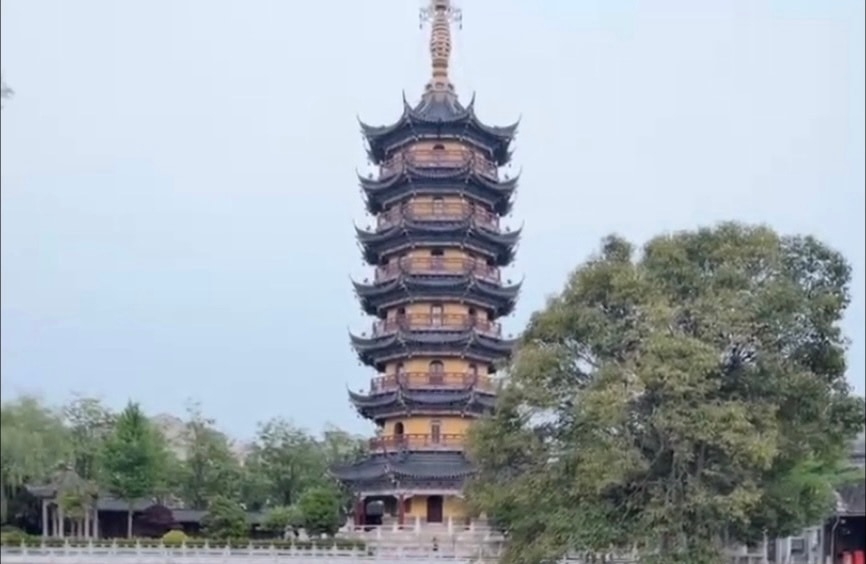
North-Facing Gate, Layout Resembling the Chinese Character '回', Four Heavenly Kings Statues In Jingang Palace, Pagoda Built Concurrently With the Temple
- Construction During the Sui Dynasty
- Damage During Wars In the Song Dynasty
- Rebuilding and Addition of A Scripture Library During the Ming Dynasty
- Reopening To the Public In 1983 After Restoration
About Dinghui Temple
Dinghui Temple, established in 591 AD during the Sui dynasty, is a significant Buddhist temple located in Rugao, China. Its founding is attributed to the influential figure of Tiantai Buddhism, inspired to establish a place of worship following a large monastic meeting held by Emperor Yang of Sui in Yangzhou. The temple complex initially included an accompanying pagoda, built at the same time as the main structure.
History and Restoration
The temple's history is marked by periods of destruction and rebuilding. It suffered considerable damage due to a series of wars during the Song dynasty. Later, during the Ming Dynasty, specifically under the reign of the Wanli emperor, Dinghui Temple underwent a complete reconstruction and was enhanced with the addition of a scripture library. In more recent times, the People's Government of Jiangsu Province decided to open the temple to the public in November 1983. At that point, most of its heritage had been ruined and its Buddha statues were heavily damaged. However, through the dedicated efforts of the Rugao Government, Dinghui Temple was meticulously restored to its original state and now attracts numerous tourists each year.
Architectural Features
Dinghui Temple covers an area of 16 mu, with its overall layout designed to resemble the shape of the Chinese character "回" (huí), meaning 'return' or 'circle'. Unconventionally for Chinese temples, the main gate faces north. Prominent structures like the Daxiong Palace and the Scripture Library are also oriented to face north. A river now surrounds the temple grounds, enhancing its aesthetic appeal. Within the Jingang Palace, visitors can observe statues of the Four Heavenly Kings: Virūḍhaka, depicted with a sword and angry eyes; Dhṛtarāṣṭra, holding a lute with a pretentious gaze; Vaiśravaṇa, carrying an umbrella with a hideous face; and Virūpākṣa, shown with strong muscles seizing a dragon.
Source: Wikipedia ↗
Frequently Asked Questions
When was Dinghui Temple built?
Dinghui Temple was built in 591 AD during the Sui dynasty. This places its foundation in the late 6th century.
Who was involved in the founding of Dinghui Temple?
According to historical accounts, the founder of Tiantai Buddhism was inspired to build the temple in Rugao. Emperor Yang of Sui was also involved, holding a large monastic meeting in Yangzhou around the time of the temple's construction.
What happened to Dinghui Temple during the Ming Dynasty?
During the reign of the Wanli emperor in the Ming Dynasty, Dinghui Temple was totally rebuilt. A scripture library was also added to the temple complex during this period.
What is the architectural layout of Dinghui Temple?
Dinghui Temple covers an area of 16 mu and is laid out in the shape of the Chinese character '回'. The gate of the temple faces north, which is unusual in China, with the main palace and scripture library also facing north.
When was Dinghui Temple reopened to the public?
The People's Government of Jiangsu Province decided to open Dinghui Temple to the public in November 1983. By this time, much of its heritage had been ruined, but restoration efforts by the Rugao Government led to its reopening.
Related Buddhist Temples

Daxingguo Temple
Daxingguo Temple is a renowned Chinese Buddhist temple located in Kaifeng, Henan province, China, historically significant for its role in the development of Chinese Buddhism. It reached its zenith during the Song dynasty, serving as a royal temple, a major monastic center, and an international hub for cultural exchange, though it suffered destruction and subsequent reconstructions.

Fuyan Temple
Fuyan Temple is a significant Buddhist temple located on Mount Heng in China's Hunan province. Originally named Bore Chan Temple, its construction began in the 6th century, and it received imperial patronage and name recognition from Song Dynasty Emperor Taizong. Designated a National Key Buddhist Temple in 1983, it remains an important site for Buddhist practice and cultural heritage.

Guanghua Temple (Putian)
Guanghua Temple (Putian) is a significant Buddhist temple located at the foot of Mount Phoenix near Putian City, Fujian Province, China. Established in 558 CE, it has undergone numerous transformations and reconstructions throughout its long history, becoming one of the most influential Chinese Buddhism temples and a scenic attraction in Fujian.