
Samadhi Statue
The Samadhi Buddha statue, located in Mahamevnāwa Park, Anuradhapura, Sri Lanka, is a renowned sculpture depicting the Buddha in the Dhyana Mudra, the posture of meditation. Carved from dolomite marble and standing at 7 feet 3 inches, it is considered one of the finest Buddha statues in Sri Lanka, dating back to the 4th-6th century.
Key Facts
- ›The statue depicts the Buddha in the Dhyana Mudra, the posture of meditation.
- ›It is carved from dolomite marble and measures 7 feet 3 inches in height.
- ›The Samadhi Buddha is dated to approximately the 4th-6th century.
- ›It is regarded as one of the finest Buddha statues in Sri Lanka.
- ›A replica was gifted to Indian Prime Minister Modi during a state visit.
- ›Jawaharlal Nehru found the statue's image to be a source of strength and comfort.

Important Relationships
- Jawaharlal Nehru
- Prime Minister Modi
Dhyana Mudra Posture, Dolomite Marble Material, Inlaid Eyes, Gilded Surface
- Jawaharlal Nehru's Visit and Subsequent Inspiration From Its Image.
About Samadhi Statue
The Samadhi Statue is a significant Buddhist sculpture located within Mahamevnāwa Park in Anuradhapura, Sri Lanka. This iconic statue depicts the Buddha in the Dhyana Mudra, the posture of meditation, which is intrinsically linked to his first Enlightenment. Standing 7 feet 3 inches tall and meticulously carved from dolomite marble, the Samadhi Statue is widely regarded as one of the most exquisite Buddha images found in Sri Lanka.
Historical Context and Artistic Style
Scholars date the Samadhi Statue to approximately the 4th to 6th century CE. Its artistic style bears resemblance to Gupta period Buddha images from India, suggesting a period of cultural exchange and influence. It is believed that the statue was originally gilded and featured eyes inlaid with precious gems, enhancing its divine appearance. It is also thought to have been one of four statues that once surrounded a sacred Bodhi tree shrine, with the Samadhi Statue being the sole survivor in largely intact condition.
The Dhyana Mudra, characterized by the Buddha sitting cross-legged with his upturned palms resting one over the other on his lap, is a universally recognized symbol of deep meditation throughout the Buddhist world. This posture distinctly differentiates it from the 'Earth-Touching Mudra,' which illustrates a different significant moment in the Buddha's journey.
Significance and Legacy
Beyond its artistic merit, the Samadhi Statue holds personal significance for notable figures. Jawaharlal Nehru, India's first Prime Minister, recounted in his autobiography how a photograph of the statue became a cherished companion during his imprisonment. He found solace and strength in its calm features, which helped him overcome periods of depression. In a modern gesture of goodwill and cultural appreciation, a replica of the Samadhi Buddha, carved from white teak, was presented to India's Prime Minister Modi during his state visit to Sri Lanka.
A substantial 25-foot replica of the Anuradhapura Samadhi Buddha was also created by monk sculptor, the Venerable Embulawitiya Medhananda Thero, at the New Jersey Buddhist Vihara & Meditation Center in the USA, and has been recognized as a Cultural Landmark by the Township Council. Another large-scale representation, the Samadhi Buddha at Rambodagalla in Kurunegala, standing 67.5 feet tall, was carved in live rock and completed over 13 years, its style inspired by the original Anuradhapura statue.
Source: Wikipedia ↗
Frequently Asked Questions
What is the Samadhi Buddha statue?
The Samadhi Buddha statue is a famous sculpture located in Mahamevnāwa Park in Anuradhapura, Sri Lanka. It depicts the Buddha in the meditation posture known as Dhyana Mudra.
What is the Dhyana Mudra?
The Dhyana Mudra is a hand gesture where the Buddha sits cross-legged with upturned palms placed one over the other on his lap, symbolizing meditation and enlightenment.
When was the Samadhi Buddha statue created?
The statue is dated to approximately the 4th to 6th century, making it an ancient and significant piece of Sri Lankan Buddhist art.
What is the statue made of and how tall is it?
The Samadhi Buddha is carved from dolomite marble and stands at 7 feet 3 inches in height. It is believed to have originally been gilded with precious gems for its eyes.
What is the significance of the Samadhi Buddha statue?
It is considered one of the finest Buddha statues in Sri Lanka and is a typical representation of Buddhist sculpture. Its image provided comfort and strength to India's first Prime Minister, Jawaharlal Nehru.
Related Buddhist Temples
Avukana Buddha Statue
The Avukana Buddha Statue is a monumental 5th to 8th-century standing Buddha carved from a single granite rock face in North Central Sri Lanka. Standing over 14 meters tall, it is renowned for its serene depiction, a variation of the Abhaya mudra, and its masterful craftsmanship, showcasing influences from Gandhara and Amaravati art schools. The statue is a significant example of ancient Sri Lankan sculpture and a popular tourist destination.
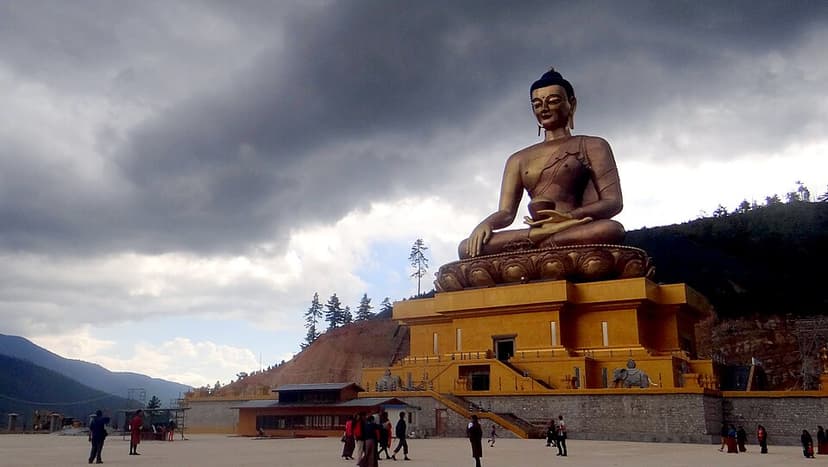
Buddha Dordenma Statue
The Great Buddha Dordenma is a colossal Shakyamuni Buddha statue located in the mountains of Bhutan, commemorating the 60th anniversary of the fourth king, Jigme Singye Wangchuck. This immense gilded bronze statue, standing 177 feet tall, houses over 125,000 smaller Buddha figures and fulfills ancient prophecies, symbolizing blessings, peace, and happiness for the world.

Laykyun Sekkya
The Laykyun Sekkya Buddha is a monumental statue located near Monywa, Sagaing Region, Myanmar. Standing at 116 meters (381 ft), it was, for a period, the world's tallest statue and remains among the tallest globally. The statue depicts a standing Gautama Buddha, symbolizing a significant representation of Buddhist art and devotion.