
Avukana Buddha Statue
The Avukana Buddha Statue is a monumental 5th to 8th-century standing Buddha carved from a single granite rock face in North Central Sri Lanka. Standing over 14 meters tall, it is renowned for its serene depiction, a variation of the Abhaya mudra, and its masterful craftsmanship, showcasing influences from Gandhara and Amaravati art schools. The statue is a significant example of ancient Sri Lankan sculpture and a popular tourist destination.
Key Facts
- ›Carved from a single large granite rock face in Avukana village, near Kekirawa, Sri Lanka.
- ›Depicts the Buddha in a standing posture, over 14 meters (46 ft) tall, with a hand raised in reassurance (Asisa mudra).
- ›Believed to have been constructed between the 5th and 8th centuries CE, with an 8th-century inscription supporting the later date.
- ›Exhibits influences from the Gandhara and Amaravati schools of art, with detailed carving of the robe.
- ›Partially attached to the rock face by a narrow strip at the back, with the background shaped to resemble a mountain.
- ›The pedestal is in the form of a lotus flower, and the statue was originally housed in a large shrine, parts of which remain.
Important Relationships
- King Dhatusena (legendary patron)
- Barana (legendary artisan)
- Sasseruwa Buddha statue
- Standing Buddha Statue Carved From A Single Granite Rock
- Asisa Mudra
- Lotus Flower Pedestal
- Detailed Carving of the Robe
- Partially Attached To Rock Face
- Shaped Background Resembling Cyclopean Masonry
Gandhara Influence, Amaravati School Influence
About Avukana Buddha Statue
The Avukana Buddha Statue is a towering, serene depiction of the Buddha located in the village of Avukana, near Kekirawa, in Sri Lanka's North Central Province. Carved from a single, massive granite rock face, this impressive sculpture stands over 14 meters (46 feet) tall and is considered one of the finest examples of a standing Buddha statue from ancient Sri Lanka.
Artistic Merit and Historical Context
The statue is renowned for its exquisite craftsmanship, showcasing influences from both the Gandhara school of art and the Amaravati School of India. The Buddha is depicted wearing a robe that clings tightly to his body, clearly outlining its form, with delicate pleats. The robe is worn over the left shoulder, leaving the right shoulder bare, a traditional convention for Buddha images in Sri Lanka. The right hand is raised in what is known as the Asisa mudra, a variation of the Abhaya mudra, signifying reassurance and protection.
Dating and Legends
While widely believed to have been created around the 5th century, a more precise dating to the 8th century is supported by a donative inscription discovered in 1951. Legends connect the statue's creation to King Dhatusena or an artisan named Barana. A notable legend describes a competition between a master sculptor and his pupil, with the master creating the Avukana statue and the pupil the similar, though unfinished, statue at Sasseruwa. Despite the charm of this legend, historical evidence suggests the Sasseruwa statue predates the Avukana Buddha image by several centuries.
Location and Modern Significance
The Avukana Buddha Statue is set within a shallow niche and faces east, gazing towards the Kala Wewa reservoir. It remains partially attached to the rock face by a narrow strip at the back for support, and the surface behind it has been shaped to resemble a mountain backdrop. The pedestal takes the form of a lotus flower. Originally housed in a substantial shrine, remnants of its stone foundation and brick walls still exist. Today, the Avukana Buddha Statue is a significant pilgrimage site for Buddhists from across Sri Lanka and a popular tourist attraction, with improvements made to the site by archaeological and civil defense authorities.
Source: Wikipedia ↗
Frequently Asked Questions
Where is the Avukana Buddha Statue located?
The Avukana Buddha Statue is located in the village of Avukana, near Kekirawa, in the North Central Province of Sri Lanka. It is carved from a granite rock face within a shallow niche.
What is the size of the Avukana Buddha Statue?
The statue of the Buddha alone is 11.84 meters (38 ft 10 in) in height. Including the pedestal, the total height of the Avukana statue reaches over 14 meters (46 ft).
When was the Avukana Buddha Statue built?
The Avukana Buddha Statue is widely believed to have been constructed in the 5th century, but scholarly opinion, supported by an 8th-century inscription, places its completion more firmly in the 8th century.
What is the artistic style of the Avukana Buddha Statue?
The statue is considered one of the best examples of a standing Buddha from ancient Sri Lanka and shows influences from the Gandhara school of art and the Amaravati School of India. The robe is depicted tightly, outlining the body, with clear pleats.
Are there any legends associated with the Avukana Buddha Statue?
A popular legend suggests the statue was created in competition with a nearby statue at Sasseruwa, with the Avukana statue being the master's work and the Sasseruwa statue the pupil's unfinished counterpart. However, historical evidence indicates the Sasseruwa statue predates the Avukana Buddha image.
What is the significance of the Buddha's hand gesture?
The Buddha's right hand is raised to his right shoulder with the palm facing left, a gesture known as the Asisa mudra. This is a variation of the Abhaya mudra, which symbolizes reassurance and protection.
Related Buddhist Temples

Samadhi Statue
The Samadhi Buddha statue, located in Mahamevnāwa Park, Anuradhapura, Sri Lanka, is a renowned sculpture depicting the Buddha in the Dhyana Mudra, the posture of meditation. Carved from dolomite marble and standing at 7 feet 3 inches, it is considered one of the finest Buddha statues in Sri Lanka, dating back to the 4th-6th century.
Buddha Dordenma Statue
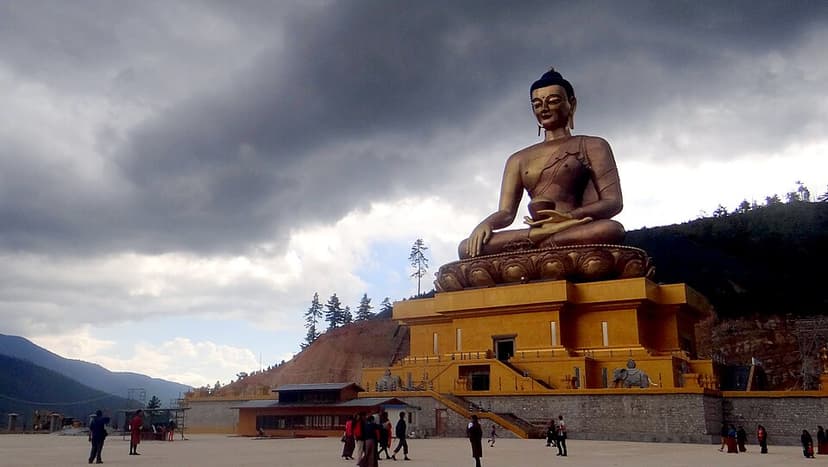
The Great Buddha Dordenma is a colossal Shakyamuni Buddha statue located in the mountains of Bhutan, commemorating the 60th anniversary of the fourth king, Jigme Singye Wangchuck. This immense gilded bronze statue, standing 177 feet tall, houses over 125,000 smaller Buddha figures and fulfills ancient prophecies, symbolizing blessings, peace, and happiness for the world.

Laykyun Sekkya
The Laykyun Sekkya Buddha is a monumental statue located near Monywa, Sagaing Region, Myanmar. Standing at 116 meters (381 ft), it was, for a period, the world's tallest statue and remains among the tallest globally. The statue depicts a standing Gautama Buddha, symbolizing a significant representation of Buddhist art and devotion.