
Longchang Temple
Temple·China·6th century·Vinaya tradition
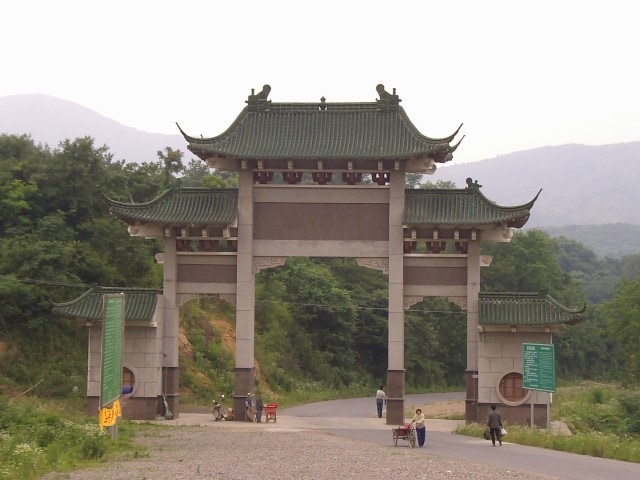
Longchang Temple, originally established as Qianhua Temple in 502 CE, is a significant Buddhist monastery located on Mount Baohua in Jiangsu, China. It holds a prominent position within the Chinese Buddhist Vinaya tradition and is distinguished by its unique Copper Hall and Beamless Halls, as well as ancient ginkgo trees.
Key Facts
- ›Founded in 502 CE by monk Baozhi as Qianhua Temple.
- ›Renamed Longchang Temple and bestowed a Chinese Buddhist canon by the Wanli Emperor of the Ming dynasty.
- ›Visited by Kangxi and Qianlong Emperors of the Qing dynasty, increasing its prestige.
- ›Features a notable Copper Hall and Beamless Halls, constructed in 1605.
- ›The Hall of Ordination, with a stone carving ordination altar designed by master Yuejian, is considered the most important hall.
- ›Designated a National Key Buddhist Temple in Han Chinese Area in 1983.
Important Relationships
- Monk Baozhi
- Wanli Emperor
- Kangxi Emperor
- Qianlong Emperor
- Master Yuejian
- Empress Dowager Xiaoding
- Baolian Temple (Hong Kong)
- Copper hall
- Beamless halls
- 400-years-old ginkgo trees
- Hall of Ordination with stone carving ordination altar
- Mahavira Hall with statue of Shijiamouni
- Renamed Huguo Shenghua Longchang Temple by the Wanli Emperor.
- Visited by Kangxi Emperor.
- Visited by Qianlong Emperor.
- Designated a national key Buddhist temple in Han Chinese area in 1983.
- Copper Hall and Beamless Halls designated as Major National Historical and Cultural Sites in Jiangsu in 2013.
- Served as a shooting location for the CCTV documentary One Hundred Buddhist Temples in China in 2015.
Chinese Buddhist
About Longchang Temple
Longchang Temple, situated on Mount Baohua in Jurong, Jiangsu, China, is a historically significant Buddhist monastery renowned for its role within the Chinese Buddhist Vinaya tradition. Originally established in 502 CE by the monk Baozhi as Qianhua Temple, it later received imperial patronage, being renamed Huguo Shenghua Longchang Temple by the Wanli Emperor of the Ming dynasty. This imperial connection was further solidified by visits from the Kangxi and Qianlong Emperors during the Qing dynasty, enhancing the temple's prestige and drawing more devotees.
Architectural Significance
The temple's architecture features several notable structures. The Copper Hall, commissioned in 1605 by Empress Dowager Xiaoding, is a striking edifice measuring 7 meters in height and housing statues of Guanyin. Adjacent to it are the Beamless Halls, also built in 1605, which are architecturally unique as they were constructed without the use of internal pillars or columns. These halls enshrine statues of Wenshu and Puxian respectively. The Hall of Ordination (Jietan Hall) is considered the temple's most important hall, distinguished by a stone carving ordination altar designed by master Yuejian in 1705.
Historical Recognition and Modern Status
Longchang Temple's importance is underscored by its designation as a National Key Buddhist Temple in Han Chinese Area in 1983. More recently, in March 2013, the Copper Hall and Beamless Halls were recognized as Major National Historical and Cultural Sites in Jiangsu by the State Council of China. The temple also holds natural beauty, being known for its ancient ginkgo trees. In 2015, it served as a filming location for the CCTV documentary "One Hundred Buddhist Temples in China."
Source: Wikipedia ↗
Frequently Asked Questions
When was Longchang Temple first built?
Longchang Temple was originally built in 502 CE during the Liang dynasty by monk Baozhi. It was initially known as Qianhua Temple.
What are the most distinctive architectural features of Longchang Temple?
The temple is renowned for its Copper Hall and its Beamless Halls, both of which were constructed in 1605. The Beamless Halls are notable for being built without the use of pillars or columns.
What is the significance of the Hall of Ordination at Longchang Temple?
The Hall of Ordination, also known as Jietan Hall, is considered the most important hall within the temple. It features a stone carving ordination altar designed in 1705 by master Yuejian.
Has Longchang Temple received any national designations?
Yes, Longchang Temple was inscribed as a National Key Buddhist Temple in Han Chinese Area in 1983. Additionally, its Copper Hall and Beamless Halls were designated as Major National Historical and Cultural Sites in Jiangsu in 2013.
What historical imperial patronage has Longchang Temple received?
During the Ming dynasty, the Wanli Emperor bestowed a set of Chinese Buddhist canon and renamed the temple. Later, during the Qing dynasty, both the Kangxi Emperor and Qianlong Emperor visited the temple to worship, which further elevated its status.
Related Buddhist Temples

Daxingguo Temple
Daxingguo Temple is a renowned Chinese Buddhist temple located in Kaifeng, Henan province, China, historically significant for its role in the development of Chinese Buddhism. It reached its zenith during the Song dynasty, serving as a royal temple, a major monastic center, and an international hub for cultural exchange, though it suffered destruction and subsequent reconstructions.

Fuyan Temple
Fuyan Temple is a significant Buddhist temple located on Mount Heng in China's Hunan province. Originally named Bore Chan Temple, its construction began in the 6th century, and it received imperial patronage and name recognition from Song Dynasty Emperor Taizong. Designated a National Key Buddhist Temple in 1983, it remains an important site for Buddhist practice and cultural heritage.

Jidu Temple
Jidu Temple is an ancient religious site located in Jiyuan, Henan province, China, constructed in 582 during the Sui dynasty. It served as a significant location for imperial sacrifices to the Immortal of the Ji River, one of the "Sidu" Immortals, with the practice continuing through successive dynasties until the Qing dynasty. The temple is recognized as one of the greatest ancient building complexes in Henan and is an Important Relic under National Protection.