
Hsi Lai Temple
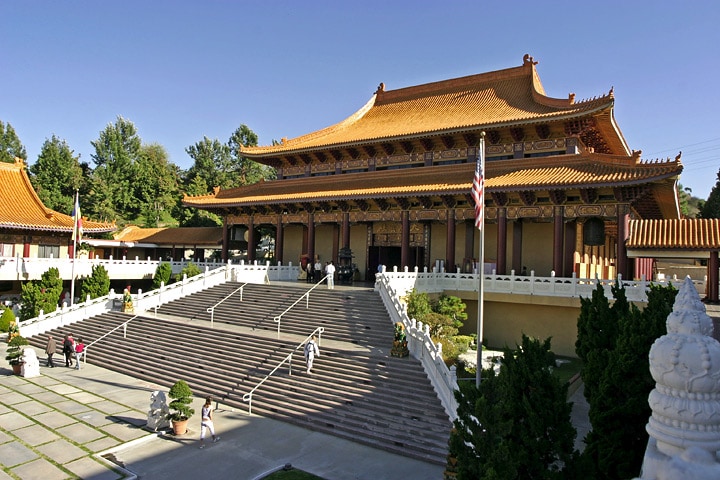
Hsi Lai Temple is a prominent mountain monastery located in Hacienda Heights, California, serving as the North American headquarters for the Fo Guang Shan Buddhist organization from Taiwan. Founded on the principles of Humanistic Buddhism, it is a significant center for religious practice, education, and cultural outreach in the West, and was the first overseas branch of its parent organization.
Key Facts
- ›Hsi Lai Temple is the first overseas branch and North American regional headquarters of the Fo Guang Shan organization, founded in Taiwan.
- ›It was officially chartered in California as the International Buddhist Progress Society and officially opened on November 26, 1988.
- ›The temple practices Humanistic Buddhism, emphasizing Buddhism's integration into daily life and society.
- ›It houses several notable shrines and gardens, including the Bodhisattva Hall, the Main Shrine with statues of Sakyamuni, Amitabha, and Bhaisajyaguru Buddhas, and the Patriarch's Shrine dedicated to its founder.
- ›Hsi Lai Temple is also associated with the University of the West, a Buddhist-affiliated institution of higher learning.
- ›The temple faced significant community resistance during its planning and construction phases in the 1980s.
Important Relationships
- Fo Guang Shan
- Master Hsing Yun
- University of the West
Bodhisattva Hall, Arhat Garden, Avalokitesvara Garden, Main Shrine, Memorial Pagoda, Meditation Hall, Patriarch’S Shrine
- Founding of Buddha's Light International Association
- 16th General Conference of the World Fellowship of Buddhists
- 7th Conference of the World Fellowship of Buddhist Youth
- International Triple Platform Full Ordination Ceremony
- Shuilu Fahui Ceremony
- Starting Location For the Amazing Race 19
- 1996 Campaign Finance Controversy
Traditional Chinese
About Hsi Lai Temple
Hsi Lai Temple is a significant mountain monastery located in Hacienda Heights, California, serving as the North American headquarters for the Fo Guang Shan Buddhist organization, which originated in Taiwan. The name "Hsi Lai" translates to "coming west," reflecting its role in bringing Buddhist teachings and practices to North America. Established as the organization's first overseas branch, Hsi Lai Temple is a central hub for Humanistic Buddhism, emphasizing the integration of Buddhist principles into everyday life and society.
History and Construction
The establishment of Hsi Lai Temple began with Master Hsing Yun's participation in America's bicentennial celebration in 1976, where he was inspired to build a monastery in the United States. The planning and construction, led by Venerable Tzu Chuang and Yi Heng, faced considerable opposition from local communities concerned about the temple's size, architectural style, and potential impact on traffic and the environment. Despite numerous public hearings and community meetings, the temple was granted a building permit in 1985, with construction concluding and the temple officially opening on November 26, 1988. Over time, negative sentiments diminished as the temple proved to be a good neighbor and community awareness grew.
Features and Activities
Hsi Lai Temple is known for its impressive architecture and numerous religious sites. These include the Bodhisattva Hall, honoring five major Bodhisattvas; the Main Shrine, which houses statues of Sakyamuni Buddha, Amitabha Buddha, and Bhaisajyaguru Buddha; the Arhat Garden depicting eighteen disciples of the Buddha; and the Avalokitesvara Garden featuring Guanyin. The temple also operates a Dining Hall serving vegetarian meals and hosts a Meditation Hall for practice. Beyond its physical structures, Hsi Lai Temple is a vibrant center for religious education, offering a wide array of retreats, classes, and Dharma services in both Mandarin and English, promoting the Humanistic Buddhism philosophy.
Educational and Cultural Outreach
Following the temple's completion, Master Hsing Yun founded Hsi Lai University in 1990, which later relocated and became the University of the West. This institution is one of sixteen Buddhist colleges operated by Fo Guang Shan and offers programs in Buddhist studies and other disciplines. Hsi Lai Temple is also home to the Fo Guang Shan International Translation Center and Buddha's Light Publishing, dedicated to translating and distributing Buddhist texts. The temple actively engages in community service and cultural events, fostering interfaith dialogue and understanding.
Notable Events and Associations
Hsi Lai Temple has hosted numerous significant events, including international ordination ceremonies and major Buddhist conferences. It gained wider public recognition when it served as the starting location for the reality television show The Amazing Race 19 in 2011. The temple was also at the center of a campaign finance controversy in 1996 involving alleged illegal political donations, which led to legal scrutiny and public discussion about the role of non-profit organizations in political activities.
Source: Wikipedia ↗
Frequently Asked Questions
What is Hsi Lai Temple and where is it located?
Hsi Lai Temple is a mountain monastery and the North American headquarters for the Fo Guang Shan Buddhist organization. It is situated in the northern Puente Hills of Hacienda Heights, Los Angeles County, California.
When was Hsi Lai Temple founded?
The planning and construction occurred throughout the 1980s, with the temple officially completed and opened on November 26, 1988. Its charter in California as the International Buddhist Progress Society predates this by some years.
What is the significance of Hsi Lai Temple within Fo Guang Shan?
Hsi Lai Temple holds significant importance as the first overseas branch of Fo Guang Shan and serves as its regional headquarters for North America. It plays a key role in spreading Humanistic Buddhism in the Western Hemisphere.
What are some of the main attractions or features of Hsi Lai Temple?
Key features include the Bodhisattva Hall honoring five Bodhisattvas, the Main Shrine housing statues of Sakyamuni, Amitabha, and Bhaisajyaguru Buddhas, the Arhat Garden depicting disciples of the Buddha, and the Avalokitesvara Garden featuring Guanyin. It also has a Memorial Pagoda and a Meditation Hall.
Does Hsi Lai Temple offer educational programs or retreats?
Yes, Hsi Lai Temple offers a wide variety of retreats and classes in English and Chinese to promote Humanistic Buddhism. These include meditation retreats, short-term monastic retreats, and extended cultivation programs.
Has Hsi Lai Temple been involved in any controversies?
Hsi Lai Temple was involved in a campaign finance controversy during the 1996 United States presidential election, concerning alleged illegal political contributions. This led to legal proceedings and the resignation of its abbess at the time.
Related Buddhist Temples

Guang Ming Temple
The Guang Ming Temple, located in Orlando, Florida, is the largest Buddhist temple in Central Florida. Completed in 2007, this three-story, 30,000-square-foot structure is built in a traditional Chinese-monastic style and is affiliated with the Fo Guang Shan monastic organization from Taiwan. It serves as a significant center for Buddhist practice and community in the region.

Chung Tian Temple
Chung Tian Temple is a Chan Buddhist temple located in Priestdale, Queensland, Australia, and is part of the Fo Guang Shan monastic order. Founded by Venerable Master Hsing Yun, it serves as a peaceful and culturally diverse venue promoting Humanistic Buddhism, multiculturalism, and multi-faith harmony.
Fo Guang Shan Temple, Tawau
Fo Guang Shan Temple Tawau is a Buddhist temple situated in Tawau, Sabah, Malaysia. It functions as one of the international branches of the Fo Guang Shan Buddhist organization, which is headquartered in Taiwan. The temple serves as a place of worship and community engagement for Buddhists in the region.