
Chorten Kora
Chorten Kora is a significant stupa located in Trashi Yangtse, East Bhutan, by the Khorlo-Chu River. Constructed in 1740 by Lama Ngawang Lodrö, it was built in memory of his uncle and to subdue a demon believed to inhabit the site. The stupa is modeled after the Boudhanath stupa in Nepal and is a focal point for annual festivals.
Key Facts
- ›Built in 1740 by Lama Ngawang Lodrö.
- ›Modeled after the Boudhanath stupa in Nepal.
- ›Took twelve years to construct.
- ›Consecrated by Je Yonten Thaye.
- ›Features annual Dakpa Kora and Drukpa Kora festivals.
- ›Associated with a legend of a Dakini princess entombed within.

Important Relationships
- Zhabdrung Ngawang Namgyal (uncle of founder)
- Lam Jangchub Gyeltshen (honored by founder)
- Lama Ngawang Lodrö (founder)
- Je Yonten Thaye (consecrator)
- Boudhanath stupa (model)
Modeled After Boudhanath Stupa, Legend of Entombed Dakini Princess
Construction Completed In 1752 ., Consecration By Je Yonten Thaye., Subduing of A Harmful Demon., Annual Dakpa Kora Festival., Annual Drukpa Kora Festival.
Nepalese Style
About Chorten Kora
Chorten Kora is a significant Buddhist stupa located in Trashi Yangtse, in East Bhutan, situated next to the Khorlo-Chu River. The construction of this impressive monument was completed in 1740 under the patronage of Lama Ngawang Lodrö, who was the nephew of the revered Zhabdrung Ngawang Namgyal and the third abbot of Rigsum Goenpa. The stupa was erected with a dual purpose: to commemorate his late uncle, Lam Jangchub Gyeltshen, and to pacify a malevolent demon believed to reside at the chosen site. The architectural design of Chorten Kora draws inspiration from the renowned Boudhanath stupa in Nepal, famously known as Jarung Khashor, and a similar structure can be found in Zemithang, Tawang, called Gorsam Chorten.
History and Construction
The construction of Chorten Kora spanned twelve years, culminating in its consecration by Je Yonten Thaye. Following its completion, it is believed that the demon that had caused distress to the local populace was successfully subdued and banished, leading to a period of peace and harmony for the valley's inhabitants. This act of spiritual intervention solidified the stupa's importance as a protective and benevolent landmark.
Festivals and Legends
Chorten Kora is a focal point for significant annual festivals that draw devotees from both Bhutan and neighboring regions. The Dakpa Kora, a ritualistic circumambulation performed by the Dakpa people from India's Tawang District, takes place on the 15th of the first lunar month. This is followed by the Drukpa Kora, a similar circumambulation by Bhutanese people from various districts, held at the end of the same month, both celebrating the stupa's spiritual presence.
A popular legend associated with Chorten Kora tells of a devout Dakini princess from Arunachal Pradesh, India, who is said to have entombed herself within the stupa. Her purpose was to meditate as the Yeshe Semba, dedicating her spiritual practice for the benefit of all sentient beings. This legend has captured the imagination and is the subject of a Bhutanese film also titled "Chorten Kora."
Source: Wikipedia ↗
Frequently Asked Questions
When was Chorten Kora built?
Chorten Kora was built in 1740. The construction took twelve years to complete.
Who built Chorten Kora?
The stupa was built by Lama Ngawang Lodrö, who was the nephew of Zhabdrung Ngawang Namgyal and the 3rd abbot of Rigsum Goenpa.
What is the purpose of Chorten Kora?
It was built in memory of Lama Ngawang Lodrö's late uncle, Lam Jangchub Gyeltshen, and to subdue a harmful demon believed to have been living at the site.
What festivals are held at Chorten Kora?
Annual festivals include Dakpa Kora, a circumambulation by the Dakpa people, held on the 15th of the first lunar month, and Drukpa Kora, a circumambulation by Bhutanese, held at the end of the first lunar month.
What is the architectural inspiration for Chorten Kora?
Chorten Kora is modeled after the famous Boudhanath stupa in Nepal, also known as Jarung Khashor. A similar stupa can be found at Zemithang in Tawang.
Related Buddhist Temples

Chendebji Chorten
Chendebji Chorten is an 18th-century stupa located in Bhutan, west of Trongsa. It is constructed in the style of Nepalese stupas and is said to cover the body of an evil spirit, built to repel a demon named Ngala.
Yongla Goenpa
Yongla Goenpa is a Nyingma Buddhist monastery situated atop a mountain in Pema Gatshel, Bhutan, visible from the national highway. It holds significance for its legendary founding by Kheydrup Jigme Kundel in the 18th century, following instructions from Jigme Lingpa to find a site resembling a ritual dagger, and its annual Phurpai Drubchen festival.
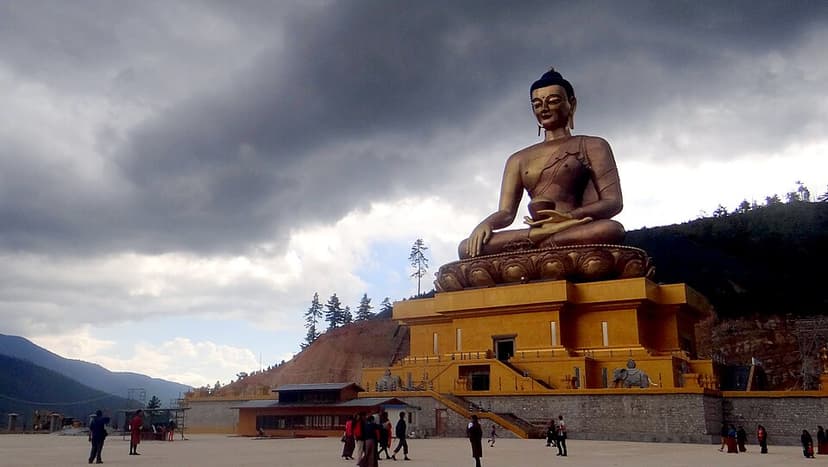
Buddha Dordenma Statue
The Great Buddha Dordenma is a colossal Shakyamuni Buddha statue located in the mountains of Bhutan, commemorating the 60th anniversary of the fourth king, Jigme Singye Wangchuck. This immense gilded bronze statue, standing 177 feet tall, houses over 125,000 smaller Buddha figures and fulfills ancient prophecies, symbolizing blessings, peace, and happiness for the world.