
Ancient Kadurugoda Viharaya
Ancient Kadurugoda Viharaya is a significant historical site in Chunnakam, Sri Lanka, representing ancient Buddhist remains in the Jaffna Peninsula. Its history is linked to the Anuradhapura era, with legends suggesting it was a stopping point for Theri Sangamitta and later the burial site for 60 Arhat Bhikkus.
Key Facts
- ›The site is considered one of the ancient Buddhist remains in the Jaffna Peninsula.
- ›Historical accounts suggest its importance during the Anuradhapura era, possibly visited by Theri Sangamitta.
- ›An inscription from the reign of King Dappula IV (923-935 A.D.) found at the site indicates bequests to a Buddhist place of worship.
- ›The temple is mentioned in the 15th-century 'Nampotha' as Kadurugoda Viharaya of Demalapattanama.
- ›Excavations in 1917 uncovered ruins including a shrine room, colored tiles, Buddha statue parts, and ancient coins.
- ›The site features approximately 20 stupas made of gray coral stone with unique patterns and umbrella-shaped pinnacles.

Important Relationships
- King Devanpiya Thissa
- Theri Sangamitta
- King Dappula IV
- King Sangili
- Paul E. Pieris
Approximately 20 Stupas, Stupa Foundations, Unique Stupa Design With Small Holes, Umbrella-Shaped Fixed Pinnacles On Stupas, Shrine Room Ruins, Colored Tiles, Parts of Buddha and Bodhisattva Statues, Buddha Foot Imprints, Guard Stone With Punkalasa, Ancient Coins, Stone Pillar Inscription
- Possible Visit By Theri Sangamitta During the Anuradhapura Era.
- Behests Made To the Temple Recorded In An Inscription From the Reign of King Dappula Iv.
- Mentioned In the 15th-Century 'Nampotha'.
- Legendary Death of 60 Arhat Bhikkus Due To Poisoned Food Or Famine, With Stupas Built To Enshrine Relics.
- Archaeological Excavations In 1917 Led By Paul E. Pieris.
About Ancient Kadurugoda Viharaya
Ancient Kadurugoda Viharaya is an important historical and archaeological site located in Kandarodai village, Chunnakam, Sri Lanka. It is recognized as one of the extant ancient Buddhist remains on the Jaffna Peninsula, offering a glimpse into the region's historical Buddhist presence.
History and Legends
The history of Kadurugoda Viharaya is believed to stretch back to the Anuradhapura era. According to tradition, it was a place visited by Theri Sangamitta upon her arrival in Sri Lanka with a sapling of the sacred Sri Maha Bodhi, on her journey to Anuradhapura. An inscribed stone pillar discovered at the site, dating from the reign of King Dappula IV (923-935 A.D.), records a royal proclamation concerning gifts and benefits bestowed upon a Buddhist place of worship, further attesting to its historical significance.
The temple is also noted in the 'Nampotha', a text compiled in the 15th century, where it is referred to as Kadurugoda Viharaya of Demalapattanama. Folklores associated with the site tell of 60 Arhat Bhikkus who practiced meditation in the area. One legend suggests that these monks died in the 16th century after consuming poisoned mushroom curry, and the stupas were erected to house their relics. Another account attributes their demise to a prolonged famine.
Archaeological Findings and Features
Excavations conducted in 1917 by Paul E. Pieris brought to light numerous Buddhist ruins, identified as the ancient Kadurugoda Vihara. Initially, around 56 stupas were reported, though currently, only about 20 are visible. The ruins also include remnants of a shrine room, colored tiles, fragments of Buddha and Bodhisattva statues, Buddha foot imprints, a guard stone with a Punkalasa motif, and ancient coins from various ruling periods. Some of these artifacts are preserved at the Jaffna Archaeological Museum.
The stupas themselves possess distinctive characteristics not found elsewhere in Sri Lanka. Constructed from gray coral stone, they are adorned with small holes and feature a unique design without the conventional square sections above the dome, instead sporting umbrella-shaped fixed pinnacles. The smallest stupa is approximately 8 feet in diameter, while the largest measures about 23.5 feet.
Preservation and Current Status
Efforts to preserve the site began in 1948 when the archaeology department acquired seven acres. However, due to land occupation, the protected area was reduced to about three acres by 1965 and has since diminished further to less than one acre. Currently, Ancient Kadurugoda Viharaya is officially designated as an archaeological site in Sri Lanka and is maintained by the Sri Lankan army.
Source: Wikipedia ↗
Frequently Asked Questions
What is the historical significance of Ancient Kadurugoda Viharaya?
Ancient Kadurugoda Viharaya is considered one of the ancient Buddhist remains in the Jaffna Peninsula. Its history is believed to date back to the Anuradhapura era, making it a site of considerable historical importance.
What are the unique features of the stupas at Kadurugoda Viharaya?
The stupas at Kadurugoda Viharaya are made of gray coral stone and have a distinctive pattern with small holes. Uniquely, they lack the standard square parts above the dome and instead feature umbrella-shaped fixed pinnacles.
What legends are associated with Kadurugoda Viharaya?
One legend states that 60 Arhat Bhikkus died in the 16th century after consuming poisoned mushroom curry in the area, and the stupas were built to enshrine their relics. Another story attributes their deaths to a prolonged famine.
What archaeological discoveries have been made at Kadurugoda Viharaya?
Excavations have revealed ruins of a shrine room, colored tiles, parts of Buddha and Bodhisattva statues, Buddha foot imprints, and ancient coins. A stone pillar inscription from the reign of King Dappula IV has also been found.
What is the current status of Ancient Kadurugoda Viharaya?
Ancient Kadurugoda Viharaya has been declared an archaeological site and is maintained by the Sri Lankan army. While originally larger, the preserved area is now less than one acre due to land occupation.
Related Buddhist Temples

Abhayathilakarathnaramaya
Abhayathilakarathnaramaya, also known as Kuruvita Purana Vihara, is an ancient Buddhist temple situated in Kuruwita, Sri Lanka. It holds significance as a formally recognized archaeological site by the Sri Lankan government, highlighting its historical and cultural importance.

Aluthepola Ganekanda Raja Maha Vihara
Aluthepola Ganekanda Raja Maha Vihara, also known as Aluthepola Vihara, is an ancient Buddhist temple situated in Minuwangoda, Sri Lanka. Local folklore suggests it was a sanctuary for King Valagamba during a period of Dravidian rule in Anuradhapura, highlighting its historical significance. The temple has been officially recognized as an archaeological site by the Sri Lankan government.
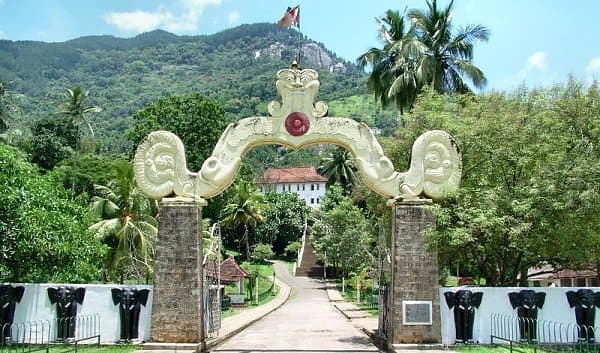
Aluvihare Rock Temple
The Aluvihare Rock Temple, also known as Matale Alu Viharaya, is a significant Buddhist temple in Sri Lanka's Matale District. It holds historical importance as the site where the Pāli Canon was first transcribed onto palm leaves, preserving Buddhist scriptures during times of upheaval. The temple complex features numerous monastery caves, some adorned with ancient inscriptions, frescoes, and Buddha statues, making it a place of both historical preservation and religious devotion.