
St Patrick's Old Cathedral
United States·New York City·Archdiocese of New York
The Basilica of Saint Patrick's Old Cathedral is a historic Catholic parish church and former cathedral located in the Nolita neighborhood of Lower Manhattan, New York City. Designed by Joseph-François Mangin, it served as the seat of the Archdiocese of New York from its completion in 1815 until 1879. Recognized as a New York City landmark and listed on the National Register of Historic Places, it was elevated to the status of a minor basilica in 2010.
Key Facts
- ›Construction of the basilica began in 1809 and was completed in 1815, making it the largest church in New York City upon its dedication.
- ›It served as the cathedral for the Archdiocese of New York until the current St. Patrick's Cathedral in Midtown Manhattan was completed in 1879.
- ›The church building was designated a New York City landmark in 1966 and added to the National Register of Historic Places in 1977.
- ›Pope Benedict XVI declared it a minor basilica on March 17, 2010.
- ›The basilica houses the catacombs, which include family crypts and clerical vaults, and are open for tours and new interments.
- ›It features a significant pipe organ built by Henry Erben in 1868, recognized for its historical merit.
Gothic Revival
Joseph-FrançOis Mangin
About St Patrick's Old Cathedral
Basilica of Saint Patrick's Old Cathedral
The Basilica of Saint Patrick's Old Cathedral, often referred to as St. Patrick's Old Cathedral or Old St. Patrick's, stands as a significant Catholic parish church in the Nolita neighborhood of Lower Manhattan, New York City. Originally built between 1809 and 1815 and designed by Joseph-François Mangin in the Gothic Revival style, it held the distinction of being the seat of the Archdiocese of New York.
History and Significance
Its construction was a response to the growing Catholic population in early 19th-century New York, fulfilling the need for a second sanctuary and a cathedral for the city's first bishop. Upon its dedication in 1815, it was the largest church in the city. It served as the archdiocesan cathedral until the new St. Patrick's Cathedral in Midtown Manhattan opened its doors in 1879. The church's historical importance is further underscored by its designation as a New York City landmark in 1966 and its inclusion on the National Register of Historic Places in 1977. On Saint Patrick's Day, March 17, 2010, Pope Benedict XVI officially declared it a minor basilica.
Architectural Features and Notable Aspects
The basilica's exterior dimensions measure 120 by 80 feet, with an inner vault height of 85 feet. The church has been the site of significant historical events, including an attempted sack during anti-Catholic riots in 1836 and a fire in 1866 that necessitated its restoration. An important feature within the basilica is the large pipe organ built by Henry Erben in 1868, which has been recognized for its exceptional historical merit. The complex also includes catacombs beneath the basilica, containing 35 family crypts and 5 clerical vaults, which are open to the public for tours and new interments.
Current Role
Since becoming a parish church after the new cathedral's opening, St. Patrick's Old Cathedral continues to serve a vibrant, multi-ethnic community. It celebrates liturgies in English, Italian, Spanish, and Chinese, reflecting the diverse congregation it serves today. The parish has merged with Most Precious Blood parish, sharing priests and administrative functions, ensuring its ongoing spiritual and community presence in Lower Manhattan.
Source: Wikipedia ↗
Frequently Asked Questions
When was St. Patrick's Old Cathedral built?
Construction of St. Patrick's Old Cathedral began in 1809 and was completed, with the sanctuary being dedicated on May 14, 1815. It took just under six years to build.
What was the historical significance of St. Patrick's Old Cathedral?
It was the first Catholic parish church in New York City to also serve as a cathedral, being the seat of the first bishop of New York. It was the largest church in the city upon its completion and was the ending place of New York's annual St. Patrick's Day parade until 1830.
Has the basilica undergone significant events or damage?
Yes, in 1836, the cathedral was the subject of an attempted sack during anti-Catholic riots. It was also gutted by a fire that spread from a nearby shop on October 7, 1866, but was subsequently restored.
What notable features or items are found within St. Patrick's Old Cathedral?
The basilica contains catacombs with family crypts and clerical vaults, which are open for tours and interments. It also houses a historic pipe organ built by Henry Erben in 1868, recognized for its exceptional historical merit.
What is the current status of St. Patrick's Old Cathedral?
St. Patrick's Old Cathedral is currently an active Catholic parish church. It merged with Most Precious Blood parish and celebrates liturgies in multiple languages, including English, Italian, Spanish, and Chinese.
Who designed St. Patrick's Old Cathedral?
The basilica was designed by Joseph-François Mangin, who also co-designed New York's City Hall. The architectural style is Gothic Revival.
Related Basilicas

St Patrick's Basilica
Saint Patrick's Basilica is a Roman Catholic minor basilica located in Montreal, Quebec, Canada. It is distinguished as the oldest English-speaking Roman Catholic church in Montreal and was elevated to the status of a minor basilica by Pope John Paul II in 1988. The basilica is architecturally significant for its Gothic Revival style and its historical ties to the Irish Canadian community.
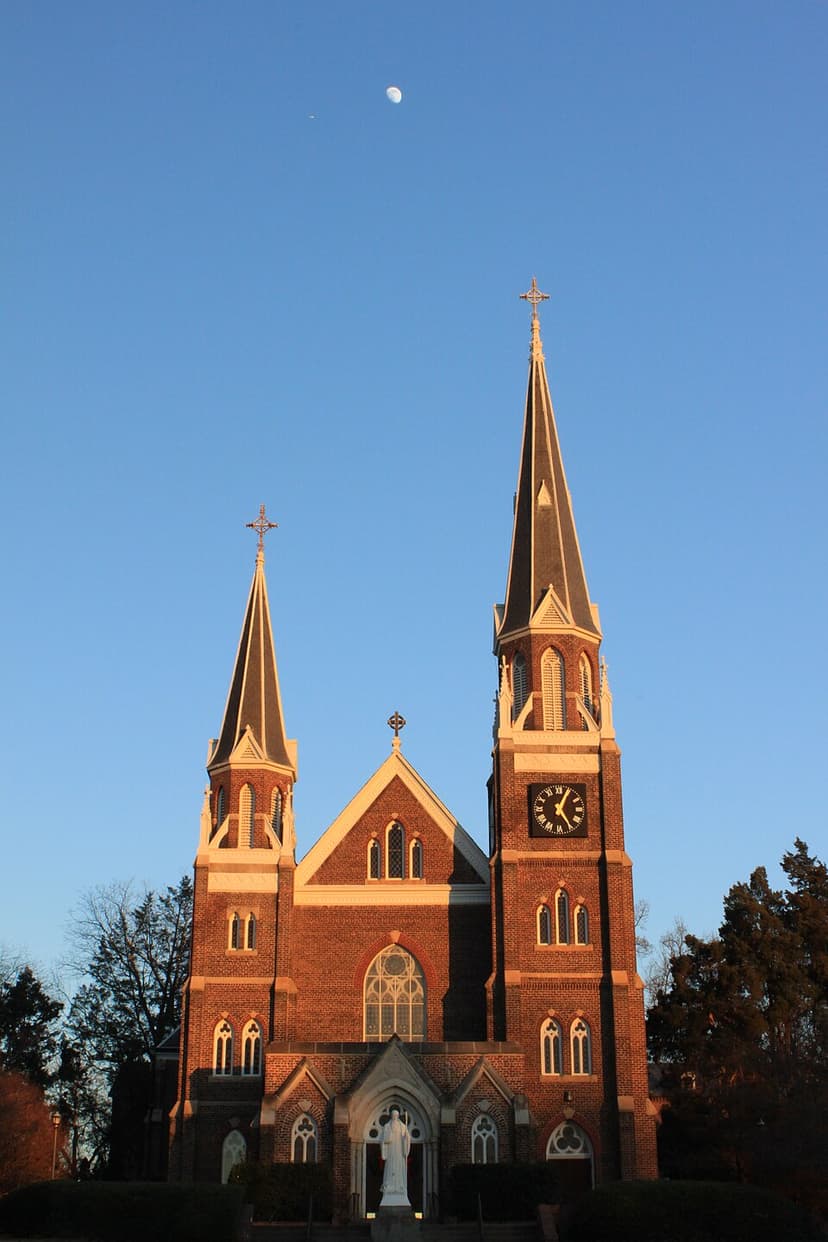
Abbey Basilica of Our Lady Help of Christians (Belmont Abbey)
The Abbey Basilica of Our Lady Help of Christians, located at Belmont Abbey in North Carolina, is a significant Catholic religious site. Originally established as a monastery and educational institution, it was elevated to the status of an abbey and later designated as a minor basilica. The basilica is notable for its Gothic Revival architecture and its historical role in education and religious administration in the region.
Basilica and National Shrine of Our Lady of Lebanon
The Basilica and National Shrine of Our Lady of Lebanon is a minor basilica of the Maronite Catholic Church situated in North Jackson, Ohio. It serves as a significant spiritual center for Maronites in the United States, mirroring the original shrine in Harissa, Lebanon. The basilica was dedicated in 1965 and later elevated to minor basilica status by Pope Francis in 2014.