
Shrine Basilica of Our Lady of Las Lajas
Colombia·Ipiales·Ipiales
The Shrine Basilica of Our Lady of Las Lajas is a Catholic minor basilica situated in a dramatic canyon setting along the Guáitara River in Ipiales, Colombia. It is a significant Marian shrine, drawing pilgrims from Colombia and Ecuador, and is renowned for its neo-gothic architecture and legends of a miraculous apparition of the Virgin Mary. The image of the Madonna and Child on the rock wall is believed by believers to be of divine origin.
Key Facts
- ›The current neo-gothic basilica was constructed between 1916 and 1949.
- ›The shrine is dedicated to the Blessed Virgin Mary as our Lady of the Rosary.
- ›Popular belief attributes the origin of the shrine to a Marian apparition in 1754 to Maria Mueses de Quiñones and her deaf-mute daughter Rosa.
- ›The basilica is built into the canyon wall and connected to the opposite side by a tall bridge.
- ›Pope Pius XII granted a pontifical decree of coronation to the image in 1951 and elevated the shrine to minor basilica status in 1954.
- ›It is a major pilgrimage site, particularly popular with visitors from Colombia and neighboring Ecuador.
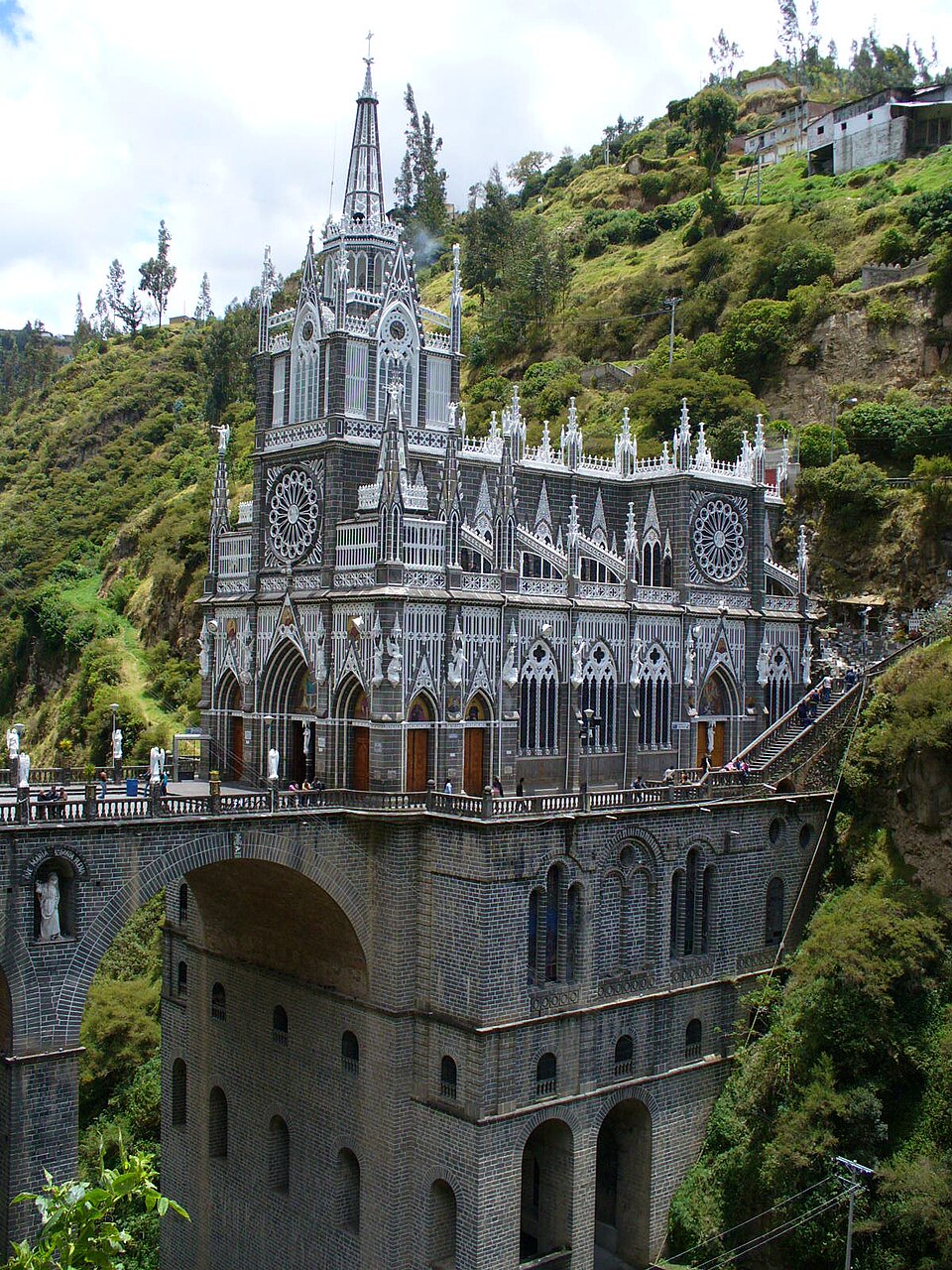
Neo-Gothic
Image of the Madonna and Child On A Rock Wall
Lucindo Maria Espinosa Medina
About Shrine Basilica of Our Lady of Las Lajas
The Sanctuary of Las Lajas
The Sanctuary of Las Lajas, officially known as the Sanctuary of Our Lady of the Holy Rosary of Las Lajas, is a significant Catholic minor basilica nestled within the dramatic canyon of the Guáitara River in Ipiales, Nariño Department, Colombia. This Marian shrine is dedicated to the Blessed Virgin Mary under the title of Our Lady of the Rosary and is celebrated for its striking neo-gothic architecture and its deep spiritual resonance.
History and Legends
The inspiration for the current basilica stems from pious believers' accounts of a miraculous event around 1754. Legend holds that Amerindian Maria Mueses de Quiñones and her deaf-mute daughter, Rosa, sought refuge from a fierce storm between large stone slabs, known as 'lajas.' During this time, Rosa reportedly exclaimed that 'the Mestiza is calling me' and pointed to a silhouette illuminated by lightning on the rock. This purported apparition of the Virgin Mary is believed to have initiated popular pilgrimages to the site, accompanied by reports of miraculous healings.
An image of the Madonna and Child appeared on the rock wall, which believers claim is of divine origin and formed without human intervention. Historical records indicate the existence of a shrine at this location as early as the mid-18th century, with initial structures made of straw and wood. This was later replaced by a brick chapel in the late 18th century, and a larger shrine was built in 1802, eventually being extended and connected to the opposite side of the canyon by a bridge in the 19th century.
Construction and Designation
The current magnificent church was constructed between 1916 and 1949, financed by donations from local churchgoers. The basilica rises an impressive 100 meters (330 feet) from the canyon floor and is spanned by a 50-meter (160-foot) high bridge connecting it to the opposite cliff face. The architect responsible for this remarkable structure was Lucindo Maria Espinosa Medina.
In recognition of its spiritual importance, Pope Pius XII granted a Pontifical Decree of coronation to the image on May 31, 1951, bestowing upon it the title Sancta Virgo de Rupe (Holy Virgin of the Rock). Subsequently, on August 30, 1954, the Holy Father elevated the Marian shrine to the status of a Minor Basilica through his decree Templum per Decorum. Further honoring the site, Pope Paul VI declared the Virgin of the Holy Rosary as the Patroness of Ipiales on April 26, 1965.
Pilgrimage Site
The Sanctuary of Las Lajas is a highly popular pilgrimage destination, attracting Christians from both Colombia and neighboring Ecuador. Its proximity to the Ecuadorian border makes it a convenient and significant site for cross-border religious tourism. It is considered one of the most important pilgrimage sites in Colombia.
Source: Wikipedia ↗
Frequently Asked Questions
What is the Shrine Basilica of Our Lady of Las Lajas?
The Shrine Basilica of Our Lady of Las Lajas is a Catholic minor basilica located in Ipiales, Colombia. It is a significant Marian shrine dedicated to the Blessed Virgin Mary and is a popular pilgrimage destination.
What is the legend behind the Shrine of Las Lajas?
According to pious legend, the Virgin Mary appeared in 1754 to a woman named Maria Mueses de Quiñones and her deaf-mute daughter, Rosa, who were seeking refuge from a storm in a canyon. An image of the Virgin Mary is said to have appeared on the rock wall, and later, Rosa was miraculously revived after her death.
What architectural style is the Shrine Basilica of Our Lady of Las Lajas?
The current church was built in a neo-gothic architectural style. It rises dramatically from the canyon floor and is connected by a tall bridge to the opposite side of the canyon.
When was the Shrine Basilica of Our Lady of Las Lajas designated as a basilica?
Pope Pius XII elevated the Marian shrine to the status of a Minor Basilica on August 30, 1954, via his decree Templum per Decorum.
Why is the Shrine of Las Lajas called 'Las Lajas'?
The name 'Laja' is Spanish for a flagstone, referring to a type of flat sedimentary rock. The shrine is built within a canyon featuring these large stone slabs.
Who was the architect of the Shrine Basilica of Our Lady of Las Lajas?
The architect of the current church was Lucindo Maria Espinosa Medina.
Related Basilicas

Basilica of Our Lady of the Most Holy Rosary
The Minor Basilica of Our Lady of the Most Holy Rosary of Angeles, also known as Pisamban Maragul, is a significant Roman Catholic minor basilica located in Angeles City, Philippines. It is dedicated to Our Lady of the Rosary and houses a venerated corpse statue of Christ called Apung Mamacalulu. Recognized as a national historical site, the basilica plays a crucial role in local religious and cultural life, particularly during significant liturgical events.

Basilica of Our Lady of the Rosary of Manaoag
The Minor Basilica of Our Lady of the Rosary of Manaoag, also known as Manaoag Church, is a prominent Roman Catholic minor basilica located in Manaoag, Pangasinan, Philippines. It is a significant pilgrimage site, dedicated to the Blessed Virgin Mary under the title of Our Lady of the Rosary, and is known for the veneration of Our Lady of Manaoag. The shrine holds a special spiritual affinity with the Basilica of Saint Mary the Great in Rome and was elevated to the status of a Minor Basilica by Pope Francis in 2014.

Cathedral Basilica of Our Lady of the Rosary
The Cathedral Basilica of Our Lady of the Rosary, also known as Culiacán Cathedral, is the principal Catholic church and seat of the Diocese of Culiacán in Mexico. Its construction spanned several decades in the 19th century, resulting in a predominantly Neoclassical architectural style with some 19th-century eclectic influences.