
Cathedral Basilica of Our Lady of the Rosary
Mexico·Culiacán·Culiacán
The Cathedral Basilica of Our Lady of the Rosary, also known as Culiacán Cathedral, is the principal Catholic church and seat of the Diocese of Culiacán in Mexico. Its construction spanned several decades in the 19th century, resulting in a predominantly Neoclassical architectural style with some 19th-century eclectic influences.
Key Facts
- ›Construction was authorized in 1842 by Bishop Lázaro de la Garza y Ballesteros.
- ›Work was interrupted multiple times due to various issues, including the Reform Movement.
- ›Construction was restarted in 1855 and finally completed in 1885.
- ›The cathedral's architectural style is primarily Neoclassical with eclectic elements.
- ›It serves as the headquarters for the Diocese of Culiacán, Mexico.

Neoclassical, Eclectic
About Cathedral Basilica of Our Lady of the Rosary
The Cathedral Basilica of Our Lady of the Rosary, also widely recognized as Culiacán Cathedral, stands as the principal seat of the Roman Catholic Diocese of Culiacán in Mexico. Its construction history is marked by a lengthy and interrupted process throughout the 19th century.
Construction and Architectural Style
The foundation for the church was laid on May 22, 1842, with authorization from Lázaro de la Garza y Ballesteros, the seventh bishop of Sonora and Sinaloa. However, construction faced significant delays and interruptions, notably due to the Reform Movement in Mexico. Work was resumed in 1855 under the direction of Pedro Loza y Pardavé, and the building was ultimately completed in 1885 under the supervision of José de Jesús Uriarte. Architecturally, the basilica is distinguished by its predominantly Neoclassical design, complemented by eclectic elements characteristic of 19th-century styles.
Source: Wikipedia ↗
Frequently Asked Questions
When was the construction of the Cathedral Basilica of Our Lady of the Rosary authorized?
The construction of the church was authorized on May 22, 1842, by Lázaro de la Garza y Ballesteros, who was the seventh bishop of Sonora and Sinaloa at the time.
What are the main architectural styles of the Culiacán Cathedral?
The cathedral is characterized by predominantly Neoclassical elements. It also incorporates certain eclectic elements from the 19th century, reflecting the period of its construction.
Why did the construction of the basilica take so long?
The construction process was lengthy and faced several interruptions. Work was restarted after initial authorization but was halted again due to the Reform Movement before its final completion in 1885.
Who is credited with completing the construction of the cathedral?
The building's construction was finally completed in 1885 by José de Jesús Uriarte.
Related Basilicas

Basilica of Our Lady of the Most Holy Rosary
The Minor Basilica of Our Lady of the Most Holy Rosary of Angeles, also known as Pisamban Maragul, is a significant Roman Catholic minor basilica located in Angeles City, Philippines. It is dedicated to Our Lady of the Rosary and houses a venerated corpse statue of Christ called Apung Mamacalulu. Recognized as a national historical site, the basilica plays a crucial role in local religious and cultural life, particularly during significant liturgical events.

Basilica of Our Lady of the Rosary of Manaoag
The Minor Basilica of Our Lady of the Rosary of Manaoag, also known as Manaoag Church, is a prominent Roman Catholic minor basilica located in Manaoag, Pangasinan, Philippines. It is a significant pilgrimage site, dedicated to the Blessed Virgin Mary under the title of Our Lady of the Rosary, and is known for the veneration of Our Lady of Manaoag. The shrine holds a special spiritual affinity with the Basilica of Saint Mary the Great in Rome and was elevated to the status of a Minor Basilica by Pope Francis in 2014.
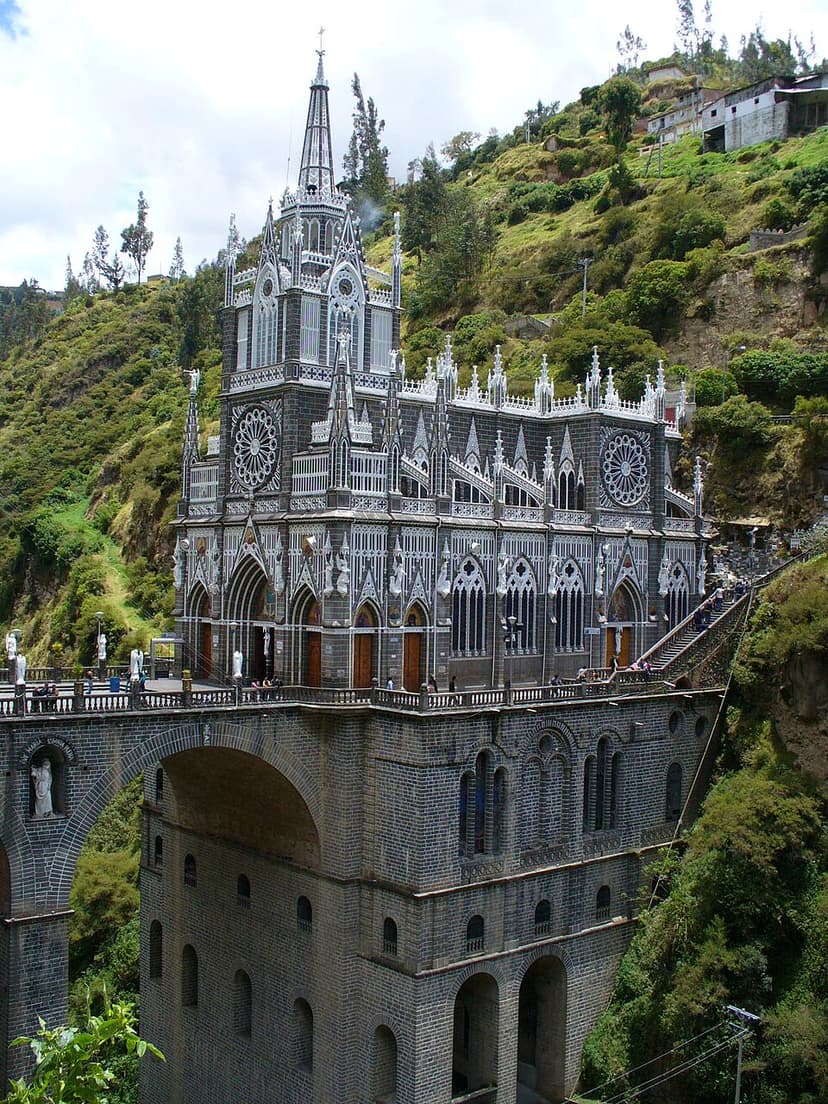
Shrine Basilica of Our Lady of Las Lajas
The Shrine Basilica of Our Lady of Las Lajas is a Catholic minor basilica situated in a dramatic canyon setting along the Guáitara River in Ipiales, Colombia. It is a significant Marian shrine, drawing pilgrims from Colombia and Ecuador, and is renowned for its neo-gothic architecture and legends of a miraculous apparition of the Virgin Mary. The image of the Madonna and Child on the rock wall is believed by believers to be of divine origin.