
Our Lady of Scherpenheuvel Basilica
Belgium·Scherpenheuvel-Zichem·Archdiocese of Mechelen–Brussels
The Basilica of Our Lady of Scherpenheuvel is a significant Roman Catholic pilgrimage shrine located in Scherpenheuvel-Zichem, Belgium. It is renowned as Belgium's most frequently visited pilgrimage site, drawing crowds due to its historical Marian cult, impressive architecture, and association with numerous reported miracles.
Key Facts
- ›The basilica is reputedly the most frequently visited pilgrimage shrine in Belgium.
- ›Its current architectural form and importance are largely attributed to the patronage of Archdukes Albert and Isabella and the Counter-Reformation.
- ›The church was consecrated in 1627 and elevated to the status of a minor basilica in 1922.
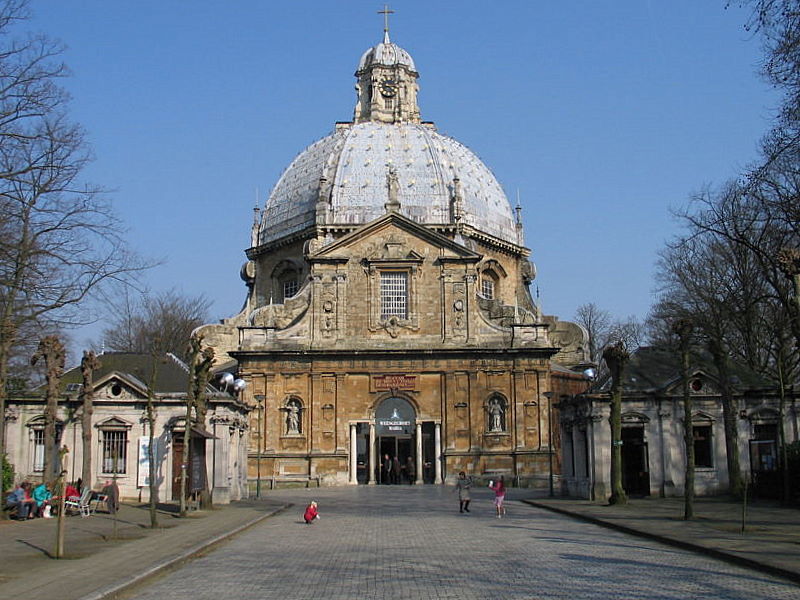
- ›The design, attributed to Wenceslas Cobergher, is a central, domed structure resting on seven columns, with a heptagonal layout mirroring the town.
- ›The iconographical program heavily features the number seven, referencing the seven Sorrows of the Virgin and symbolizing unity during a time of religious and political division.
- ›The cult of our Lady of Scherpenheuvel spread widely through distributed images made from wood of the original oak tree.
Baroque
Our Lady of Scherpenheuvel
Statue of the Virgin Mary
Oratorians
Wenceslas Cobergher
About Our Lady of Scherpenheuvel Basilica
The Basilica of Our Lady of Scherpenheuvel
The Basilica of Our Lady of Scherpenheuvel, also known as Basiliek van Onze-Lieve-Vrouw van Scherpenheuvel in Dutch and Basilique de Notre Dame de Montaigu in French, is a prominent Roman Catholic parish church and minor basilica situated in Scherpenheuvel-Zichem, Belgium. It holds the distinction of being reputedly the most frequently visited shrine of pilgrimage in Belgium, drawing numerous faithful seeking spiritual solace and veneration.
Origins and Development
The Marian cult at Scherpenheuvel has ancient roots, originally centered around a small statue of the Virgin Mary displayed in an oak tree atop the hill. A foundational legend recounts a shepherd's discovery of the statue's miraculous properties. The site gained significant attention in the latter half of the sixteenth century, particularly among the inhabitants of the nearby town of Zichem, who frequented it during times of illness. Despite periods of disruption, such as the removal of the statue during the Dutch Revolt, the cult was restored and began to expand, aided by soldiers and almoners stationed in the region.
Official approbation of the cult came in 1604 from Mathias Hovius, Archbishop of Mechelen, coinciding with the publication of miracle accounts attributed to the Virgin of Scherpenheuvel. The growing devotion necessitated the construction of a chapel, initially wooden and then stone, with the foundation stone laid in 1603. The Archdukes Albert and Isabella became significant patrons, making annual pilgrimages and supporting the shrine's elevation to town status in 1605 and an independent parish in 1610. Their patronage culminated in the decision to build a grand new church, the foundation stone of which was laid by them in 1609.
Architecture and Iconography
The present church, designed by the archducal architect Wenceslas Cobergher, was consecrated in 1627. The basilica is characterized by its central, domed structure resting on seven columns, with its layout determined by a heptagonal shape, mirroring the planned town. The main altar is situated on the original site of the oak tree. A striking feature of the exterior is the dome's surface, adorned with hundreds of seven-pointed gilded stars. The church's design bears a resemblance to the later Basilica of Santa Maria della Salute in Venice.
The interior is rich with artwork by Theodoor van Loon and statuary by the de Nole sculptors. The iconographical program is particularly elaborate, with the repeated emphasis on the number seven symbolizing the Seven Sorrows of the Virgin and harkening back to a period of desired political and religious unity in the Low Countries. The basilica's iconography also serves to defend the doctrine of the Immaculate Conception through various Marian emblems drawn from litanies, such as the Seven Columns of the House of Wisdom and the Gateway to Heaven.
Distinctions and Devotional Practices
The image of Our Lady of Scherpenheuvel was solemnly crowned in 1872 by Cardinal Victor-Auguste-Isidor Deschamps on behalf of Pope Pius IX. Fifty years later, on May 2, 1922, Pope Pius XI elevated the shrine to the status of a minor basilica. In 2011, Pope Benedict XVI dedicated the Golden Rose to the basilica, a significant honor. The pilgrimage season runs from May to November, attracting groups from across Belgium and neighboring countries. Traditional devotional practices include the Kaarskensprocessie (Procession of Candles) and the commemoration of the statue's crowning every 25 years during the Kroningsfeesten.
Source: Wikipedia ↗
Frequently Asked Questions
What is the Basilica of Our Lady of Scherpenheuvel?
The Basilica of Our Lady of Scherpenheuvel is a Roman Catholic parish church and minor basilica in Scherpenheuvel-Zichem, Belgium. It is highly regarded as the most visited pilgrimage site in Belgium.
When was the basilica consecrated and designated a minor basilica?
The church was consecrated in 1627. It was later raised to the status of a minor basilica by Pope Pius XI on May 2, 1922.
Who was instrumental in the development of the shrine?
Archdukes Albert and Isabella were significant patrons, supporting the development of the shrine from its early stages. The architect Wenceslas Cobergher is credited with its design.
What is architecturally unique about the basilica?
The basilica features a central, domed structure resting on seven columns, with a heptagonal layout that extends to the planned town. Hundreds of seven-pointed gilded stars adorn the dome's surface.
What is the religious significance of the number seven at the basilica?
The recurrent use of the number seven, seen in the church's shape, the number of altars, and the stars on the dome, recalls the cult of the Seven Sorrows of the Virgin and symbolized political and religious unity.
How did the cult of Our Lady of Scherpenheuvel spread?
The cult spread through the distribution of images made from particles of the original oak tree where a statue of the Virgin Mary once hung. These images were gifted to royalty, nobility, and clergy, disseminating devotion.
Related Basilicas

Abbatial Basilica of SS Peter and Paul
The Abbatial Basilica of SS Peter and Paul, also known as Dendermonde Abbey, is a Benedictine monastery in Dendermonde, Belgium. It played a significant role in the Liturgical Movement in Belgium during the late 19th and early 20th centuries. The current basilica structure was consecrated in 1902 and designated a basilica in 1939.

Basilica of Our Lady of Hanswijk
The Basilica of Our Lady of Hanswijk, located in Mechelen, Belgium, is a significant Roman Catholic basilica and a renowned pilgrimage site. It houses a historic statue of Our Lady, venerated following a reported miracle. The basilica is notable for its Italian-style facade, cupola designed by Lucas Faydherbe, and richly decorated Baroque interior.

Basilica of Our Lady of Tongre
The Basilica of Our Lady of Tongre is a Roman Catholic parish church and minor basilica located in Tongre-Notre-Dame, Belgium. It is a significant historical shrine, renowned for its medieval statue of the Madonna and Child, which was canonically crowned by Pope Leo XIII in 1881. The basilica also houses a collection of jewels donated by pilgrims, including royalty, and has been a site of Marian devotion and pilgrimage since the late 11th century.