
Our Lady of Itatí Basilica
Argentina·Itatí·Corrientes
The Our Lady of Itatí Basilica, also known as the Virgin of Itatí, is a prominent Catholic pilgrimage site in Itatí, Corrientes Province, Argentina. Its origins are tied to a legendary apparition of the Virgin Mary to Franciscan settlers in the 16th century, leading to the construction of a shrine and eventually a basilica. The site is a major center of devotion, attracting hundreds of thousands of pilgrims annually.
Key Facts
- ›The name 'Itatí' originates from the Guarani word for 'white rock'.
- ›The shrine's origins trace back to a 1528 Franciscan settlement and a reported apparition of the Virgin Mary under a rock.
- ›A wooden statue of our Lady of Itatí was created in 1589, later becoming a focal point for devotion.
- ›The statue received a Canonical Coronation on July 16, 1900, by Pope Leo XIII, who also declared her patron saint of Corrientes.
- ›A basilica to house the statue was constructed in 1950, featuring one of South America's tallest domes.
- ›The basilica is one of Argentina's largest Catholic pilgrimage destinations, drawing approximately 300,000 visitors each year.

Wooden Statue of Our Lady of Itatí
Franciscan, Jesuit
About Our Lady of Itatí Basilica
The Our Lady of Itatí Basilica, also known by the title Virgin of Itatí (Nuestra Señora de Itatí), is a major Catholic pilgrimage destination located in the city of Itatí, Corrientes Province, Argentina. Its significance stems from a historical narrative of Marian apparitions and the veneration of a statue of the Virgin Mary that has drawn pilgrims for centuries.
History and Origins
The spiritual roots of Itatí are intertwined with the arrival of the first Franciscan community in the Santa Ana area, known then as the Reduction of Yaguari, in 1528. Legend recounts that the reflection of the Virgin Mary appeared three times beneath a rock near a river in the Paraná Basin. This event inspired the Franciscan settlers to commission a statue dedicated to Our Lady of Itatí in 1589.
Following initial conflicts with local indigenous populations, who captured the statue and questioned the site of the apparition, a new settlement was established. This settlement, named Pueblo de Indios de la Pura y Limpia Concepción de Nuestra Señora de Itatí, became a focal point for both religious devotion and the management of regional water currents to facilitate construction. According to tradition, the wooden representation of the Virgin Mary is credited with saving the life of the 17th-century Jesuit missionary Luis de Bolaños, known for his missionary work among native peoples. The Virgin is also said to have intervened in battles between indigenous tribes, aiding those who were allied with the European colonizers.
A pivotal moment in the shrine's history occurred on July 16, 1900, when the statue of Our Lady was granted a Canonical Coronation under Pope Leo XIII. This papal decree also proclaimed the Virgin of Itatí as the patron saint of Corrientes and led to the establishment of the Diocese of Corrientes. In 1950, a grand basilica was erected to house the revered image, notable for its construction and the presence of one of the tallest domes in South America.
Pilgrimage and Devotion
Today, the Our Lady of Itatí Basilica and its striking dome are recognized as one of Argentina's most important Catholic pilgrimage sites. The shrine attracts an estimated 300,000 pilgrims annually, who come to venerate the wooden statue. This statue, standing 126 centimeters tall, depicts the Virgin Mary in an attitude of prayer, adorned in a blue coat over a white undercoat. The basilica remains an active center of faith and a testament to enduring Marian devotion in the region.
Source: Wikipedia ↗
Frequently Asked Questions
What is the meaning of the name Itatí?
Itatí is a word from the Guarani language. It is derived from 'Ita,' meaning 'rock,' and 'tí,' meaning 'white,' referencing the white lime deposits found in the area.
When did the devotion to Our Lady of Itatí begin?
The devotion began in the 16th century, following reports of an apparition of the Virgin Mary to Franciscan settlers. A statue dedicated to her was first built in 1589.
What is the significance of the Canonical Coronation in 1900?
On July 16, 1900, the statue of Our Lady of Itatí was granted a Canonical Coronation by Pope Leo XIII. This event also proclaimed her the patron saint of Corrientes and led to the creation of the Diocese of Corrientes.
What is notable about the basilica's architecture?
The basilica was built in 1950 to enshrine the revered image. It is distinguished by having one of the tallest domes in South America.
How many pilgrims visit the Our Lady of Itatí Basilica annually?
The shrine and its dome attract a large number of devotees, with approximately 300,000 pilgrims visiting annually, making it one of Argentina's major Catholic pilgrimage sites.
Related Basilicas
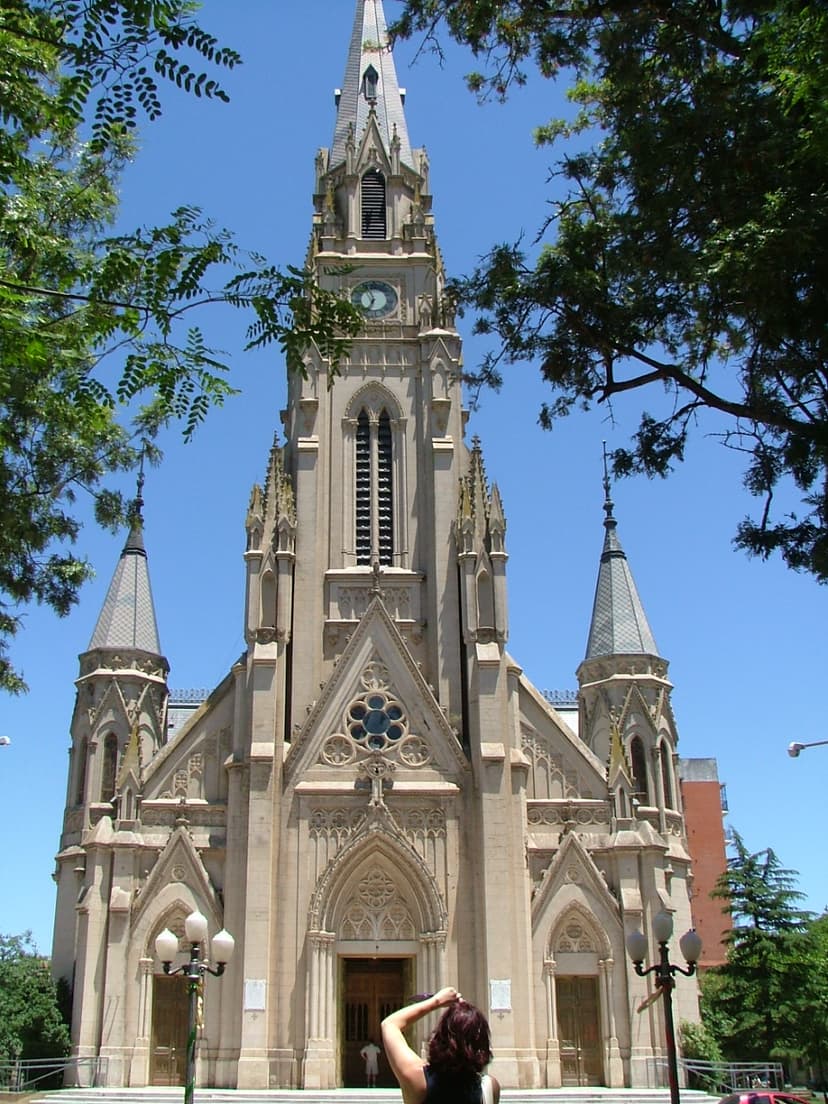
Cathedral Basilica of Our Lady of Mercies
The Cathedral Basilica of Our Lady of Mercies is a Catholic cathedral and minor basilica located in Mercedes, Buenos Aires Province, Argentina. Serving as the seat of the Archdiocese of Mercedes-Luján, it is a significant religious and historical landmark, built in the Gothic Revival style and declared a National Historic Landmark in 2010.
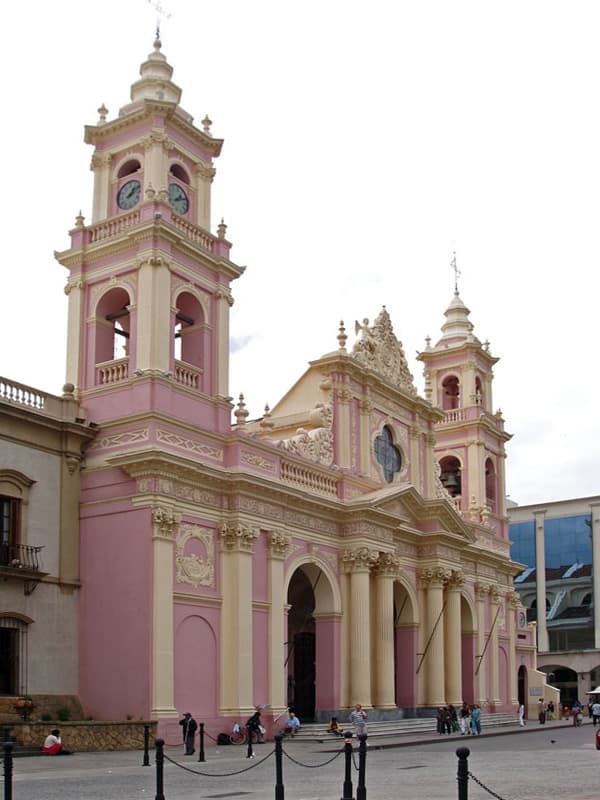
Cathedral Shrine of Our Lord and the Virgin of the Miracle
Salta Cathedral, officially the Cathedral Basilica of Salta, is the metropolitan cathedral of the Archbishop of Salta in Argentina. It is dedicated to Jesus Christ as the "Lord of Miracles" and the Blessed Virgin Mary as the "Our Lady of the Miraculous Rosary." The cathedral holds significant religious importance, having received a pontifical coronation for its enshrined images in 1902.

Cathedral Basilica of Our Lady of the Valley
The Catedral Basílica de Nuestra Señora del Valle, located in San Fernando del Valle de Catamarca, Argentina, is a significant religious edifice dedicated to the Virgen del Valle. Its architecture features a nave flanked by two chapels, adorned with marble mosaic floors and a Carrara marble altar, presenting a notable example of religious architecture in the region.