
Metropolitan and Primatial Cathedral Basilica of St Tecla
Spain·Tarragona
The Metropolitan and Primatial Cathedral Basilica of St Tecla, also known as Tarragona Cathedral, is a Roman Catholic church in Tarragona, Catalonia, Spain. It stands on a site with a long religious history, having previously housed a Roman temple, Visigothic cathedral, and a mosque. The current edifice showcases a transitional architectural style between Romanesque and Gothic, reflecting centuries of construction and modification.
Key Facts
- ›Construction of the cathedral began in 1154, on a site with prior religious structures.
- ›The architecture is a blend of Romanesque and Gothic styles, with a basilica plan, nave, aisles, and semicircular apses.
- ›Key interior features include a nave height of 26 meters at the dome, cross vaults, and capitals with Moorish motifs.
- ›The cloister, begun around 1194, features arcades with smaller circular arches surmounted by rose windows and ogival arches, with a frieze in Moorish style.
- ›The unfinished main façade has Gothic and Romanesque portals and a large rose window.
- ›It was declared a national monument in 1905.

Romanesque, Gothic
Tecla
Jaume Amigó, Pere Blai, Bernat CàCeres, Mateu Ortoneda, Guerau Gener, LluíS Borrassà, Francesc Grau, Francesc Tramulles Roig, Aloi De Montbrai, Pere Johan, Jaume Cascalls, Bernat Martorell, Bartolomeu of Girona, Bartolomeu
About Metropolitan and Primatial Cathedral Basilica of St Tecla
The Metropolitan and Primatial Cathedral Basilica of St Tecla, commonly referred to as Tarragona Cathedral, is a significant Roman Catholic church located in Tarragona, Catalonia, Spain. Its historical importance is amplified by the fact that it occupies a site with a deep religious heritage, having previously served as a Roman temple during the time of Tiberius, a Visigothic cathedral, and a mosque under Moorish rule. The current structure is a testament to centuries of architectural evolution, primarily showcasing a transitional style that bridges the Romanesque and Gothic periods.
History and Construction
The foundation of the present cathedral dates back to 1154. Over the subsequent centuries, various phases of construction and renovation contributed to its final form. The cathedral was officially recognized for its historical value when it was declared a national monument in 1905.
Architecture and Design
Architecturally, Tarragona Cathedral presents a compelling blend of Romanesque and Gothic elements. It follows a basilica plan, featuring a prominent nave and two aisles, a transept with unequal arms, and three semicircular apses. The interior is characterized by a nave that rises to a height of 26 meters at the dome, with cross vaults supported by cruciform pilasters. The capitals of the columns are notably decorated with Moorish motifs, and the presbytery and apse retain a Romanesque pavement composed of geometrically patterned stone and marble.
Notable features include the octagonal tower-dome, constructed in the mid-13th century, and the choir stalls crafted from oak wood by Francisco Gomar in the 15th century. The cathedral is rich in chapels, each with its own historical and artistic significance, including the Chapel of the Virgin Mary, the Chapel of the Virgin of Montserrat, and the Baroque-style Chapel of the Conception.
Exterior and Cloister
The exterior of the cathedral showcases an unfinished main façade with three portals, reflecting both Gothic and Romanesque styles. A large rose window, measuring 11 meters in diameter, graces the western side, echoing designs found in other notable churches. The main gate, executed between 1277 and c. 1291, is adorned with ogival arches and figures of saints and prophets by Jaume Cascalls.
The cloister, which began construction around 1194, is a rectangular structure measuring 47 by 46 meters. It comprises four galleries divided by pilasters, with arcades organized into groups of smaller circular arches surmounted by rose windows and larger ogival arches. The capitals within the cloister are sculpted with religious scenes, and an Arab inscription from 960, belonging to the former mosque, is preserved on the eastern gallery wall. The cloister is accessed through a 13th-century Romanesque gate.
Bell Tower and Legacy
The Gothic bell tower, situated over the southern apse, reaches a height of 70 meters. Commissioned by bishop Roderic Tello, its upper section, dating from the 14th century, is enclosed in an octagonal form and topped by a small temple housing the bells.
Tarragona Cathedral remains an active place of worship and a significant historical monument, drawing visitors interested in its rich architectural heritage and religious importance. The tradition of the dancing egg is held annually in the cloister fountain since 1933.
Source: Wikipedia ↗
Frequently Asked Questions
What is the history of the site where Tarragona Cathedral stands?
The site has a rich religious past, having previously been occupied by a Roman temple dating to the time of Tiberius, followed by a Visigothic cathedral, and subsequently a Moorish mosque. The current cathedral's construction began in 1154.
What architectural styles can be seen at Tarragona Cathedral?
The cathedral exhibits a transitional style between Romanesque and Gothic architecture. This blend is evident in its basilica plan, the structure of its apses, and elements of its portals and windows.
What are some notable features of the interior of Tarragona Cathedral?
The interior boasts a nave that reaches 26 meters in height at the dome, supported by cross vaults. The capitals of the columns are adorned with Moorish motifs, and the presbytery and apse retain a Romanesque pavement of colored stone and marble.
When was the cloister of Tarragona Cathedral constructed?
The construction of the cloister likely began around 1194, though some scholars suggest it started later, from 1214 onwards. It features four galleries divided by pilasters and arcades with decorative rose windows.
What is significant about the exterior of Tarragona Cathedral?
The main façade remains unfinished but features portals in both Gothic and Romanesque styles. A large rose window, similar to those found in other significant Catalan churches, adorns the western side.
Has Tarragona Cathedral been recognized as a national monument?
Yes, the cathedral was declared a national monument in 1905, acknowledging its historical and architectural importance.
Related Basilicas
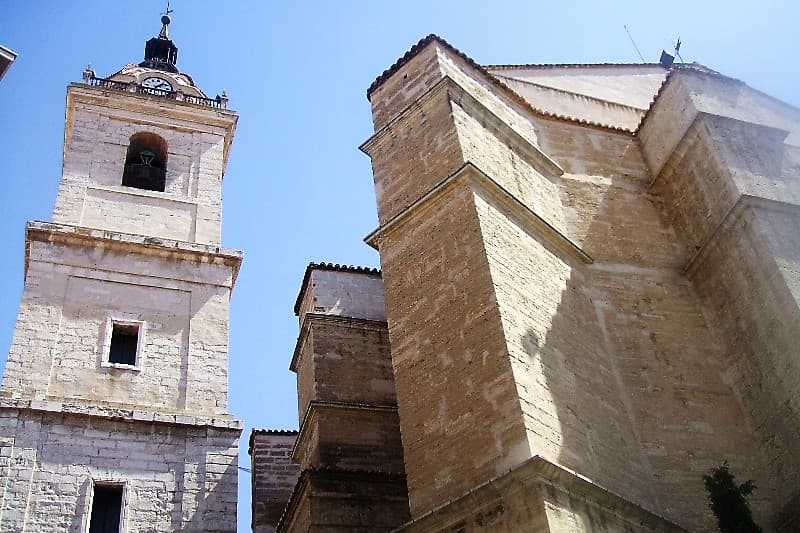
Cathedral Basilica of St Mary of the Meadow
The Holy Priory Church Cathedral Basilica of the Military Orders of Our Lady Saint Mary of the Prado, commonly known as the Cathedral of Saint Mary of the Prado, is a significant religious and architectural landmark in Ciudad Real, Spain. Its construction, spanning centuries and incorporating Gothic, Renaissance, and Baroque elements, makes it a rich historical monument. Since 1875, it has served as the priory for four of Spain's military orders, underscoring its enduring importance.
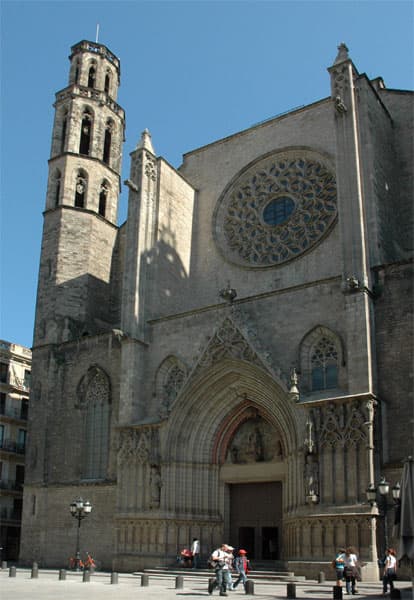
Basilica of St Mary of the Sea
The Basilica of St Mary of the Sea, known in Catalan as Santa Maria del Mar, is a prominent church in Barcelona, Spain, constructed between 1329 and 1383. It stands as a remarkable example of Catalan Gothic architecture, distinguished by its stylistic purity and unity. The basilica holds significance as a testament to the maritime and mercantile power of the Principality of Catalonia during the medieval period, and notably, its construction was supported by the common people rather than the nobility.

Basilica of the Most Holy and True Cross
The Basilica of Vera Cruz, officially known as Basílica de la Vera Cruz, is a Roman Catholic church located in the town of Caravaca de la Cruz. It was granted the title of minor basilica by the Dicastery for Divine Worship and the Discipline of the Sacraments on December 3, 2007, signifying its importance within the Catholic Church.