
Corpus Christi Basilica
The Corpus Christi Basilica in Kraków, Poland, is a historic Roman Catholic parish and conventual church with a rich history dating back to the 14th century. Originally founded as a monastery church, it was later entrusted to the Canons Regular of the Lateran and has undergone significant architectural transformations, notably incorporating impressive Baroque elements after being devastated during the Swedish invasion.
Key Facts
- ›Founded by King Casimir III the Great in 1335 as a Gothic church.
- ›Construction began in 1340 and continued until the MID-15th century.
- ›Transferred to the Canons Regular of the Lateran in 1404.
- ›Interior features a blend of Polish Gothic and Polish Baroque architecture.
- ›Suffered extensive damage during the 1655 Swedish invasion, leading to Baroque renovations.
- ›Houses the largest organs in Kraków, with a main instrument built between 1958-1963.

Gothic, Baroque
Canons Regular of the Lateran
About Corpus Christi Basilica
The Corpus Christi Basilica, known in Polish as Kościół Bożego Ciała, stands as a significant historic Roman Catholic parish and conventual church in Kraków, Poland. Located in Kazimierz, the former Jewish district, it is affiliated with the Canons Regular of the Lateran and holds a prominent place in the city's religious and architectural heritage.
History and Construction
The basilica's origins trace back to 1335 when King Casimir III the Great founded it as a Gothic church. Construction commenced in 1340 and proceeded in phases until the mid-15th century. It was initially conceived as a monastery church, reflected in its substantial land plot and the adjacent monastic cemetery. In 1404, King Władysław II Jagiełło transferred ownership to the Canons Regular of the Lateran, a congregation he had invited from Kłodzko.
A pivotal moment in its history occurred during the 1655 Swedish invasion, referred to as the Deluge. The church was severely looted and its interior devastated by soldiers. This event necessitated extensive rebuilding and renovation, leading to the significant integration of Baroque architectural elements that characterize its appearance today.
Architectural Features and Interior
The interior of Corpus Christi Basilica presents a captivating fusion of Polish Gothic structure and opulent Polish Baroque decoration. Notable features include a large, gilded Baroque high altar and a distinctive boat-shaped pulpit dating from 1750. The church is also noted for housing what some consider one of the most beautiful Baroque choir stalls in Central Europe.
Musical Heritage
Corpus Christi Basilica is renowned for its impressive organs, holding the distinction of having the largest organs in Kraków. The main instrument was constructed between 1958 and 1963, incorporating elements from an older organ dating back to the 1770s. This substantial instrument is designed with 83 pitches and comprises two parts: the main organ situated in the choir and side organs in the chancel. With a total of 5950 pipes and 25 bells, the organs are capable of playing works on an echo basis, creating a unique spatial sound experience for listeners situated up to 70 meters apart.
Notable Burials
The basilica serves as the final resting place for Bartolommeo Berrecci, the celebrated Renaissance artist who is credited with designing Sigismund's Chapel at Wawel Castle.
Source: Wikipedia ↗
Frequently Asked Questions
When was Corpus Christi Basilica founded?
The Corpus Christi Basilica was founded as a Gothic church by King Casimir III the Great in 1335. Construction on the basilica began in 1340 and continued in stages until the mid-15th century.
What is the architectural style of Corpus Christi Basilica?
The interior of Corpus Christi Basilica is a mix of Polish Gothic and Polish Baroque architecture. The Baroque style is particularly evident in its decoration, which was largely implemented after the church was devastated during the Swedish invasion in 1655.
What is significant about the organs in Corpus Christi Basilica?
Corpus Christi Basilica houses the largest organs in Kraków. The main instrument was constructed between 1958 and 1963, incorporating elements from an older organ dating back to the 1770s. These organs have 5950 pipes, 25 bells, and are designed to play works on an echo basis, offering a unique auditory experience.
Who is buried in Corpus Christi Basilica?
Bartolommeo Berrecci, the Renaissance artist known for designing Sigismund's Chapel at Wawel, is buried within Corpus Christi Basilica.
What happened to Corpus Christi Basilica during the Swedish invasion?
During the 1655 Swedish invasion, known as the Deluge, Corpus Christi Basilica was robbed clean and its interior was utterly devastated by soldiers. This event led to the prevalence of Baroque elements in its subsequent decoration.
Related Basilicas
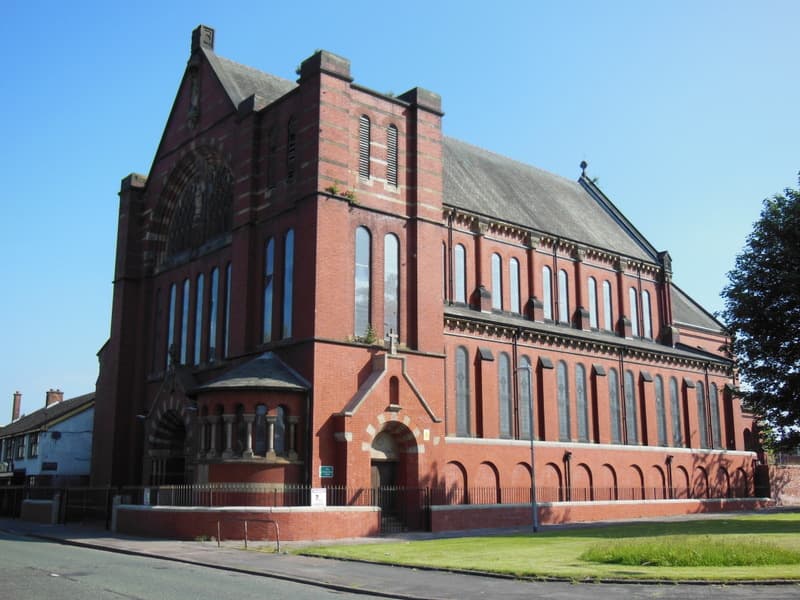
Corpus Christi Basilica, Miles Platting
Corpus Christi Basilica in Miles Platting, Manchester, was a Catholic church established by Premonstratensian canons regular. Designed by William Telford Gunson, its construction began in 1906 and it opened in 1907. The basilica served as a significant religious center until escalating repair costs led to its closure in 2007.
Basilica of the Visitation (Carmelite Church)
The Basilica of the Visitation (Carmelite Church) in Kraków, Poland, is the city's first Carmelite church, originally founded in the 11th century according to legend, though documented construction began in 1395. It is significant for its history, including its rebuilding in Baroque style after the Swedish Deluge and its role in Polish royal and military history, culminating in its elevation to a minor basilica by Pope John Paul II in 1997.

Basilica of the Assumption of the Blessed Virgin Mary Queen of Poland (St Mary's Basilica)
The Basilica of the Assumption of the Blessed Virgin Mary Queen of Poland, commonly known as St. Mary's Basilica, is a historic Roman Catholic parish church in Kraków, Poland. It is a prime example of Brick Gothic architecture, renowned for its 14th-century wooden altarpiece by Veit Stoss and its hourly trumpet signal, the Hejnał mariacki. The basilica holds significant religious and cultural importance, serving as a model for Polish diaspora churches and recognized as a UNESCO World Heritage Site.