
Cathedral Basilica of the Immaculate Conception of the Good Journey
Argentina·Morón·Diocese of Morón
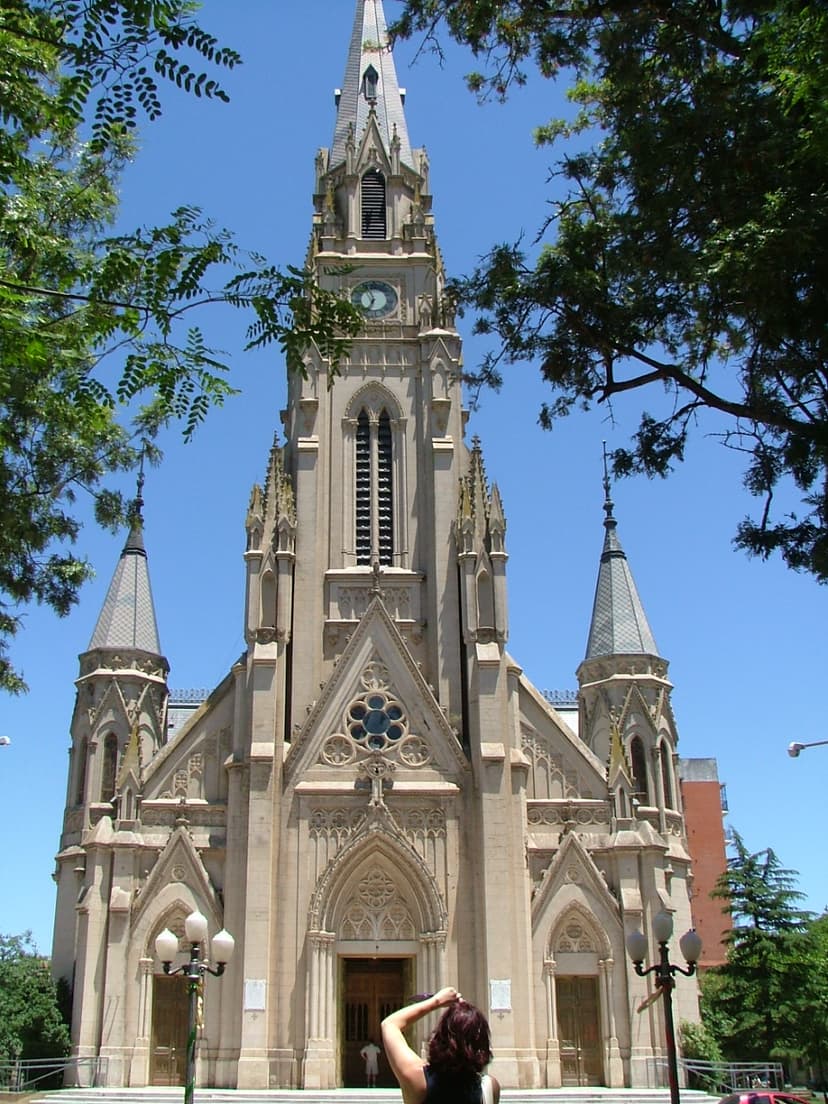
The Cathedral Basilica of the Immaculate Conception of the Good Journey is the seat of the Diocese of Morón in Argentina. Completed in 1885, it is dedicated to the Virgin of the Immaculate Conception of Good Voyage and has a rich history dating back to the establishment of the Morón parish in 1730. It was elevated to cathedral status in 1957 and declared a minor basilica by Pope John Paul II.
Key Facts
- ›The current cathedral's foundation stone was laid on July 31, 1868, by parish priest Francisco Romero.
- ›Construction of the third and final cathedral continued until 1885, with the church opening to worshippers in 1871.
- ›The cathedral was consecrated on August 14, 1944.
- ›It was elevated to cathedral status by Pope Pius XII in 1957.
- ›Pope John Paul II declared it a minor basilica and visited in 1982.
- ›A 1,085-tube organ from Germany was commissioned and installed in 1921.

- Virgin of the Immaculate Conception of Good Voyage
About Cathedral Basilica of the Immaculate Conception of the Good Journey
The Cathedral Basilica of the Immaculate Conception of the Good Journey, located in Morón, Buenos Aires Province, Argentina, serves as the principal church for the Diocese of Morón. Dedicated to the Virgin of the Immaculate Conception of Good Voyage, this basilica is a significant religious and historical landmark in the region.
History and Development
The origins of the parish in Morón trace back to 1730, with a church first established on the current site in 1776. This initial structure was replaced by a second cathedral in 1852, which was deemed too small and was demolished after just over a decade. The foundation stone for the third and final cathedral was laid on July 31, 1868, by parish priest Francisco Romero. While the church opened to worshippers in 1871, construction continued until its completion in 1885.
Elevation and Designations
The solemn consecration of the cathedral took place on August 14, 1944. A significant milestone in its history was its elevation to the status of a cathedral by Pope Pius XII in 1957. Further enhancing its religious standing, Pope John Paul II declared it a minor basilica and visited the site in 1982. The church's archives, containing items dating back to its 18th-century parish origins, were established in a dedicated area in 1998.
Architectural and Artistic Features
Among its notable features is a 1,085-tube organ imported from Germany. Its production was delayed by World War I and metal rationing, but it was eventually installed in 1921. The basilica's clock tower houses a French clock, which historically played a role in civic life, even influencing an election in 1930 when it was deliberately set back an hour. The clock was removed due to mechanical issues in 1998 and restored in 2018.
Source: Wikipedia ↗
Frequently Asked Questions
When was the Cathedral Basilica of the Immaculate Conception of the Good Journey completed?
The core structure of the Cathedral Basilica of the Immaculate Conception of the Good Journey was completed in 1885. Construction on the third and final cathedral began in 1868 and it opened to worshippers in 1871, with work continuing for many years thereafter.
What is the significance of the Immaculate Conception of the Good Journey?
The basilica is dedicated to the Virgin of the Immaculate Conception of Good Voyage. This title reflects devotion to Mary, the mother of Jesus, under her patronage of safe journeys and protection during travel.
What important religious events have taken place at the basilica?
The cathedral was consecrated on August 14, 1944, and the canonical coronation of its patron saint was held in 1947. Pope John Paul II visited the cathedral in 1982 and declared it a minor basilica.
What notable features does the basilica have?
The basilica houses a 1,085-tube organ from Germany, which was commissioned before World War I and installed in 1921. It also features a historic French clock on its tower, which famously influenced an election in 1930.
When did the basilica become a cathedral and a minor basilica?
The church was elevated to the status of a cathedral by Pope Pius XII in 1957. It was later declared a minor basilica by Pope John Paul II.
Related Basilicas
Cathedral Basilica of Our Lady of Mercies
The Cathedral Basilica of Our Lady of Mercies is a Catholic cathedral and minor basilica located in Mercedes, Buenos Aires Province, Argentina. Serving as the seat of the Archdiocese of Mercedes-Luján, it is a significant religious and historical landmark, built in the Gothic Revival style and declared a National Historic Landmark in 2010.

Cathedral Basilica of Our Lady of the Valley
The Catedral Basílica de Nuestra Señora del Valle, located in San Fernando del Valle de Catamarca, Argentina, is a significant religious edifice dedicated to the Virgen del Valle. Its architecture features a nave flanked by two chapels, adorned with marble mosaic floors and a Carrara marble altar, presenting a notable example of religious architecture in the region.

Cathedral Basilica of SS Peter and Cecilia
The Cathedral Basilica of SS Peter and Cecilia is a Roman Catholic church located in Mar del Plata, Argentina. It is dedicated to St. Peter the Apostle and St. Cecilia and was declared a minor basilica by Pope Pius XI in 1924. Following the establishment of the Diocese of Mar del Plata in 1957, it became the cathedral church of the diocese.