
Basilica of the National Shrine of the Immaculate Conception
United States·Washington D.C.·Archdiocese of Washington
The Basilica of the National Shrine of the Immaculate Conception is the largest Catholic church building in North America, located in Washington D.C. It serves as the national shrine to the Immaculate Conception, the principal patroness of the United States. This minor basilica is a significant landmark, noted for its Neo-Byzantine and Romanesque Revival architecture and its role in hosting major religious events.
Key Facts
- ›Construction began in 1920 and was significantly halted by the Great Depression and World War II, with major sections completed in stages.
- ›It is dedicated to the Immaculate Conception, a title formalized for the United States in 1847.
- ›The basilica features extensive mosaics inspired by those in St. Mark's Basilica in Venice, Italy.
- ›It was raised to the status of a minor basilica by Pope John Paul II in 1990.
- ›The basilica's Trinity Dome is comparable in size to that of the U.S. Capitol.
- ›It houses 82 Marian chapels designed to reflect the origins of Catholic Americans and their religious orders.
Neo-Byzantine, Romanesque Revival
First Class Relics of Kateri Tekakwitha, First Class Relics of Marianne Cope
Maginnis & Walsh
About Basilica of the National Shrine of the Immaculate Conception
The Basilica of the National Shrine of the Immaculate Conception
The Basilica of the National Shrine of the Immaculate Conception stands as the largest Catholic church in North America and the tallest habitable building in Washington, D.C. It functions as the national shrine dedicated to the Immaculate Conception, who is recognized as the principal patroness of the United States. This significant religious edifice was elevated to the status of a minor basilica by Pope John Paul II in 1990.
History and Construction
The concept for a national shrine to commemorate the Immaculate Conception in the nation's capital was proposed by Bishop Thomas Joseph Shahan, the fourth rector of The Catholic University of America. He received papal support and a personal contribution from Pope Pius X in 1913. The Catholic University of America donated land for its construction, and the architectural firm Maginnis & Walsh was chosen to design the structure. Construction commenced in 1920, employing Neo-Byzantine and Romanesque Revival styles. The initial phase saw the completion of the Crypt Church, which hosted its first public Mass in 1924. However, progress was significantly hampered by the Great Depression and the onset of World War II, halting construction above the Crypt Church level.
Work resumed in 1954, driven by a pledge from American bishops to fund the completion of the Great Upper Church. This section was dedicated on November 20, 1959. The final major architectural element, the Trinity Dome mosaic, was completed and dedicated on December 8, 2017. The basilica's construction spanned nearly a century, reflecting periods of significant progress and extended delays.
Architecture and Features
The basilica's architecture draws inspiration from medieval churches, utilizing thick masonry walls and columns. Its exterior measures 459 feet long and 240 feet wide, reaching 237 feet to the top of the dome's cross. The interior is known for its numerous domes, adorned with extensive mosaics that depict American renditions of traditional Catholic imagery, similar in style to St. Mark's Basilica in Venice but on a larger scale. The mosaics feature specific color symbolism: blue for the Virgin Mary, yellow for Hebrew church architecture, red for Christ's blood, and grey as a neutral tone.
The shrine houses 82 Marian chapels, each designed to represent the heritage of Catholic Americans and the religious orders that contributed to their erection. Notable among these are the Our Mother of Africa Chapel and the Our Lady of La Vang Chapel. The basilica was designed to accommodate 10,000 worshipers and incorporated modern amenities for its time, including a cafeteria and an advanced heating system.
Religious Significance and Role
The basilica is dedicated to the Immaculate Conception, a title formally recognized as the principal patroness of the United States in 1847. It serves as the patronal church for the Catholic Church in the United States. While situated within the Archdiocese of Washington, it operates independently of the local archbishop's direct authority. It plays a crucial role in national Catholic life, hosting numerous Masses for various organizations from across the country and serving adjacent Catholic University. The basilica has been the site of significant papal visits and events, including Pope Benedict XVI bestowing a Golden Rose in 2008 and Pope Francis canonizing Saint Junípero Serra in 2015. It also holds important relics, such as those of Saints Kateri Tekakwitha and Marianne Cope.
Source: Wikipedia ↗
Frequently Asked Questions
When was the Basilica of the National Shrine of the Immaculate Conception built?
Construction of the basilica began in 1920. The Crypt Church was used for Mass by 1924, but the Great Upper Church was not dedicated until 1959. The final architectural element, the Trinity Dome mosaic, was completed in 2017.
What is the architectural style of the Basilica of the National Shrine of the Immaculate Conception?
The basilica is designed in the Neo-Byzantine and Romanesque Revival styles. Its interior features domes decorated with mosaics, reminiscent of St. Mark's Basilica in Venice.
What is the significance of the Basilica of the National Shrine of the Immaculate Conception?
It is the largest Catholic church in North America and serves as the national shrine dedicated to the Immaculate Conception, the principal patroness of the United States. It is also a minor basilica, a title bestowed by Pope John Paul II.
Does the Basilica of the National Shrine of the Immaculate Conception have its own parish?
No, the basilica is not a parish of the Archdiocese of Washington and does not have its own parish community. It serves the adjacent Catholic University and the United States Conference of Catholic Bishops, hosting Masses for various national organizations.
What notable events have occurred at the Basilica of the National Shrine of the Immaculate Conception?
Notable events include Pope Benedict XVI bestowing a Golden Rose in 2008 and Pope Francis canonizing Junípero Serra there in 2015. It also hosted the funeral Mass for Supreme Court Justice Antonin Scalia in 2016.
Related Basilicas

Cathedral Basilica of the Immaculate Conception of Mérida
The Cathedral Basilica of the Immaculate Conception of Mérida is the principal Roman Catholic church and the seat of the Archdiocese of Mérida, located in Mérida, Venezuela. Its construction spanned a significant period, from 1805 with various modifications until 1960, and it houses numerous stained glass windows and religious artifacts of considerable historical importance.

Basilica of the Immaculate Conception
The Minor Basilica and Parish of the Immaculate Conception, also known as the Archdiocesan Shrine of Santo Niño de Batangan, is a significant religious site in Batangas City, Philippines. Established as an independent parish in 1614, it is one of the oldest churches in the region and holds a revered ivory image of La Inmaculada Concepcion de Batangan, which has received pontifical coronation. The basilica's robust architecture is designed to withstand natural disasters, reflecting its long and resilient history.
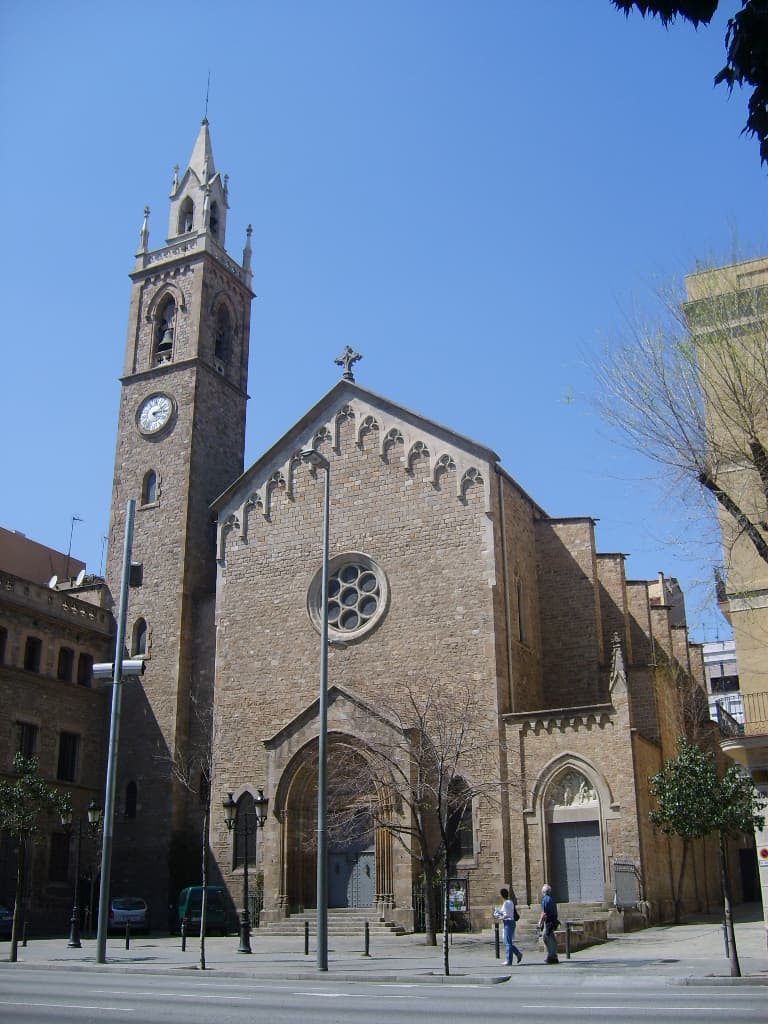
Basilica of the Purest Conception
The Basilica of the Immaculate Conception and Assumption of Our Lady in Barcelona originated from the Jonqueres Monastery, which was relocated stone by stone to preserve its structure. It was later enhanced with a bell tower from another demolished church and a historicist rectory. Pope Benedict XVI designated it a minor basilica in 2009, making it the eighth basilica in Barcelona.