
Basilica of the National Shrine of Our Lady of San Juan del Valle
United States·San Juan·Diocese of Brownsville
The Basilica of the National Shrine of Our Lady of San Juan del Valle is a minor basilica and national shrine located in San Juan, Texas. It is dedicated to Our Lady of San Juan de los Lagos and became a significant pilgrimage site, especially after its original structure was destroyed by a plane crash in 1970 and subsequently rebuilt.
Key Facts
- ›Began as a devotion fostered by Rev. Jose Maria Azpiazu, O.M.I., in 1949.
- ›Original shrine was destroyed by an airplane crash in 1970, with only the tower remaining.
- ›A new, larger shrine church was constructed and dedicated in 1980.
- ›Designated a national shrine by the National Conference of Catholic Bishops in 1998.
- ›Elevated to the status of a minor basilica by Pope John Paul II in 1999.
- ›Features outdoor Stations of the Cross with 30 life-size bronze statues and a mural on its exterior wall.
Our Lady of San Juan De Los Lagos
Statue of Our Lady of San Juan Del Valle, Blessed Sacrament
Oblates of Mary Immaculate
About Basilica of the National Shrine of Our Lady of San Juan del Valle
The Basilica of the National Shrine of Our Lady of San Juan del Valle is a significant religious site in San Juan, Texas, serving as both a national shrine and a minor basilica of the Catholic Church. It is administered by the Diocese of Brownsville and is a focal point for pilgrimage and devotion.
History and Development
The origins of the shrine date back to 1949 when Rev. Jose Maria Azpiazu, O.M.I., then pastor of St. John the Baptist parish, began promoting devotion to Our Lady of San Juan de los Lagos. He commissioned an artist in Guadalajara, Mexico, to create a statue replicating the revered image from San Juan de los Lagos, which was then placed in the San Juan chapel. A new church and shrine dedicated to the Virgin of San Juan were constructed in 1954, receiving approval from Bishop Mariano S. Garriaga of Corpus Christi.
A tragic event occurred on October 23, 1970, when a low-flying airplane crashed into the shrine, causing it to be destroyed by fire. Miraculously, the shrine's tower remained standing, and the statue of Our Lady of San Juan del Valle, along with the Blessed Sacrament, was rescued by Rev. Patricio Dominguez, O.M.I., and diocesan priest Rev. Ron Anderson, respectively. The dining room of the shrine served as a temporary sanctuary for the statue.
Following the destruction, Bishop John J. Fitzpatrick of Brownsville separated the shrine from the parish and initiated plans for a new, larger shrine church on the same property. Groundbreaking for this new structure took place on November 27, 1976. The dedication ceremony, attended by Cardinal Humberto Medeiros of Boston and Bishop Fitzpatrick, drew an estimated crowd of 50,000 people on April 19, 1980.
Further enhancements to the site included the dedication of outdoor Stations of the Cross, comprising 30 life-size bronze statues along a three-quarter-mile path on October 16, 1993. The mural "Jesus Presents His Mother" on the shrine's exterior wall was blessed on February 2, 1995.
Recognition and Status
The Basilica of the National Shrine of Our Lady of San Juan del Valle was formally designated a national shrine by the National Conference of Catholic Bishops on March 24, 1998. Its status was further elevated when Pope John Paul II designated it as a minor basilica on June 12, 1999.
Pilgrimage and Worship
The basilica is a popular destination for pilgrims, with Saturdays and Sundays being the busiest days. The site offers a regular schedule of Masses throughout the weekend, including services in Spanish, English, and bilingual formats, accommodating a diverse congregation.
Source: Wikipedia ↗
Frequently Asked Questions
When was the Basilica of the National Shrine of Our Lady of San Juan del Valle built?
The ground breaking for the new shrine church was held on November 27, 1976, and it was dedicated on April 19, 1980. This new structure replaced the original shrine that was destroyed in 1970.
What is the significance of Our Lady of San Juan del Valle?
The devotion to Our Lady of San Juan de los Lagos was fostered in San Juan, Texas, leading to the creation of a shrine dedicated to her. The statue of Our Lady of San Juan del Valle was rescued from the original shrine after its destruction.
What happened to the original shrine?
The original shrine was destroyed on October 23, 1970, when a low-flying airplane crashed into it and exploded into flames. The pilot was the only fatality, and the statue of Our Lady of San Juan del Valle was rescued.
What are the worship services like at the basilica?
The basilica holds multiple Masses on Saturdays and Sundays, catering to both Spanish and English speakers. Services include specific times for Spanish, English, and bilingual Masses throughout the weekend.
Is the Basilica of the National Shrine of Our Lady of San Juan del Valle a major basilica?
No, the Basilica of the National Shrine of Our Lady of San Juan del Valle is designated as a minor basilica. Pope John Paul II bestowed this title upon the shrine in 1999.
Related Basilicas

Metropolitan Cathedral Basilica of St John the Baptist of Puerto Rico
The Metropolitan Cathedral Basilica of Saint John the Baptist is the principal church of the Archdiocese of San Juan, Puerto Rico. Located in Old San Juan, it is one of the oldest cathedral buildings in the Americas, holding significant historical and religious importance, including the tomb of explorer Juan Ponce de León and the national shrine to Our Lady of Divine Providence.
Basilica of St Fidelis
The Basilica of St. Fidelis, also known as the Cathedral of the Plains, is a Romanesque-style Catholic parish church located in Victoria, Kansas. It was constructed between 1908 and 1911 and was elevated to the status of a minor basilica in 2014. Its impressive architecture and prominent location have made it a significant landmark in western Kansas.
Basilica of the Sacred Heart of Jesus
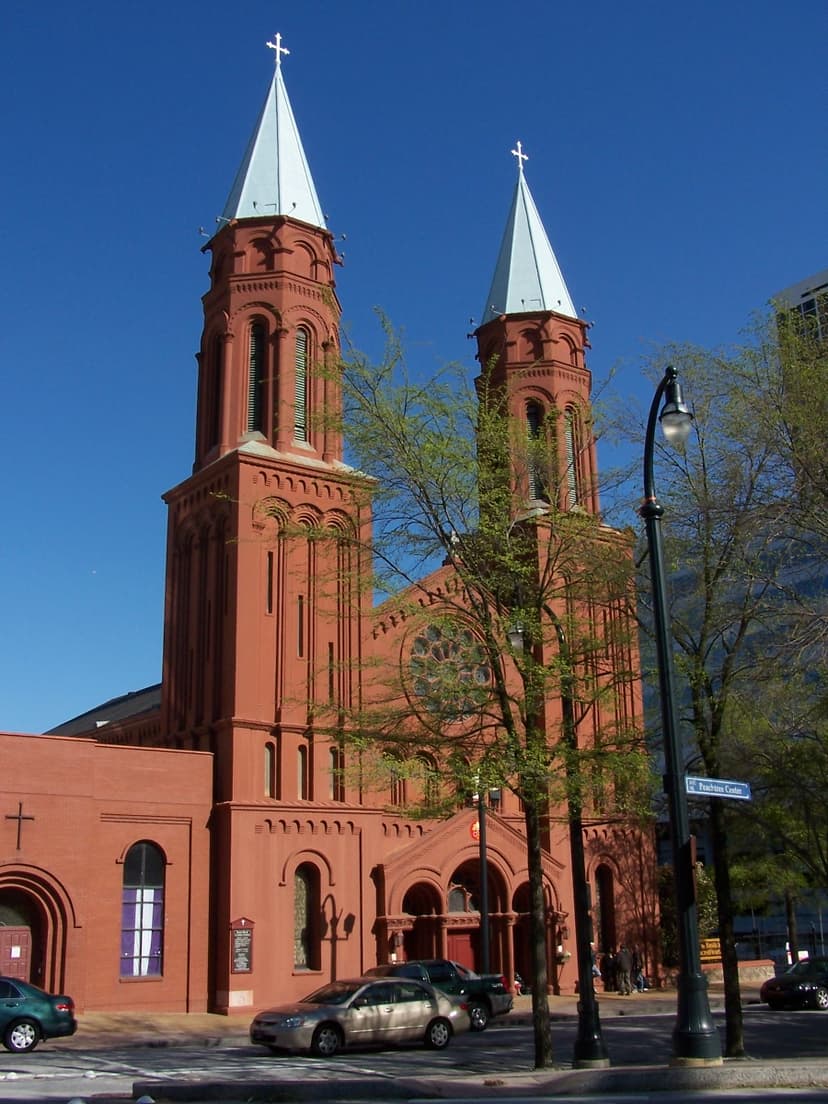
The Basilica of the Sacred Heart of Jesus is a Roman Catholic church located in downtown Atlanta, Georgia. Completed in 1898, it is recognized for its French Romanesque and Romanesque Revival architecture and was designated a minor basilica in 2010. The church holds historical significance as one of the few remaining structures from Atlanta's early 20th-century development and has served its congregation for over a century.