
Basilica of the National Shrine of Mary Help of Christians
Philippines·Parañaque·Diocese of Parañaque
The Basilica of the National Shrine of Mary Help of Christians is a Roman Catholic church in Parañaque, Philippines, dedicated to Mary Help of Christians. It serves as a national shrine and parish church, and was elevated to the status of a minor basilica by Pope Francis in 2025, becoming the first basilica in its diocese.
Key Facts
- ›Devotion to Mary Help of Christians in the Philippines began in 1922.
- ›The current church building was constructed between 1972 and 1975.
- ›It was consecrated in December 1976.
- ›The church was officially proclaimed a national shrine on August 24, 1985.
- ›The enshrined image of Mary Help of Christians received a canonical coronation on May 24, 2022.
- ›It was elevated to a minor basilica by Pope Francis on March 27, 2025.

Brutalist, Baroque
Salesians
About Basilica of the National Shrine of Mary Help of Christians
The Basilica of the National Shrine of Mary Help of Christians
The Basilica of the National Shrine of Mary Help of Christians, also known as Mary Help of Christians Shrine, is a significant Roman Catholic religious site located in Parañaque, Philippines. It functions as a parish church, a national shrine, and, as of 2025, a minor basilica, making it the first of its kind within the Diocese of Parañaque. The basilica is dedicated to Mary Help of Christians, a title of the Virgin Mary that has been particularly honored in the Philippines since the early 20th century.
History and Devotion
The devotion to Mary Help of Christians in the Philippines was initiated in 1922 by Salesian Archbishop Guglielmo Piani, who brought an image of the Blessed Mother to the country. This image was initially enthroned at the Manila Cathedral. During the challenging years of World War II in 1942, the image was moved to the Our Lady of Loreto Church for safekeeping, where it remained for several decades. In 1994, the image was transferred to its permanent home at the National Shrine in Parañaque.
The construction of the current church building commenced in 1972 and concluded in 1975, the same year the Parish of Mary Help of Christians was formally established. The church was consecrated in December 1976. A significant milestone in its history occurred on August 24, 1985, when the Catholic Bishops' Conference of the Philippines officially proclaimed the parish a national shrine. Further elevating its status, Pope Francis designated the shrine as a minor basilica on March 27, 2025, with the solemn declaration taking place on December 8, 2025.
Architectural Features
The architectural design of the Basilica of the National Shrine of Mary Help of Christians presents a striking contrast between its exterior and interior. The facade is characterized by a Brutalist style, featuring concrete fins arranged symmetrically that divide the face into narrow sections. These sections are punctuated by colored-glass window openings, with a prominent parabolic stained glass window above the main entrance. Topping the facade are a statue of Mary, Help of Christians, and the basilica's coat of arms. The bell tower stands separately from the main structure.
Internally, the basilica exhibits an eclectic mix of styles. The sanctuary is adorned with a Baroque Altar and Reredos, while the walls maintain a Brutalist aesthetic. The sanctuary pillars feature bas reliefs that draw inspiration from ancient Egyptian mural art, creating a unique spiritual and artistic environment for worshippers.
Source: Wikipedia ↗
Frequently Asked Questions
When was the Basilica of the National Shrine of Mary Help of Christians constructed?
Construction of the present church building began in 1972 and was completed in 1975.
What is the significance of the Basilica of the National Shrine of Mary Help of Christians?
It is a national shrine dedicated to Mary Help of Christians and was elevated to the status of a minor basilica by Pope Francis in 2025, marking it as the first basilica in the Diocese of Parañaque.
What architectural styles are present in the basilica?
The facade features a Brutalist style with concrete fins and colored-glass windows. The interior is an eclectic mix, including a Baroque Altar and Reredos, Brutalist walls, and sanctuary pillar bas reliefs inspired by Egyptian mural art.
When was the devotion to Mary Help of Christians introduced to the Philippines?
The devotion began in 1922 with the appointment of Salesian Archbishop Guglielmo Piani, who brought an image of Mary Help of Christians to the Philippines.
What notable religious event occurred in 2022?
The enshrined image of Mary Help of Christians received a canonical coronation on her feast day, May 24, 2022.
When was the church consecrated and declared a national shrine?
The church was consecrated in December 1976, and officially proclaimed a national shrine on August 24, 1985.
Related Basilicas
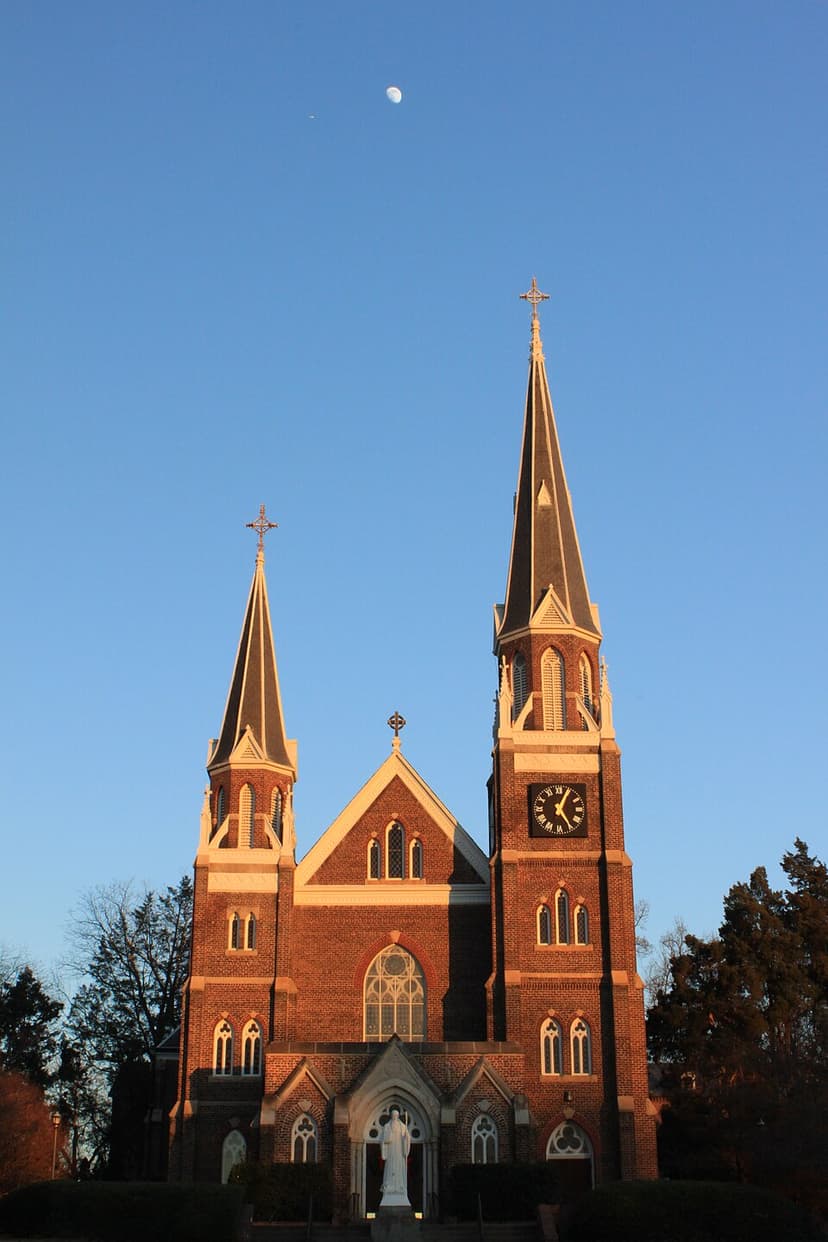
Abbey Basilica of Our Lady Help of Christians (Belmont Abbey)
The Abbey Basilica of Our Lady Help of Christians, located at Belmont Abbey in North Carolina, is a significant Catholic religious site. Originally established as a monastery and educational institution, it was elevated to the status of an abbey and later designated as a minor basilica. The basilica is notable for its Gothic Revival architecture and its historical role in education and religious administration in the region.

Basilica of Our Lady Help of Christians (She Shan Basilica)
The Basilica of Our Lady Help of Christians, also known as the National Shrine of Our Mother of Sheshan, is a significant Roman Catholic Marian shrine located in Shanghai, China. Elevated to the status of a Minor Basilica by Pope Pius XII in 1942, it is a major pilgrimage site for Chinese Catholics, venerating a statue of Mary Help of Christians and an icon of Our Mother of Sheshan. The basilica's history is intertwined with the French Jesuits and has endured periods of damage and reconstruction, making it a symbol of faith and resilience.

Shrine Basilica of Mary Help of Christians, Breña
The Basilica of Mary Help of Christians, also known as Basílica María Auxiliadora, is a Roman Catholic church located in Breña, Lima, Peru. Constructed between 1916 and 1924, it played a significant role in Peru's Centennial celebrations and has demonstrated remarkable resilience against multiple earthquakes.