
Basilica of Our Lady Help of Christians (She Shan Basilica)
China·Shanghai
The Basilica of Our Lady Help of Christians, also known as the National Shrine of Our Mother of Sheshan, is a significant Roman Catholic Marian shrine located in Shanghai, China. Elevated to the status of a Minor Basilica by Pope Pius XII in 1942, it is a major pilgrimage site for Chinese Catholics, venerating a statue of Mary Help of Christians and an icon of Our Mother of Sheshan. The basilica's history is intertwined with the French Jesuits and has endured periods of damage and reconstruction, making it a symbol of faith and resilience.
Key Facts
- ›The basilica is a Roman Catholic Marian shrine located on Sheshan Hill in Shanghai, China.
- ›It was elevated to the status of a Minor Basilica by Pope Pius XII in 1942.
- ›The current basilica was constructed between 1924 and 1935, replacing an earlier church built by French Jesuits.
- ›It is a significant pilgrimage destination, particularly during may, with a plenary indulgence granted to pilgrims.
- ›The church houses a venerated statue of Mary Help of Christians and the icon of our Mother of Sheshan.
- ›The basilica and its surroundings suffered damage during the Cultural Revolution but have since been repaired.

Classical Basilica Form, Chinese and Western Architecture
Mary Help of Christians, Our Mother of Sheshan
Statue of Mary Help of Christians, Icon of Our Mother of Sheshan
Jesuits
Alphonse De Moerloose, FrançOis-Xavier Diniz
About Basilica of Our Lady Help of Christians (She Shan Basilica)
The Basilica of Our Lady Help of Christians, also known as the National Shrine of Our Mother of Sheshan, stands as a prominent Roman Catholic Marian shrine in Shanghai, China. Its location on Sheshan Hill in the Songjiang District has made it a spiritual focal point for Catholics in the region and beyond. The basilica was officially recognized and elevated to the status of a Minor Basilica by Pope Pius XII in 1942, a significant designation that underscores its importance.
History and Construction
The history of Catholic presence on Sheshan Hill dates back to the early 1860s when French Jesuits began acquiring land. An initial hilltop church, designed by French Jesuit Brother Léon Mariot, was completed in the early 1870s, featuring a blend of Chinese and Western architectural elements. This structure was later deemed inadequate, prompting the Shanghai Jesuits to commission Belgian missionary-architect Father Alphonse De Moerloose to design a more monumental basilica. Construction of the current basilica commenced in 1924 and continued until 1935, under the daily supervision of Portuguese Jesuit missionary-architect Father François-Xavier Diniz.
The basilica's construction was a significant undertaking, involving the careful transport of materials to the hilltop. The new basilica was built in a classical basilica form, measuring approximately 70 feet (20 meters) in height, with a rectangular Latin cross shape. It features entrances on the north, west, and south sides, with the main door located in the southwest. The interior boasts a nave that is 55.81 meters long and 24.68 meters wide, with a ceiling height of 16.46 meters, capable of seating 3000 worshippers.
Religious Significance and Pilgrimage
The basilica is dedicated to the Virgin Mary under the title of Mary Help of Christians, with a venerated statue of her enshrined within. It also houses the recently reconstructed icon of Our Mother of Sheshan, both of which are objects of deep devotion for Chinese Catholics. The shrine's religious importance was further amplified in 1874 when Pope Pius IX declared that pilgrims visiting Sheshan in May, traditionally a Marian month, would receive a plenary indulgence. This declaration transformed the site into a major pilgrimage destination, drawing Catholics from across China, a tradition that continues to this day.
Challenges and Resilience
The basilica has faced significant challenges throughout its history. During the Chinese retreat from Shanghai, the area around the basilica was the site of battles. More severely, the church and its environs suffered considerable damage during the Cultural Revolution. This included the destruction of statues, smashing of stained-glass windows, and damage to ancillary buildings. Following the end of the Cultural Revolution in 1976, gradual repairs were undertaken to restore the basilica. In 2000, a replacement statue was installed atop the bell tower, which stands 38 meters tall and is crowned with a 4.8-meter bronze statue of the Madonna and Child.
In a more recent development, Pope Benedict XVI announced on May 24, 2008, that he had composed a special prayer for Our Lady of Sheshan, further acknowledging the shrine's spiritual significance.
Source: Wikipedia ↗
Frequently Asked Questions
What is the Basilica of Our Lady Help of Christians also known as?
The basilica is also known as the National Shrine of Our Mother of Sheshan. It was formerly romanized as Zosé Basilica, using the Shanghainese pronunciation of its location.
When was the Sheshan church elevated to the rank of minor basilica?
Pope Pius XII formally raised the Sheshan church to the rank of minor basilica through his pontifical decree Compertum Habemus. This decree was officially signed and notarized on September 12, 1942.
Who designed the current basilica?
The plans for the monumental new basilica were designed by the Belgian missionary-architect Father Alphonse De Moerloose. The daily supervision of its construction was handled by the Portuguese Jesuit missionary-architect Father François-Xavier Diniz.
What is the significance of Sheshan Hill for Catholics?
Sheshan Hill is significant as the location of a major Roman Catholic Marian shrine. In 1924, China was solemnly consecrated to the Virgin Mary under the title of Mary Help of Christians on Sheshan Hill during the Catholic Synod of Shanghai.
What happened to the basilica during the Cultural Revolution?
During the Cultural Revolution, the church and its environs sustained damage. This included damage to ancillary buildings, destruction of statues, smashing of stained-glass windows, and the toppling of the statue at the steeple.
What relics or venerated items are housed in the basilica?
The basilica enshrines a venerated statue of the Blessed Virgin Mary under the title of Mary Help of Christians. It also houses the recently reconstructed icon of Our Mother of Sheshan, both of which are venerated by Chinese Catholics.
Related Basilicas
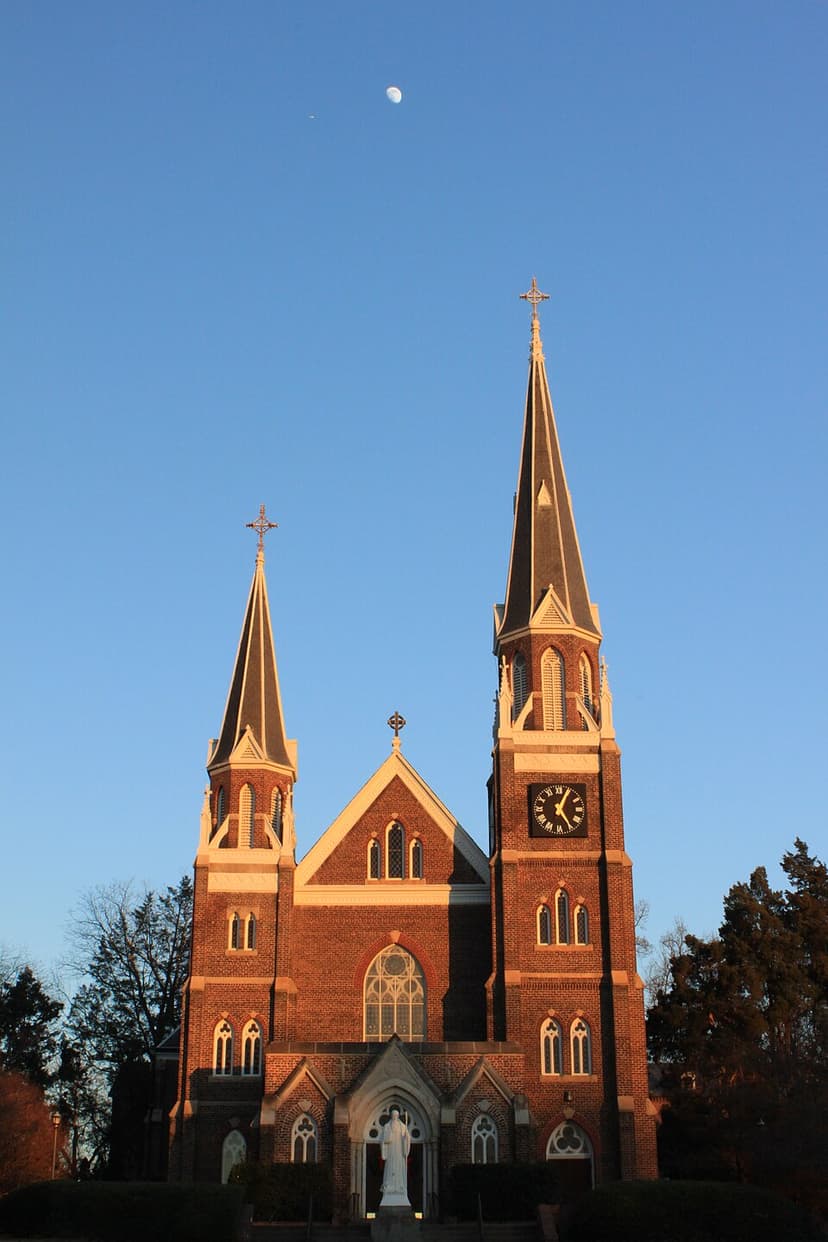
Abbey Basilica of Our Lady Help of Christians (Belmont Abbey)
The Abbey Basilica of Our Lady Help of Christians, located at Belmont Abbey in North Carolina, is a significant Catholic religious site. Originally established as a monastery and educational institution, it was elevated to the status of an abbey and later designated as a minor basilica. The basilica is notable for its Gothic Revival architecture and its historical role in education and religious administration in the region.

"Old" Basilica of Our Lady of Guadalupe
The Insigne y Nacional Basílica de Santa María de Guadalupe, commonly known as the Basilica of Our Lady of Guadalupe, is a prominent Catholic church in Mexico City dedicated to the Virgin Mary under her invocation as Our Lady of Guadalupe. It is one of the most visited Marian shrines in the world, attracting an estimated twenty million pilgrims annually, with a significant portion visiting around December 12th, the feast day of Our Lady of Guadalupe. The sanctuary complex includes the older church, now referred to as the Old Basilica, built in the early 18th century, and the modern New Basilica constructed in the 1970s to accommodate the growing number of devotees.

"Old" Basilica of Our Lady of La Vang
The "Old" Basilica of Our Lady of La Vang is a significant Marian shrine located in Quảng Trị Province, Vietnam, associated with a reported apparition of the Virgin Mary during a period of Christian persecution. Pope John XXIII elevated the shrine to the status of a Minor Basilica in 1961, making it a focal point for Catholic devotion in Vietnam.