
Basilica of St Martin of Tours
The Taal Basilica, officially the Minor Basilica and Parish of Saint Martin of Tours, is a significant Roman Catholic church located in Taal, Batangas, Philippines. It is renowned for being the largest church building in the Philippines and the largest Augustinian church, showcasing Italian Baroque architecture. The basilica is dedicated to Saint Martin of Tours, the town's patron saint, and has a rich history marked by several reconstructions due to natural disasters.
Key Facts
- ›Construction of the present church began in 1856 and was completed in 1878.
- ›It is the largest church building in the Philippines, measuring 88.6 meters long and 48 meters wide.
- ›The basilica is built in the Italian Baroque architectural style on a Latin cross layout.
- ›It was declared a minor basilica on December 8, 1954, becoming the third in the Philippines to receive this honor.
- ›The church has been designated a national historical landmark by Presidential Decree no. 375.
- ›It has undergone multiple restorations, most recently after damage from earthquakes in 2017 and the 2020 Taal Volcano eruption.

Italian Baroque
Augustinian
Luciano Oliver, Marcos AntóN, Agapito Aparicio
About Basilica of St Martin of Tours
Taal Basilica
The Minor Basilica and Parish of Saint Martin of Tours, commonly known as Taal Basilica, is a significant religious edifice in Taal, Batangas, Philippines. It holds the distinction of being the largest church building in the Philippines and the largest Augustinian church, a testament to its grand scale and architectural importance.
History
The history of the Taal Basilica is marked by resilience and rebuilding. The first church dedicated to Saint Martin of Tours was begun in 1575. This was rebuilt in 1642 but tragically destroyed, along with the town, in the catastrophic eruption of Taal Volcano in 1754. The town and church were subsequently relocated to their present elevated site. Construction of a new church commenced in 1755, undergoing further development and facing damage from a strong earthquake in 1852.
The present church, designed by Spanish architect Luciano Oliver and initiated by Marcos Antón, began construction in 1856. Despite being inaugurated in 1865 while unfinished, it was fully completed by Agapito Aparicio in 1878. The basilica has since undergone several restorations, notably in preparation for the canonical coronation of Our Lady of Caysasay in 1953. It was officially declared a minor basilica on December 8, 1954, and a national historical landmark in 1974. The basilica has also faced damage from earthquakes in 2017 and the 2020 Taal Volcano eruption, necessitating further restoration efforts.
Architecture and Significance
Architecturally, the Taal Basilica is constructed in the Italian Baroque style, laid out on a Latin cross plan. Its imposing structure features three naves, a grand transept, and an elegant façade adorned with Ionic and Doric orders. The basilica's substantial dimensions—88.6 meters long and 48 meters wide—underscore its status as the largest church in the Philippines. The interior boasts a Doric altar standing 24 meters high and a baptistery with European tiles, reflecting the craftsmanship of its construction and subsequent renovations. The basilica's dedication to Saint Martin of Tours aligns with the town's patron saint, whose feast day is celebrated annually on November 11.
Source: Wikipedia ↗
Frequently Asked Questions
What is the Taal Basilica's full name?
The full name of the Taal Basilica is the Minor Basilica and Parish of Saint Martin of Tours. It is commonly known as Taal Basilica.
Who is the patron saint of the Taal Basilica?
The patron saint of the Taal Basilica is Saint Martin of Tours. His feast day is celebrated annually on November 11.
When was the Taal Basilica declared a minor basilica?
The Taal Basilica was declared a minor basilica on December 8, 1954. It was the third church in the Philippines to be granted this status.
What are the dimensions of the Taal Basilica?
The basilica measures 88.6 meters (291 ft) in length and 48 meters (157 ft) in width, making it the largest church in the Philippines. Its façade is 28 meters (92 ft) high, and the cupola reaches 44.5 meters (146 ft).
What architectural style is the Taal Basilica?
The Taal Basilica is built in the Italian Baroque architectural style. It features a Latin cross layout, three naves, a grand transept, and an elegant façade with Ionic and Doric orders.
Has the Taal Basilica been damaged by natural disasters?
Yes, the basilica has a history of damage from natural disasters. Earlier churches were destroyed by volcanic eruptions and earthquakes, and the present church has been damaged by earthquakes in 1952, 1942 (old belfry), 2017, and 2020, as well as ashfall from the 2020 Taal Volcano eruption.
Related Basilicas

Basilica of the Immaculate Conception
The Minor Basilica and Parish of the Immaculate Conception, also known as the Archdiocesan Shrine of Santo Niño de Batangan, is a significant religious site in Batangas City, Philippines. Established as an independent parish in 1614, it is one of the oldest churches in the region and holds a revered ivory image of La Inmaculada Concepcion de Batangan, which has received pontifical coronation. The basilica's robust architecture is designed to withstand natural disasters, reflecting its long and resilient history.
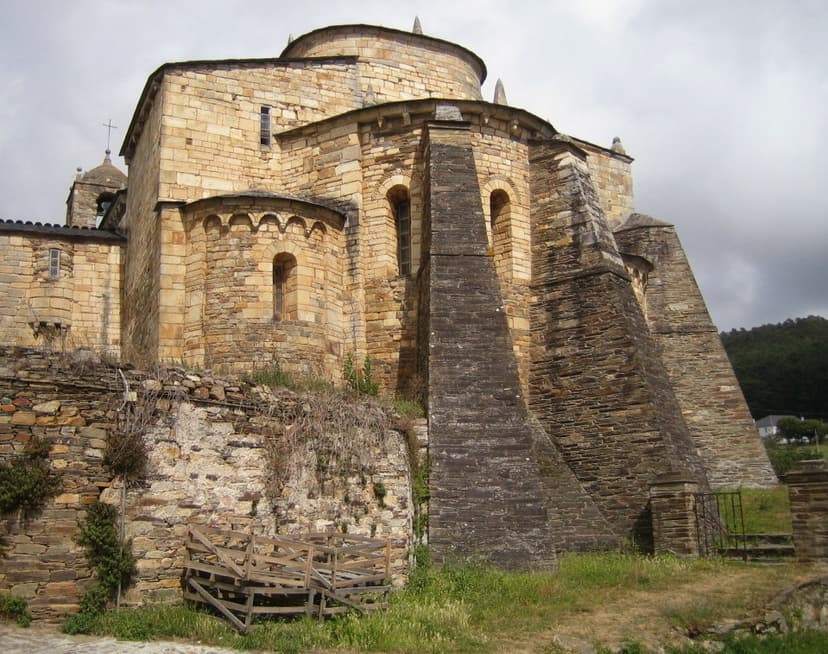
Basilica of St Martin of Mondoñedo
The Basilica of San Martiño de Mondoñedo, located in Foz, Galicia, Spain, is recognized as the oldest cathedral in Spain. It served as the episcopal seat for two bishops in the ninth century. The current Romanesque structure dates to the late eleventh century, with later eighteenth-century reinforcements.
Basilica of Saint Gregory the Great
The Basilica of Saint Gregory the Great, commonly known as Majayjay Church, is a historic Minor Basilica and Roman Catholic church in the Philippines, recognized as a National Cultural Treasure. It stands as one of the oldest churches in the country, with a history of construction and rebuilding spanning centuries, reflecting significant efforts in preserving Catholic heritage.