
Basilica of St Francis Xavier
United States·Dyersville·Archdiocese of Dubuque
The Basilica of St. Francis Xavier is a prominent parish church in Dyersville, Iowa, elevated to the status of a minor basilica in 1956. It is renowned for its impressive Ruskinian Gothic Revival architecture, featuring towering steeples and a seating capacity for approximately 1,000 worshippers. The church and its rectory were jointly recognized for their historical significance by being listed on the National Register of Historic Places in 1999.
Key Facts
- ›Construction of the current Gothic Revival structure began in 1887 and was completed in 1889, costing approximately $100,000.
- ›The church was consecrated in the MID-1950s, a prerequisite for its elevation to basilica status.
- ›It was officially designated a minor basilica by Pope Pius XII on May 11, 1956, becoming the twelfth church in the United States to receive this honor.
- ›The basilica's architecture is characterized by Ruskinian Gothic Revival style, with two steeples reaching 212 feet (65 M) tall.
- ›The interior boasts extensive decorations including paintings and frescoes by Milwaukee artists Clotilda and Alphonse Brielmaier, and features a large rose window with an Indian motif.
- ›The church building measures 174.5 by 70 feet (53.2 by 21.3 M) and has a seating capacity of about 1,000 people.

Ruskinian Gothic Revival
Fridolin Heer Sr., Fridolin Heer Jr.
About Basilica of St Francis Xavier
The Basilica of St. Francis Xavier, located in Dyersville, Iowa, is a significant parish church within the Archdiocese of Dubuque. It was honored with the status of a minor basilica in 1956, a distinction granted by Pope Pius XII. The church and its adjacent rectory were collectively recognized for their historical importance when they were added to the National Register of Historic Places in 1999.
History and Construction
Dyersville's early settlement was marked by English immigrants, followed by a substantial German Catholic population. A parish was established in 1859 to serve these German immigrants. The first St. Francis Xavier Church, completed in 1862, was soon outgrown, necessitating an expansion by 1869. By 1880, it was clear that a larger church was needed to accommodate the growing Catholic community.
A new building program commenced in the mid-1880s, resulting in the design of a large Gothic Revival structure by Dubuque architects Fridolin Heer Sr. and Fridolin Heer Jr. Construction began in 1887, with the cornerstone laid on June 3, 1888. The new church was dedicated on December 3, 1889, by Bishop John Hennessy, at a cost of approximately $100,000. The former church was repurposed as classrooms and later demolished.
Architectural Features
The basilica is a striking example of Ruskinian Gothic Revival architecture. Its two prominent steeples rise to 212 feet (65 m), capped with 14-foot crosses, making the church a visible landmark from miles away. The rectangular building measures 174.5 by 70 feet (53.2 by 21.3 m) and stands 76 feet (23 m) high, featuring a polygonal apse on its west side. The interior is characterized by columns and vaulted ceilings, with a seating capacity for around 1,000 worshippers.
The church is adorned with 64 large cathedral glass windows, including a notable rose window above the entrance, installed in 1959, which features an Indian motif recognizing the region's historical inhabitants. The interior is further enhanced by numerous paintings and frescoes, much of which was completed by Milwaukee artists Clotilda and Alphonse Brielmaier between 1904 and 1905. These artworks have undergone restoration and touch-ups over the years.
Religious Significance and Designation
Efforts to elevate St. Francis Xavier to minor basilica status began in the 1940s, championed by figures like then-Father Mathias M. Hoffman. A crucial step was the church's consecration in the mid-1950s, a ritual anointing of the walls with chrism that signifies the building can never be used for secular purposes. This consecration is a prerequisite for basilica designation.
On May 11, 1956, Pope Pius XII officially raised the church to the rank of a minor basilica, the twelfth in the United States to receive this honor. The ceremony drew large crowds and high-ranking clergy from across the state. The basilica also houses a tintinnabulum and an umbraculum, ceremonial items signifying its role as a papal church in the event of a papal visit.
Later Developments
An addition to the south side of the basilica was made in 1989, providing accessibility features like a handicapped elevator and restrooms. In the mid-1990s, the parish began offering the Tridentine Mass in Latin. The church's interior underwent a significant refurbishment from 2000 to 2001, including the cleaning and restoration of paintings, frescoes, altars, and statues. The center aisle also features a unique floor installed in 1998, combining terrazzo with laser-cut brass molds depicting various significant symbols.
Source: Wikipedia ↗
Frequently Asked Questions
When was the Basilica of St. Francis Xavier built?
Construction of the current church building began in 1887 and was completed in 1889. The rectory was built later, in 1935.
What architectural style is the Basilica of St. Francis Xavier?
The basilica features Ruskinian Gothic Revival architecture. This style is evident in its imposing two steeples, each 212 feet tall, and the overall design of the rectangular structure.
When was the church designated as a minor basilica?
The Basilica of St. Francis Xavier was elevated to the rank of a minor basilica on May 11, 1956, by Pope Pius XII. This honor was bestowed after the church building was consecrated.
What is the seating capacity of the basilica?
The church has a seating capacity of approximately 1,000 people. The parish itself comprises about 5,000 members.
What is notable about the interior of the basilica?
The interior is richly decorated with paintings and frescoes, largely created by Clotilda and Alphonse Brielmaier between 1904 and 1905. It also features a large rose window with an Indian motif and ornate altars and pulpits.
Is the Basilica of St. Francis Xavier historically recognized?
Yes, the church building and its rectory were jointly listed on the National Register of Historic Places in 1999, recognizing their historical and architectural significance.
Related Basilicas

Cathedral Basilica of St Francis Xavier
St. Francis Xavier Cathedral, originally a Jesuit church, became a cathedral in 1991 and is now one of only four minor basilicas in Belarus. Its construction began in 1687, resulting in a significant Baroque basilica renowned for its elaborate frescoes, altars, and sculptures.
Basilica of St Fidelis
The Basilica of St. Fidelis, also known as the Cathedral of the Plains, is a Romanesque-style Catholic parish church located in Victoria, Kansas. It was constructed between 1908 and 1911 and was elevated to the status of a minor basilica in 2014. Its impressive architecture and prominent location have made it a significant landmark in western Kansas.
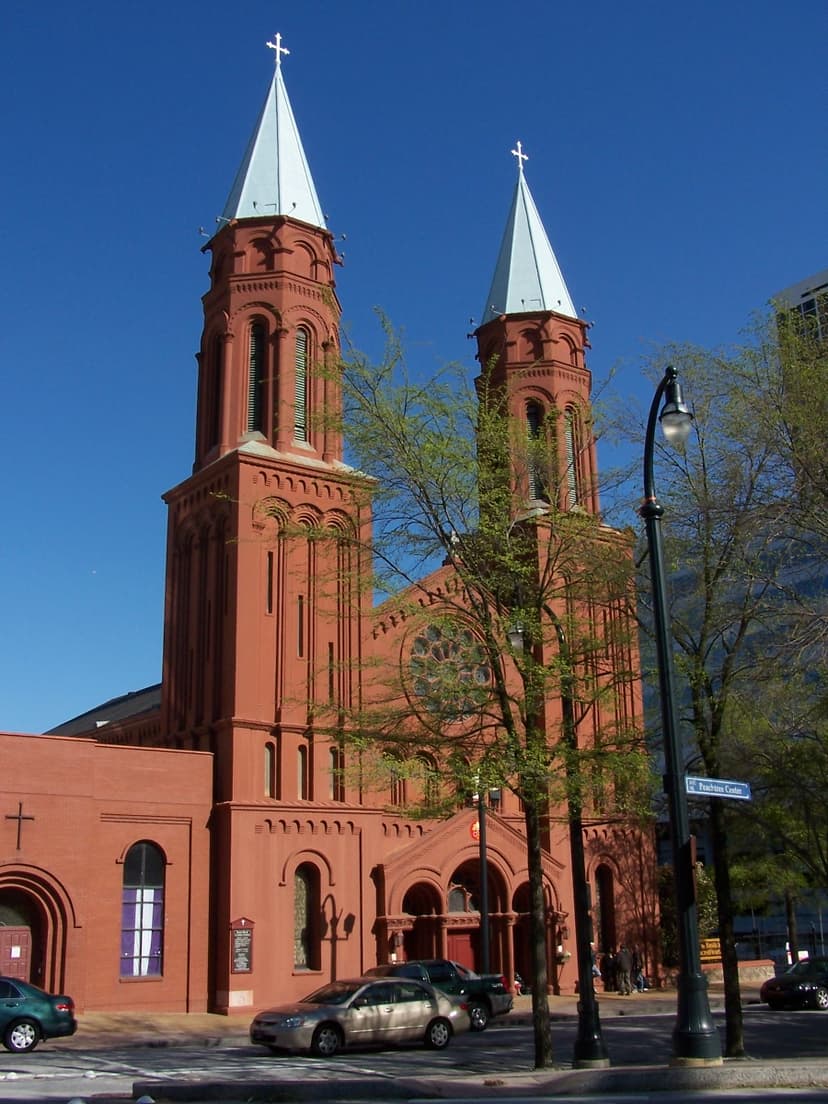
Basilica of the Sacred Heart of Jesus
The Basilica of the Sacred Heart of Jesus is a Roman Catholic church located in downtown Atlanta, Georgia. Completed in 1898, it is recognized for its French Romanesque and Romanesque Revival architecture and was designated a minor basilica in 2010. The church holds historical significance as one of the few remaining structures from Atlanta's early 20th-century development and has served its congregation for over a century.