
Basilica of St Encratius
Spain·Zaragoza
The Basilica of Santa Engracia in Zaragoza, Spain, is built on the traditional site of the martyrdom of Saint Engratia and her companions in 303 AD. It holds significant historical and religious importance, evolving from an early Christian tomb to an abbey, then a monastery, and finally a basilica designated by Pope John Paul II in 1982.
Key Facts
- ›Built on the site of the martyrdom of Saint Engratia and her companions.
- ›An abbey was established around 609 AD to house the relics of Saint Engratia and other martyrs.
- ›The monastery church was largely destroyed in the 1809 Siege of Saragossa.
- ›The current building was constructed between 1891 and 1899.
- ›Designated a minor basilica by Pope John Paul II in 1982.
- ›The crypt contains two Early Christian sarcophagi from the fourth century.

Saint Engratia
Relics of Saint Engratia and Companions
Hieronymites
Gil Morlanes El Viejo
About Basilica of St Encratius
The Basilica of Santa Engracia
The Basilica of Santa Engracia, located in Zaragoza, Spain, stands as a significant site of Christian martyrdom and devotion. It is traditionally believed to have been constructed on the very spot where Saint Engratia and her companions suffered martyrdom in the year 303 AD. The basilica's history is deeply intertwined with the veneration of these early Christian martyrs.
Historical Development
The earliest known structure on the site, dating to the early fourth century, was a tomb built within a Christian-Roman necropolis. By approximately 609 AD, the Abbey of Santa Engracia was established specifically to house the relics of Saint Engratia and the numerous martyrs of Saragossa. This abbey saw significant changes over the centuries. Around 1492, Ferdinand II of Aragon ordered its demolition and founded the Hieronymus monastery of Santa Engracia in its place.
The monastery church faced considerable destruction during the Siege of Saragossa in 1809, a pivotal event in the Spanish War of Independence. Only the crypt and the façade remarkably survived the conflict. Following this devastation, the present basilica structure was erected between 1891 and 1899.
The church's importance was further recognized in modern times when Pope John Paul II visited Zaragoza and honored it with the designation of a minor basilica on the occasion of his visit in 1982.
Architectural Significance
The basilica's façade was initiated around 1511 by Gil Morlanes El Viejo and completed by his son five years later. This façade underwent modifications between 1754 and 1759, following a partial collapse of the church. Today, parts of this original façade are the sole remnants of the monastery church that stood before the current edifice was built.
Within the basilica, the crypt holds particular architectural and historical importance. Discovered in 1737, it contains two Early Christian sarcophagi dating back to the fourth century, offering a tangible link to the site's ancient past.
Source: Wikipedia ↗
Frequently Asked Questions
Where is the Basilica of Santa Engracia located?
The Basilica of Santa Engracia is located in Zaragoza, Spain, specifically at Plaza de Santa Engracia.
What is the historical significance of the Basilica of Santa Engracia?
It is believed to be built on the spot where Saint Engratia and her companions were martyred in 303 AD. The site has a long history of religious devotion, dating back to an early Christian tomb and later housing relics of martyrs.
When was the Basilica of Santa Engracia designated as a basilica?
The church was honored with the designation of a minor basilica by Pope John Paul II during his visit in 1982.
What are some notable architectural features of the Basilica of Santa Engracia?
The façade was begun in the early 16th century and later modified. The most significant architectural elements remaining include the crypt with two Early Christian sarcophagi from the fourth century.
What happened to the original monastery church?
The monastery church was largely destroyed during the Siege of Saragossa in 1809, with only the crypt and the façade surviving. The present building was constructed on the site between 1891 and 1899.
Related Basilicas
Cathedral Basilica of St Mary of the Meadow
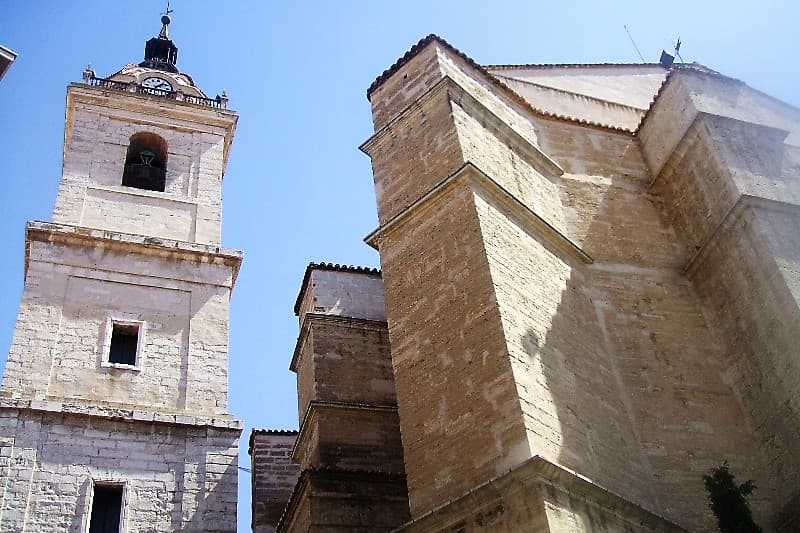
The Holy Priory Church Cathedral Basilica of the Military Orders of Our Lady Saint Mary of the Prado, commonly known as the Cathedral of Saint Mary of the Prado, is a significant religious and architectural landmark in Ciudad Real, Spain. Its construction, spanning centuries and incorporating Gothic, Renaissance, and Baroque elements, makes it a rich historical monument. Since 1875, it has served as the priory for four of Spain's military orders, underscoring its enduring importance.
Basilica of St Mary of the Sea
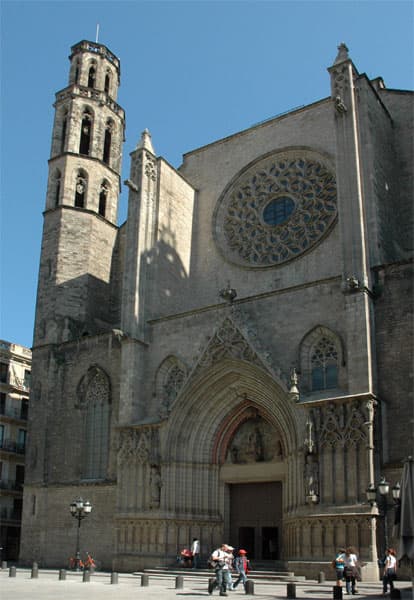
The Basilica of St Mary of the Sea, known in Catalan as Santa Maria del Mar, is a prominent church in Barcelona, Spain, constructed between 1329 and 1383. It stands as a remarkable example of Catalan Gothic architecture, distinguished by its stylistic purity and unity. The basilica holds significance as a testament to the maritime and mercantile power of the Principality of Catalonia during the medieval period, and notably, its construction was supported by the common people rather than the nobility.

Basilica of the Most Holy and True Cross
The Basilica of Vera Cruz, officially known as Basílica de la Vera Cruz, is a Roman Catholic church located in the town of Caravaca de la Cruz. It was granted the title of minor basilica by the Dicastery for Divine Worship and the Discipline of the Sacraments on December 3, 2007, signifying its importance within the Catholic Church.