
Basilica of St Andrew
United States·Roanoke
The Basilica of St. Andrew, also known as St. Andrew's Catholic Church, is a historic Catholic church and rectory located in Roanoke, Virginia. Constructed between 1900 and 1902 in the High Victorian Gothic style, it is recognized for its buff brick edifice, stone trimming, cruciform plan, and twin Gothic towers. The church was designated a minor basilica on September 6, 2023, adding to its religious and architectural significance.
Key Facts
- ›Built between 1900 and 1902, replacing an earlier church from 1883.
- ›Designed by William P. Ginther in the High Victorian Gothic architectural style.
- ›Features a cruciform plan with two tall Gothic towers flanking the main entrance.
- ›Listed on the National Register of Historic Places in 1973.
- ›Received the title of minor basilica on September 6, 2023.
- ›Underwent significant renovations after the Second Vatican Council and a major update from 2010 to 2014.
High Victorian Gothic
William P. Ginther
About Basilica of St Andrew
The Basilica of St. Andrew, also identified as St. Andrew's Catholic Church, stands as a significant historical and religious landmark in Roanoke, Virginia. Constructed between 1900 and 1902, this edifice replaced an earlier brick church built in 1883. The current structure is a prominent example of High Victorian Gothic architecture, characterized by its buff brick exterior with stone trimming, a cruciform layout, and two imposing Gothic towers that frame the main entrance.
Designed by William P. Ginther of Akron, Ohio, the church was envisioned to become a landmark in Roanoke. Its construction cost $60,000, with an additional $40,000 allocated for interior furnishings. The building's architectural features include lancet windows, pointed-arch stained-glass tracery windows, and belfry openings that enhance its Gothic aesthetic. A rectory, built in 1887, is also part of the property.
The Basilica of St. Andrew has undergone several renovations to maintain its structural integrity and adapt to evolving liturgical practices. Following the Second Vatican Council, internal modifications were made to facilitate versus populum Mass celebration, including the installation of a freestanding altar. Later renovations replaced the original freestanding altar with a more ornate marble one and saw the removal of side altars and some iconography to create a brighter interior. From 2010 to 2014, a significant renovation project addressed the large pipe organ, replacing it with an electric one while retaining the pipes for decorative purposes, and also involved the renovation of the original steeples.
Recognizing its historical and religious importance, the church was listed on the National Register of Historic Places in 1973. Its status was further elevated on September 6, 2023, when the Dicastery for Divine Worship and the Discipline of the Sacraments officially granted it the title of minor basilica, solidifying its place as a site of devotion and architectural heritage.
Source: Wikipedia ↗
Frequently Asked Questions
When was the Basilica of St. Andrew built?
The Basilica of St. Andrew was built between 1900 and 1902. It replaced a smaller brick church that was constructed in 1883.
What is the architectural style of the Basilica of St. Andrew?
The basilica is designed in the High Victorian Gothic style. It is characterized by its buff brick construction with stone trimming and features two tall Gothic towers.
What notable renovations has the Basilica of St. Andrew undergone?
The church has had two major renovations. The first occurred after the Second Vatican Council to allow for liturgical alterations, and a second, more extensive renovation took place from 2010 to 2014, which included updating the organ and renovating the steeples.
When was St. Andrew's designated as a minor basilica?
The parish church was granted the title of minor basilica on September 6, 2023, by the Dicastery for Divine Worship and the Discipline of the Sacraments.
What was the cost of constructing the Basilica of St. Andrew?
The construction of the buff brick edifice cost $60,000, with an additional $40,000 budgeted for interior appointments and trim.
Related Basilicas

Archcathedral Basilica of the Assumption and St Andrew the Apostle
The Archcathedral Basilica of the Assumption and St Andrew the Apostle, also known as Frombork Cathedral, is a significant Roman Catholic church located in Frombork, Poland. Constructed between 1329 and 1388, it replaced an earlier timber structure and is notable for its historical association with the astronomer Nicolaus Copernicus, who worked and is believed to be buried there. The basilica is recognized as a national Historic Monument in Poland.
Basilica of St Fidelis
The Basilica of St. Fidelis, also known as the Cathedral of the Plains, is a Romanesque-style Catholic parish church located in Victoria, Kansas. It was constructed between 1908 and 1911 and was elevated to the status of a minor basilica in 2014. Its impressive architecture and prominent location have made it a significant landmark in western Kansas.
Basilica of the Sacred Heart of Jesus
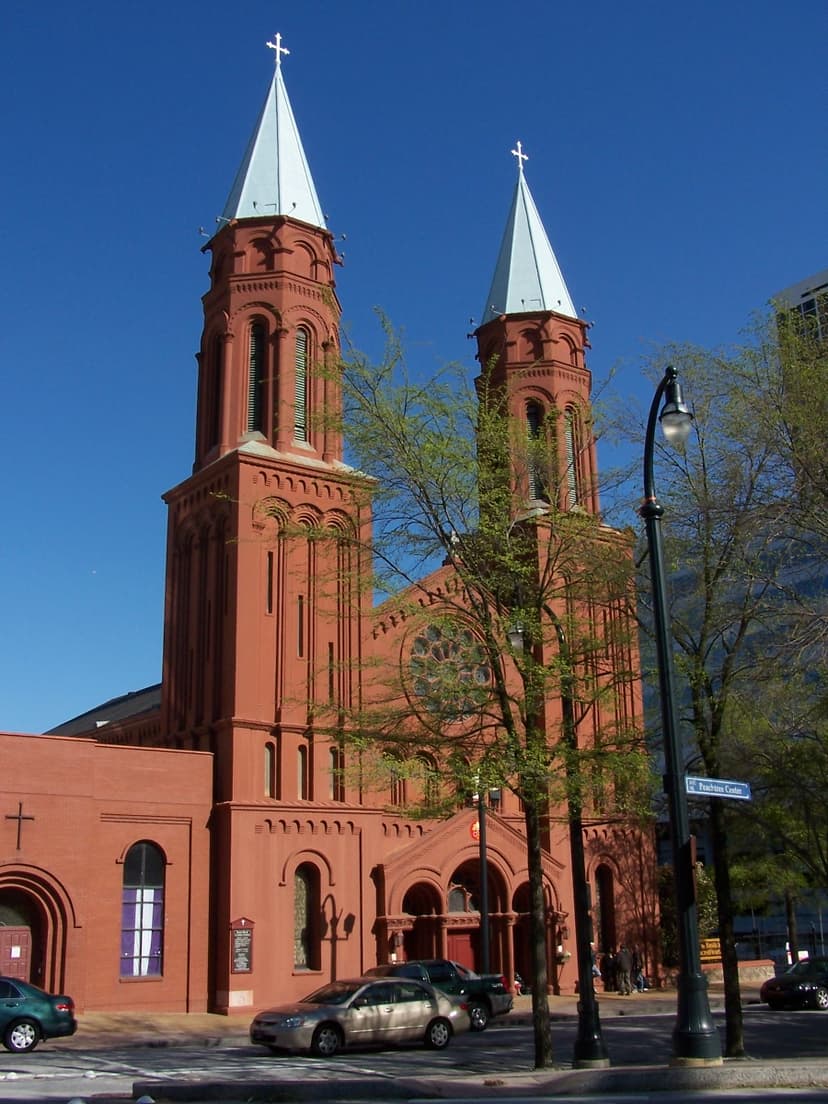
The Basilica of the Sacred Heart of Jesus is a Roman Catholic church located in downtown Atlanta, Georgia. Completed in 1898, it is recognized for its French Romanesque and Romanesque Revival architecture and was designated a minor basilica in 2010. The church holds historical significance as one of the few remaining structures from Atlanta's early 20th-century development and has served its congregation for over a century.