
Basilica of Our Lady of Grace, Sveta Gora
Slovenia·Sveta Gora
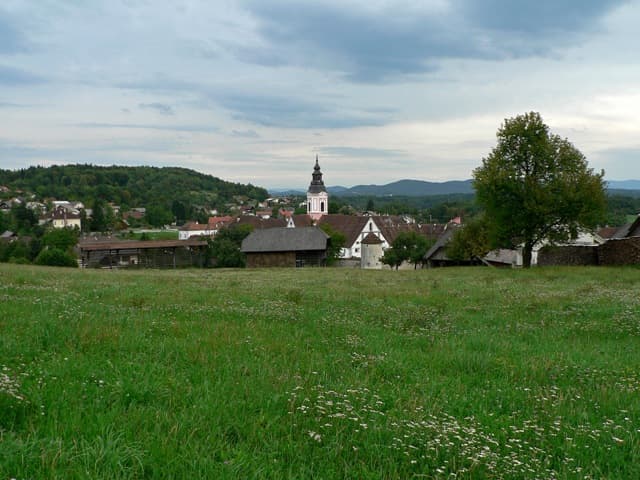
The Basilica of Our Lady of Grace, Sveta Gora, is a significant pilgrimage site in western Slovenia, situated atop Holy Mount. Its origins trace back to a 1539 vision where the Virgin Mary reportedly instructed a shepherdess to initiate the construction of a church dedicated to her. The site also witnessed intense conflict during World War I.
Key Facts
- ›Construction of the church was inspired by a vision of the Virgin Mary in 1539.
- ›Urška Ferligoj, a shepherdess, reported the vision that led to the church's founding.
- ›The area experienced significant battles between Austrian and Italian forces in May 1917.
- ›Austro-Hungarian dugout shelters remain on the path to the Franciscan monastery and church.
- ›Sveta Gora became an independent settlement in 2006.

Franciscans
About Basilica of Our Lady of Grace, Sveta Gora
Sveta Gora: A Marian Pilgrimage Site
The Basilica of Our Lady of Grace, Sveta Gora, is a prominent pilgrimage church and monastery located in western Slovenia. Its history is deeply intertwined with a reported divine apparition and has served as a spiritual center for centuries.
Origins and Vision
The foundational event for the church at Sveta Gora occurred in 1539. According to tradition, a shepherdess named Urška Ferligoj experienced a vision in which the Virgin Mary appeared to her. In this vision, the Virgin Mary allegedly instructed Ferligoj to convey a message to the people, commanding them to build a church in her honor. This celestial directive marked the beginning of the sacred site's development.
Historical Context and Conflict
Sveta Gora, meaning 'Holy Mount,' earned its name from its spiritual significance. The site is situated above the Soča Valley, in the Municipality of Nova Gorica. While a place of peace and devotion, Sveta Gora also became a focal point of conflict. In May 1917, during World War I, the area witnessed intense battles between Austrian and Italian forces. The presence of Austro-Hungarian dugout shelters along the Skalnica Road leading to the Franciscan monastery and church serves as a stark reminder of this turbulent period in the region's history.
Religious and Administrative Significance
The Basilica is associated with the Franciscan order, who manage the monastery and church. The site continues to be a destination for pilgrims seeking spiritual solace and veneration. Administratively, Sveta Gora became an independent settlement in 2006, having previously been part of the territories of Solkan and Grgar. Its elevation to an independent settlement underscores its unique identity and importance within the region.
Source: Wikipedia ↗
Frequently Asked Questions
When was the Basilica of Our Lady of Grace, Sveta Gora founded?
The founding of the church at Sveta Gora was inspired by a vision in 1539. A shepherdess named Urška Ferligoj reported seeing the Virgin Mary, who commanded her to tell people to build a church.
What is the significance of Sveta Gora?
Sveta Gora is a holy mount and a pilgrimage destination in western Slovenia. Its significance is rooted in the reported vision of the Virgin Mary and the subsequent construction of a church and Franciscan monastery.
Was Sveta Gora involved in any historical conflicts?
Yes, Sveta Gora was the scene of heavy fighting in May 1917 during World War I. Austro-Hungarian dugout shelters are still present along the road leading to the monastery and church, remnants of this period.
What is the geographical location of Sveta Gora?
Sveta Gora is located in western Slovenia, in the Municipality of Nova Gorica. It sits atop Holy Mount, overlooking the Soča Valley and southwest of the Banjšice Plateau.
Related Basilicas
Basilica of Our Lady, Stična Abbey
The Basilica of Our Lady, Stična Abbey, located within the oldest monastery in Slovenia, is a significant religious and cultural site. Originally founded in 1136, the abbey has undergone numerous architectural transformations, retaining Romanesque and Gothic elements within its Baroque structures. The basilica itself is dedicated to Our Lady of Sorrows and functions as a parish church, with both the abbey and its Romanesque basilica recognized as national cultural monuments.

"Old" Basilica of Our Lady of Guadalupe
The Insigne y Nacional Basílica de Santa María de Guadalupe, commonly known as the Basilica of Our Lady of Guadalupe, is a prominent Catholic church in Mexico City dedicated to the Virgin Mary under her invocation as Our Lady of Guadalupe. It is one of the most visited Marian shrines in the world, attracting an estimated twenty million pilgrims annually, with a significant portion visiting around December 12th, the feast day of Our Lady of Guadalupe. The sanctuary complex includes the older church, now referred to as the Old Basilica, built in the early 18th century, and the modern New Basilica constructed in the 1970s to accommodate the growing number of devotees.

Archcathedral Basilica of the Assumption and St Andrew the Apostle
The Archcathedral Basilica of the Assumption and St Andrew the Apostle, also known as Frombork Cathedral, is a significant Roman Catholic church located in Frombork, Poland. Constructed between 1329 and 1388, it replaced an earlier timber structure and is notable for its historical association with the astronomer Nicolaus Copernicus, who worked and is believed to be buried there. The basilica is recognized as a national Historic Monument in Poland.