
Sri Sunama Jakini Matha
Sri Sunama Jakini Matha is a temple dedicated to a deified legendary woman from the Suryavamshi Kshatriya Are-Katika community. The temple commemorates her life and the unique circumstances of her spiritual passing, becoming a significant site of worship for her community.
Key Facts
- ›The temple is dedicated to Sri Sunama Jakini Maata, a deified legendary woman.
- ›She was born in the Suryavamshi Kshatriya Are-Katika community in Pinnepalli village, Anantapur district, Andhra Pradesh.
- ›The temple is considered one of the first dedicated to the Suryavamshi Kshatriya Are-Katika community.
- ›The incident leading to her deification is estimated to have occurred around 1803 AD.
- ›The temple's foundation stone was laid on February 22, 2002, with consecration in 2003.
- ›Annual celebrations, or 'jaatara', are held on the second Thursday and Friday of Magha Masam.
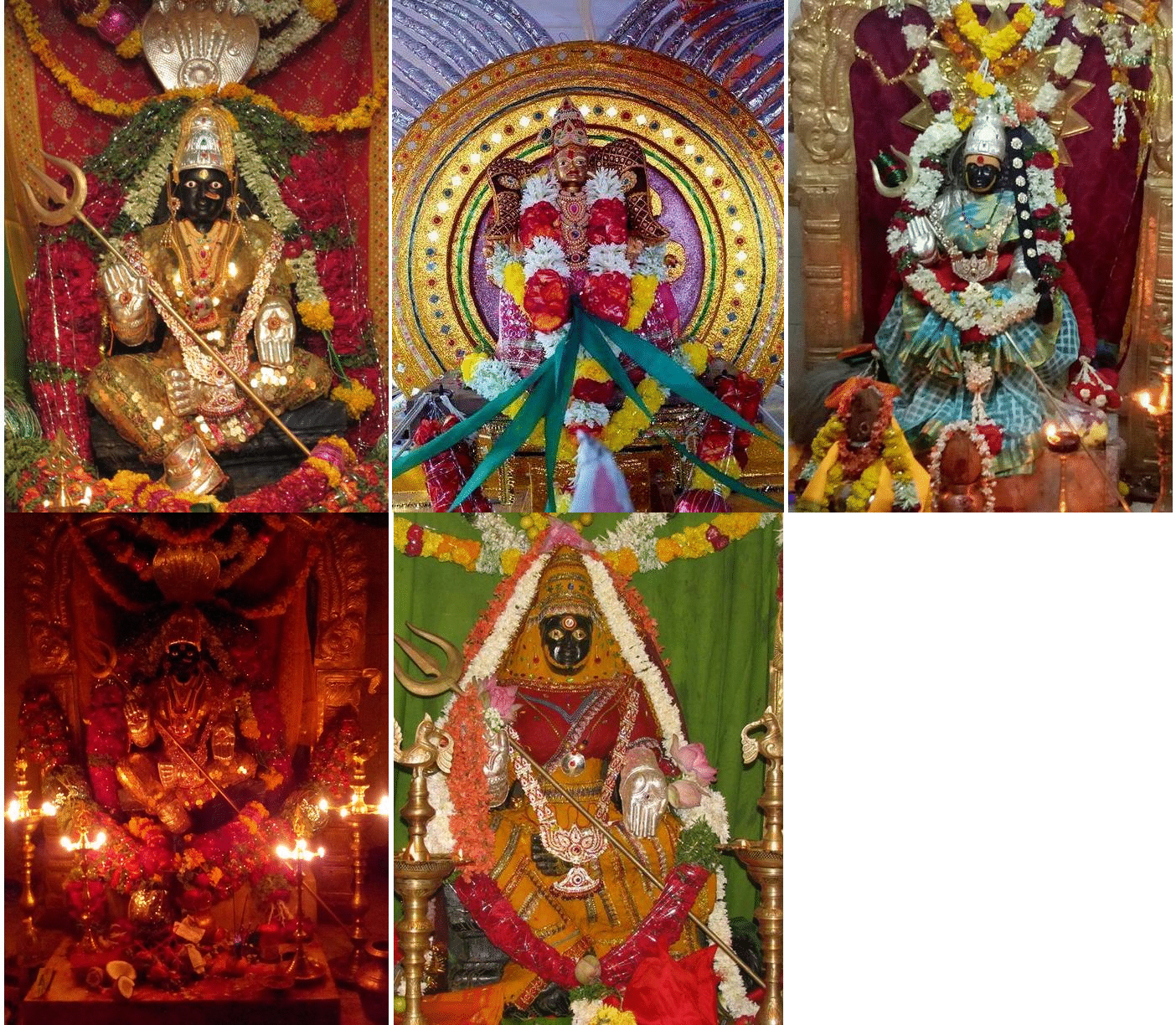
Sunama Jakini Maata
- Religious Site For the Suryavamshi Kshatriya Are-Katika Community
- Honors A Deified Legendary Woman
- Annual Celebrations On the Second Thursday and Friday of Magha Masam
Are-Katika Community
About Sri Sunama Jakini Matha
Sri Sunama Jakini Matha is a temple dedicated to the deification of a legendary woman from the Suryavamshi Kshatriya Are-Katika community. The temple is situated in Gooty town, within the Anantapur district of Andhra Pradesh, India, and holds particular importance as one of the earliest temples established for this community.
History and Legend
The central figure, Sri Sunama Jakini Maata, was born in the Malkari gotram of the Are-Katika community in Pinnepalli village. Tradition recounts that during a period of fasting, she fell unconscious. Her husband, mistakenly believing her to be dead, ordered her burial against the pleas of locals. However, it was discovered she was still alive. Under the influence of alcohol, the husband allegedly insisted on her burial, leading to her taking 'Jeeva Samadhi,' a concept akin to Nirvana. This event is estimated to have occurred around 1803 AD.
Later, her family members, upon visiting her grave, found fresh white flowers and heard a celestial voice. This voice reportedly directed them to arrange a marriage between her husband and her sister, Malkuma Jakini. While initially resistant, the family eventually accepted this divine guidance. From this point onwards, Sunama Jakini Maata has been revered as a goddess and an incarnation by the Are-Katika community.
Temple Construction and Operations
The foundation stone for the Sri Sunama Jakini Matha temple was laid on February 22, 2002, with the main consecration ceremony, or 'prana pratishtha,' taking place on February 14, 2003. The temple's Shikara was consecrated in 2005.
Annual celebrations, known as 'jaatara,' are observed on the second Thursday and Friday of Magha Masam according to the Indian Hindu calendar. These events draw a significant number of pilgrims, estimated between 15,000 to 20,000, from various states including Andhra Pradesh, Telangana, Karnataka, Tamil Nadu, Pondicherry, and Maharashtra.
The temple is managed by a temple committee, responsible for its development activities. This committee is operated by an elected body chosen through elections conducted among the members of the Are-Katika community.
Source: Wikipedia ↗
Frequently Asked Questions
Who is Sri Sunama Jakini Maata?
Sri Sunama Jakini Maata is a legendary Indian woman from the Suryavamshi Kshatriya Are-Katika community who was deified. The temple honors her and the spiritual significance attributed to her life and passing.
Where is Sri Sunama Jakini Matha located?
The temple is located in Gooty town, within the Anantapur district of Andhra Pradesh, India.
What is the history behind the deification of Sunama Jakini Maata?
According to tradition, Sunama Jakini Maata took 'Jeeva Samadhi' under tragic circumstances involving her husband's misunderstanding of her state during a fast. Her family later witnessed divine signs and heard celestial voices which led to her worship as a goddess.
When was the temple built?
The foundation stone for the temple was laid on February 22, 2002, and the 'prana pratishtha' (consecration) took place on February 14, 2003. The Shikara was consecrated in 2005.
Who visits the temple and when?
Devotees from Andhra Pradesh, Telangana, Karnataka, Tamil Nadu, Pondicherry, and Maharashtra visit the temple, particularly during the annual celebrations which attract an estimated 15,000 to 20,000 pilgrims.
How is the temple managed?
The temple's development activities are managed by a temple committee. This committee is operated by an elected body chosen through elections among the members of the Are-Katika community.
Related Temples (Hindu)

Iskcon Temple, Chennai
The ISKCON Temple Chennai, also known as Sri Sri Radha Krishna Mandir, is a prominent Gaudiya Vaishnavism temple dedicated to Lord Krishna and his consort Radha. Inaugurated in 2012, it was established following the directives of ISKCON founder A. C. Bhaktivedanta Swami Prabhupada to create a significant spiritual center in Chennai.

Hare Krishna Golden Temple
The Hare Krishna Golden Temple, located in Banjara Hills, Hyderabad, India, is the first Golden Temple constructed in Telangana. Inaugurated in 2018, it is dedicated to multiple deities including Lakshmi Narasimha Swamy, Radha-Govinda, Lord Shiva, and Lord Hanuman. The temple is known for its significant golden features, including a 50-foot Dhwaja Stambh and a Rajagopuram with five golden stairs.

Prem Mandir, Vrindavan
Prem Mandir is a prominent Hindu temple located in Vrindavan, Uttar Pradesh, India. It was established by Jagadguru Shri Kripalu Ji Maharaj and dedicated to Radha Krishna and Sita Ram. The temple complex is renowned for its intricate architecture and lush gardens, featuring life-size depictions of Krishna's leelas.