
Maa Ugra Tara
The ancient temple of Maa Ugra Tara is located in Mulajharigarh village, Bhusandapur, Odisha, India, and is dedicated to the fierce yet benevolent goddess Tara. She is revered as the tutelary deity of the Eastern Ganga dynasty kings and is one of the ten Mahavidyas in Hindu Tantrik theology, known for her potent weapons and standing over a funeral pyre.
Key Facts
- ›The temple is dedicated to Maa Ugra Tara, a form of the goddess Tara.
- ›She is considered the tutelary deity of the Eastern Ganga dynasty kings of Kalinga.
- ›The icon depicts a three-eyed, four-armed goddess holding weapons, a blue lotus, and a cup, standing on a corpse amidst flames.
- ›Elements like serpent anklets and a serpent crown suggest a connection to the 11th-century Sadhanamala Tantra.
- ›Maa Ugra Tara is one of the ten Mahavidyas within Hindu Tantrik theology.
- ›The temple is situated in Mulajharigarh village, Bhusandapur, Odisha, India.
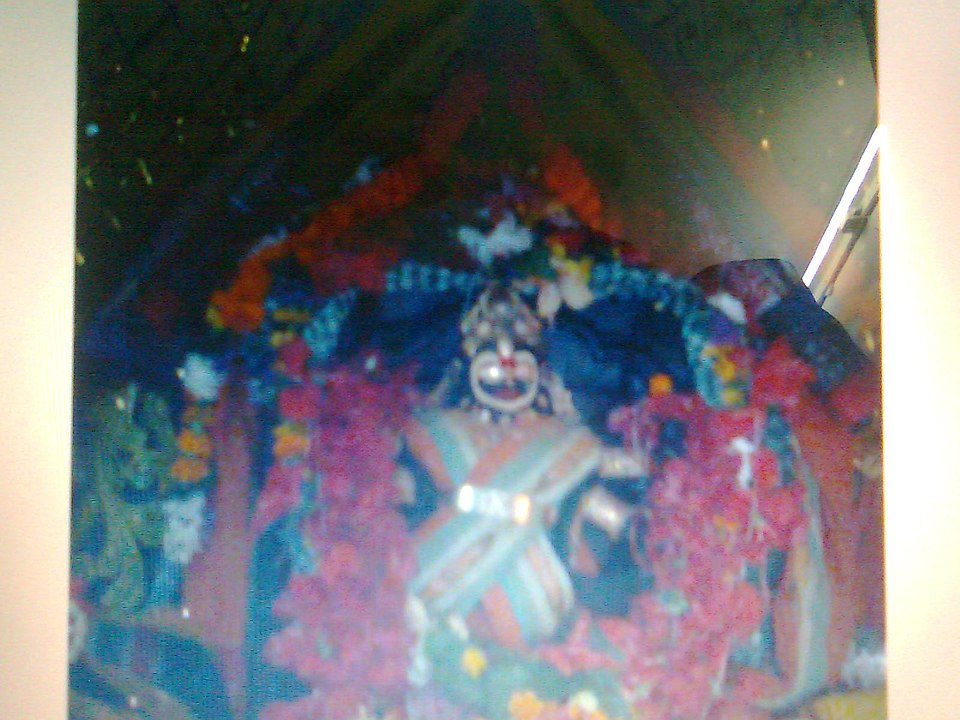
Ugra Tara
Tutelary Deity of Eastern Ganga Dynasty Kings, One of the Ten Mahavidyas, Important Site For Tantrik Worship
Eastern Ganga Dynasty
Chaitra Parba, Raja Parba, Sharadiya Durga Puja
Eastern Ganga Dynasty Kings
Icon of Mother Tara
About Maa Ugra Tara
The ancient temple dedicated to Maa Ugra Tara is located in Mulajharigarh village, Bhusandapur, in the state of Odisha, India. This sacred site is situated approximately 65 kilometers from the state capital, Bhubaneswar. Maa Ugra Tara is a significant deity in Hindu Tantrik theology, recognized as one of the ten Mahavidyas. She is particularly revered as the tutelary deity of the kings of the Eastern Ganga dynasty, who ruled the erstwhile Kalinga kingdom.
Iconography and Worship
The icon of Maa Ugra Tara is characterized by her three eyes and four arms. In her hands, she holds potent symbolic weapons, including a sword and a dagger, alongside a blue lotus and a drinking cup. A striking feature of the iconography is that she stands over a corpse atop the flames of a funeral pyre. The presence of serpent anklets and a serpent adorning her crown strongly suggests that the worship and iconography date back to at least the 11th century, aligning with the Tantrik text Sadhanamala Tantra.
Maa Ugra Tara is known for her fierce aspect, which earns her the name Ugratara, but she is also considered benevolent and benevolent to her devotees, sometimes referred to as Ekajata or Neela-Saraswati. The temple practices Tantrik rituals, including the offering of all fivefold tantrik paraphrenalias. Many individuals from the Vasishtha Gotra consider her their Ishta Devi, or cherished personal deity.
Historical Context and Accessibility
While Maa Ugra Tara held prominence as the tutelary deity of the Eastern Ganga rulers, her importance saw a decline when later kings of the Gajapati dynasty began to revere goddesses Kali or Shyamakaali more intensely. Nevertheless, the cult of Ugra Tara persisted and remains significant. The temple's location in Bhusandapur is accessible via the nearby Bhushandapur railway station, with local passenger trains connecting from Bhubaneswar and Balugaon.
Festivals
Key festivals celebrated at the temple include Chaitra Parba, Raja Parba, and Sharadiya Durga Puja. These occasions draw devotees who seek the blessings of Maa Ugra Tara.
Source: Wikipedia ↗
Frequently Asked Questions
Where is the ancient temple of Maa Ugra Tara located?
The ancient temple of Maa Ugra Tara is located in Mulajharigarh village, Bhusandapur, approximately 65 kilometers from Bhubaneswar, the state capital of Odisha, India. The nearest railway station is Bhushandapur.
What is the significance of Maa Ugra Tara?
Maa Ugra Tara is revered as the tutelary deity of the Eastern Ganga dynasty kings of the erstwhile Kalinga dynasty. She is also recognized as one of the ten Mahavidyas in Hindu Tantrik theology and is considered benevolent to her adorers despite her fierce aspect.
What does the icon of Maa Ugra Tara depict?
The icon of Maa Ugra Tara is three-eyed and Chaturbhuja (four-armed). She holds potent weapons such as a sword and dagger, along with a blue lotus and a drinking cup. She stands over a corpse on the flames of a funeral pyre, with serpent anklets and a serpent on her crown.
When was the worship of Maa Ugra Tara likely established?
The presence of serpent anklets and a serpent on the crown of the icon clearly dates the worship back to the time of the 11th-century Tantrik text Sadhanamala Tantra.
What are the main festivals celebrated at the Maa Ugra Tara temple?
The main festivals celebrated at the temple include Chaitra Parba, Raja Parba, and Sharadiya Durga Puja. The goddess is worshipped in a tantrik way, with offerings of all tantrik fivefold paraphrenalias.
Who reveres Maa Ugra Tara as their Ishta Devi?
Many people belonging to the Vasishtha Gotra revere Maa Ugra Tara as their Ishta Devi (cherished deity).
Related Temples (Hindu)

Srikalahasteeswara temple
The Srikalahasteeswara temple, located in Andhra Pradesh, India, is a significant Hindu temple dedicated to Shiva as Vayu Lingam. It is renowned as one of the Pancha Bhuta Sthalams and is considered the "Kailash of the South," attracting devotees for its unique Vayu Lingam and the Rahu-Ketu pooja.

Shamlaji
Shamlaji is a significant Hindu pilgrimage center located in Gujarat, India, primarily dedicated to Vishnu in his form as Shamlaji. The site boasts a rich history, with evidence of ancient Buddhist and Hindu monastic activity, and its main temple structure dates to the 15th-16th centuries, though older sculptures are present. It is renowned for its religious importance and the annual fair held during the Kartik Sud 15th.

Amarnath Cave Temple
Amarnath Cave Temple is a Hindu shrine located in the Indian Himalayas, renowned for its natural ice stalagmite Shiva Lingam. Situated at a high altitude, it is accessible to pilgrims only for a brief summer period and is considered one of the 51 Shakti Pithas. The temple's pilgrimage, known as the Amarnath Yatra, has ancient roots and attracts a significant number of devotees annually.