
Kodandarama Temple, Tirupati
The Kodandarama Temple in Tirupati, Andhra Pradesh, India, is a significant Hindu temple dedicated to Lord Rama, an incarnation of Vishnu. The temple, believed to have been built by the Cholas in the tenth century, is also home to shrines for Sita, Lakshmana, and Anjaneya, Rama's mount.
Key Facts
- ›Dedicated to Lord Rama, an incarnation of Vishnu, along with Sita and Lakshmana.
- ›Features a sub-shrine for Rama's mount, Anjaneya.
- ›According to legend, Lord Rama resided here with Sita and Lakshmana during Treta Yuga.
- ›Constructed by the Cholas in the tenth century AD.
- ›Organized and managed by the Tirumala Tirupati Devasthanams board.
- ›Celebrates major festivals including Rama Navami and annual Brahmotsavams.
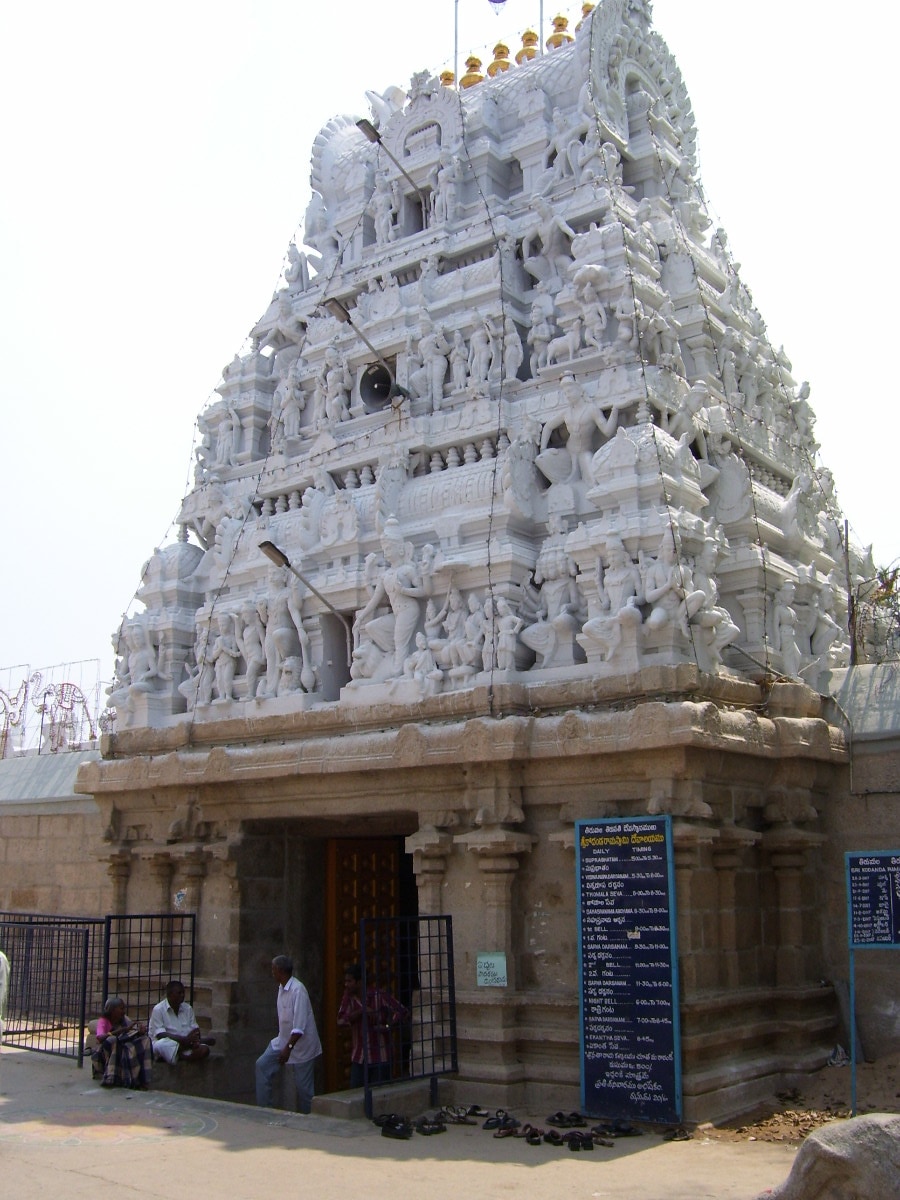
Rama, Sita, Lakshmana, Vishnu, Anjaneya
- Historical Importance As A Chola-Era Construction.
- Religious Significance As A Place of Worship For Lord Rama and Associated Deities.
- Site For Major Hindu Festivals and Annual Celebrations.
Chola
Rama Navami, Brahmotsavams, Teppotsavams
Cholas
Sri Ramachandra Pushkarini
About Kodandarama Temple, Tirupati
The Kodandarama Temple, located in Tirupati, Andhra Pradesh, India, is a prominent Hindu temple dedicated to Lord Rama, revered as an incarnation of Vishnu. The temple complex also enshrines deities of Sita and Lakshmana, who are central figures in the epic Ramayana, and a sub-shrine for Anjaneya, Rama's devoted mount.
Legend and History
According to the Varaha Purana, the site holds legendary significance as the place where Lord Sri Rama resided with Sita Devi and Lakshmana during the Treta Yuga, upon their return from Lankapuri. Historically, the temple was constructed by the Chola dynasty during the tenth century AD, establishing its ancient roots.
Administration and Festivals
Today, the Kodandarama Temple is managed by the Tirumala Tirupati Devasthanams (TTD) board. The temple is a vibrant center for religious observances, with major festivals celebrated throughout the year. Rama Navami is observed with great fanfare, including events like Hanumantha Vahana Seva, Sri Sita Rama Kalyanam, and Sri Rama Pattabhisheka Mahotsavam. The annual nine-day Brahmotsavams, held between March and April, are another significant event. Additionally, the three-day Teppotsavams, or Float festival, takes place in April, where processional deities are taken on a float in the Sri Ramachandra Pushkarini.
Source: Wikipedia ↗
Frequently Asked Questions
What deities are worshipped at the Kodandarama Temple in Tirupati?
The Kodandarama Temple is primarily dedicated to Lord Rama, an incarnation of Vishnu. It also features deities of Sita and Lakshmana, who accompanied Rama. Additionally, there is a sub-shrine dedicated to Anjaneya, Rama's mount.
What is the historical origin of the Kodandarama Temple?
According to legend, Lord Rama resided at this site with Sita and Lakshmana during Treta Yuga. Historically, the temple was built by the Chola dynasty in the tenth century AD.
What are the major festivals celebrated at the Kodandarama Temple?
Key festivals include Rama Navami, celebrated with grandeur and associated events like Hanumantha Vahana Seva, Sri Sita Rama Kalyanam, and Sri Rama Pattabhisheka Mahotsavam. The temple also hosts nine-day annual Brahmotsavams between March and April, and a three-day Teppotsavams (Float festival) in April.
Who administers the Kodandarama Temple today?
The present-day administration of the Kodandarama Temple is managed by the Tirumala Tirupati Devasthanams (TTD) board.
Related Temples (Hindu)

Shiva temple, Kera
The Shiva temple, Kera, also known as the Lakheshwara temple of Kerakot, is an ancient Hindu temple located in Kera village, near Bhuj in Gujarat, India. Built during the later part of the 10th century under the Chaulukya dynasty, it is dedicated to the deity Shiva and is renowned for its well-preserved spire and intricate sculptures, despite significant damage from historical earthquakes.

Varahi Deula, Chaurasi
Varahi Deula, Chaurasi is an ancient temple on the eastern coast of Odisha, India, dedicated to Goddess Varahi. Constructed in the 10th century during the Somavamsi rule, it is renowned for its unique Khakhara architectural style and the exquisite image of the deity, considered a masterpiece among Varahi depictions in India.

Thillai Nataraja Temple
The Thillai Nataraja Temple in Chidambaram, Tamil Nadu, is a significant Hindu temple dedicated to Shiva as Nataraja, the cosmic dancer. With ancient roots and a history of renovation by the Chola dynasty, its architecture symbolizes the union of arts and spirituality, prominently featuring the 108 karanas of the Natya Shastra. It is a revered pilgrimage site and holds importance within Shaivism as one of the Pancha Sabha Thalam and Pancha Bhuta Thalam.