
JK Temple
Blend of ancient and modern·20th century·India
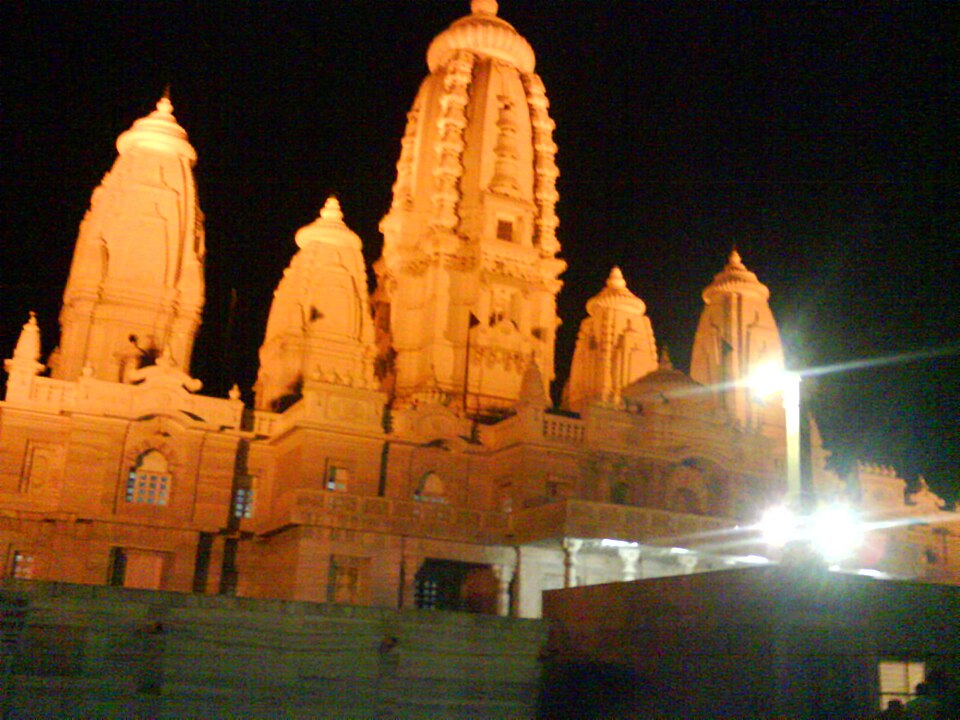
The JK Temple, also known as Radhakrishna Temple, is a Hindu temple located in Kanpur, Uttar Pradesh, India. Constructed by the JK Trust and opened to the public in 1960, it is noted for its unique architectural blend of ancient and modern styles, featuring a mandapa with high roofs for ventilation. The temple complex houses five shrines dedicated to various deities.
Key Facts
- ›The temple is popularly known as Radhakrishna Temple.
- ›Constructed by the JK Trust, founded by the Singhania family's JK Organisation.
- ›Opened to the public in 1960 and celebrated its 50th anniversary in 2010.
- ›Features five shrines dedicated to Radha and Krishna, Lakshmi and Narayan, Ardhanarishwar, Narmadeshwar, and Hanuman.
- ›The mandapa is designed with high roofs for ample light and air ventilation.
- ›Photography is prohibited, and the temple has strict security measures.
Radha and Krishna, Lakshmi and Narayan, Ardhanarishwar, Narmadeshwar, Hanuman
- Architectural Blend of Ancient and Modern Styles
- Dedicated To Various Hindu Deities
Janmashtami
Jk Trust
About JK Temple
The JK Temple, also widely known as the Radhakrishna Temple, is a significant Hindu place of worship located in the city of Kanpur, Uttar Pradesh, India. Established by the JK Trust, an organization founded by the Singhania family as part of the JK Organisation, the temple was opened to the public in 1960. It is recognized for its distinctive architectural design, which harmoniously merges ancient and modern elements, particularly evident in its mandapa, featuring high roofs designed to facilitate ample light and air circulation.
History and Patronage
The temple's construction was undertaken by the JK Trust, which was formed in 1953. The trust continues to manage the majority of the temple's maintenance expenses, ensuring its upkeep and preservation. The temple marked its 50th anniversary in 2010, reflecting its long-standing presence in the community.
Religious Significance and Shrines
JK Temple houses five distinct shrines, catering to the worship of several important Hindu deities. The central shrine is dedicated to the primary deities, Shri Radhakrishna. Other shrines within the complex are adorned with idols of Shri Laxminarayan, Shri Ardhanarishwar, Shri Narmadeshwar, and Shri Hanuman.
Campus and Architecture
The temple is situated within a triangular campus oriented in an east-west direction, featuring a landscape dotted with various plants and trees. Three ponds are integrated within the campus on its west, north, and south sides. The architectural approach includes even-level roofs for the mandapas, ensuring sufficient natural ventilation. A lake named Moti Jheel is located in proximity to the temple complex.
Visiting Information
The optimal period for visiting JK Temple is from October to March, owing to favorable weather conditions. The temple experiences a surge in visitors, particularly on the occasion of Janmashtami, a festival commemorating the birth of Lord Krishna. The temple is open daily from 9:00 am to 12:00 noon and from 4:00 pm to 6:30 pm. However, visitors should be aware of certain security protocols, including a prohibition on photography, the need to deposit large bags, and mandatory frisking before entry.
Source: Wikipedia ↗
Frequently Asked Questions
When was JK Temple opened to the public?
JK Temple was opened to the public in the year 1960. The JK Trust, which constructed the temple, was formed in 1953.
What deities are worshipped at JK Temple?
JK Temple has five shrines dedicated to Lord Radha and Krishna, Lord Lakshmi and Narayan, Lord Ardhanarishwar, Lord Narmadeshwar, and Lord Hanuman. The central shrine is dedicated to Shri Radhakrishna.
What is the architectural style of JK Temple?
JK Temple is considered a unique blend of ancient and modern architecture. A notable feature is the mandapa, constructed with a high roof to ensure adequate ventilation for light and air.
What are the visiting hours for JK Temple?
JK Temple is open every day of the week. The visiting hours are from 9:00 am to 12 noon and again from 4:00 pm to 6:30 pm.
What is the best time to visit JK Temple?
The best time to visit JK Temple is between October and March. The temple also experiences an increase in visitors on Janmashtami, the festival celebrating Lord Krishna's birth.
Are there any restrictions for visitors at JK Temple?
Yes, photography is prohibited at JK Temple, and the premises are heavily secured with guards and CCTV. Visitors are also required to deposit handbags and large purses at the cloakroom before entry, and they are frisked.
Related Temples (Hindu)

EME Temple
The Dakshinamoorthy and Navgraha EME Temple in Vadodara, Gujarat, is a unique Hindu temple dedicated to Lord Shiva, built in 1966 by the Indian Army's EME School. Its distinctive geodesic dome design, inspired by Buckminster Fuller, incorporates architectural elements from major world religions, symbolizing secularism.

Swaminarayan Akshardham (Gandhinagar)
Swaminarayan Akshardham in Gandhinagar, Gujarat, India, is a vast Hindu temple complex dedicated to Swaminarayan and his teachings, inspired by prominent spiritual successors of the Swaminarayan faith. Completed in 1992, the 23-acre complex features a central mandir crafted from pink sandstone, along with exhibition halls, a water show, and gardens that explore Hindu philosophy and history.

Maa Dewri Temple
Maa Dewri Temple is an ancient Hindu temple located in Diuri village, near Ranchi, Jharkhand, India. It is primarily dedicated to Maa Dewri Devi, a tribal deity, and is renowned for its 700-year-old idol of the 16-armed goddess. The temple is constructed using interlocking stones without any binding material and holds significant religious and cultural importance for local tribal communities.