
Dodda Basavana Gudi
Dodda Basavana Gudi, also known as the Nandhi Temple, is a significant Hindu temple located in Basavanagudi, South Bengaluru, India. It is renowned for housing one of the largest monolithic stone idols of Nandi, the sacred bull and attendant of Lord Shiva, making it a prominent pilgrimage site for devotees.
Key Facts
- ›The temple is dedicated to Nandi, the sacred bull and vahana of Lord Shiva.
- ›It houses one of the largest monolithic stone idols of Nandi in the world, measuring approximately 15 ft high and 20 ft long.
- ›The temple was built in 1537 by Kempe Gowda under the Vijayanagara Empire.
- ›An annual groundnut fair, 'Kadalekaayi Parishe', is held in the temple premises during the Hindu month of Karthika Maasa.
- ›The temple is situated within Bugle Rock Park in Bengaluru, Karnataka, India.
- ›The Nandi idol is continuously covered with new layers of butter (benne).
Nandi, Shiva
- Houses One of the Largest Nandi Monoliths Globally
- Important Pilgrimage Site For Devotees of Shiva
- Annual Kadalekaayi Parishe Festival
Vijayanagara Empire
Kadalekaayi Parishe
Granite
Kempe Gowda
Monolithic Nandi Idol
About Dodda Basavana Gudi
Dodda Basavana Gudi: The Nandhi Temple
Dodda Basavana Gudi, also known as the Nandhi Temple, is a prominent Hindu temple located in the Basavanagudi area of South Bengaluru, within the Indian state of Karnataka. Situated inside the Bugle Rock park, this temple is dedicated to Nandi, the sacred bull and devoted attendant of Lord Shiva. It is recognized as one of the largest temples dedicated to Nandi globally.
History and Architecture
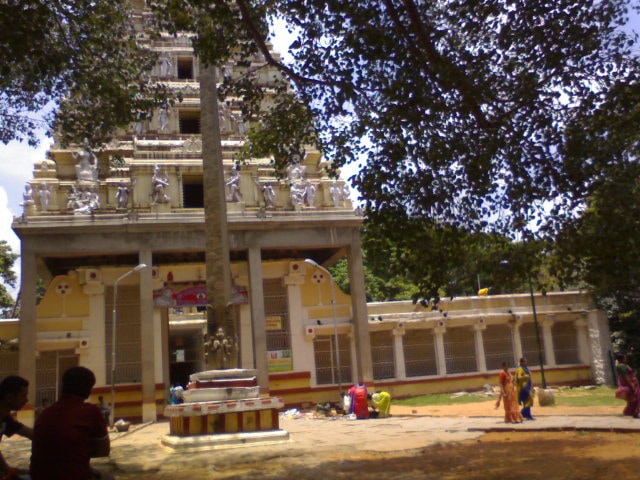
The temple was constructed in 1537 by Kempe Gowda, the founder of Bengaluru, under the patronage of the Vijayanagara Empire. The predominant architectural style is Vijayanagara, evident in the shrine's porch. The temple itself is described as relatively small, comprising the main shrine. The current tower (vimana) above the shrine, erected in the early 20th century, is decorated with motifs and figures associated with Saivism.
The Nandi Idol and Worship
At the heart of Dodda Basavana Gudi is a colossal monolithic idol of Nandi, carved from granite. This idol, which has become blackened over time due to the application of charcoal and oil, stands approximately 15 feet (4.6 meters) in height and measures about 20 feet (6.1 meters) in length. Devotees often cover the idol with fresh layers of butter, known locally as 'benne'. An idol of Lord Ganesha is also located nearby.
Annual Celebrations
A significant annual event held at the temple is the 'Kadalekaayi Parishe', or groundnut fair. This festival takes place on the last Monday and Tuesday of the Hindu month of Karthika Maasa, during which groundnuts are offered to the deity. The fair draws large crowds of groundnut sellers and devotees, making it a vibrant cultural and religious gathering.
Tourism and Significance
Dodda Basavana Gudi is a popular destination for tourists visiting Bengaluru and is frequently included in tour packages offered by operators, including the Karnataka State Tourism Development Corporation. Its immense Nandi idol and the unique annual fair contribute to its status as an important religious and cultural landmark.
Source: Wikipedia ↗
Frequently Asked Questions
What is Dodda Basavana Gudi famous for?
Dodda Basavana Gudi is most famous for its large monolithic stone idol of Nandi, the sacred bull, which is considered one of the largest in the world. It is also known for the annual groundnut fair, Kadalekaayi Parishe, held within its premises.
Who built Dodda Basavana Gudi and when?
The temple was built in 1537 by Kempe Gowda, the founder of Bengaluru, during the reign of the Vijayanagara Empire. He also established the city of Bengaluru.
What is the significance of Nandi in Hinduism?
Nandi is a sacred Hindu demi-god, known as a close devotee and attendant of Lord Shiva. He is also considered Lord Shiva's vahana, or vehicle. The name 'Nandi' itself means 'joyful' in Sanskrit.
What is the Kadalekaayi Parishe?
Kadalekaayi Parishe is an annual groundnut fair held in the temple premises during the Hindu month of Karthika Maasa. During this festival, groundnuts are offered to the deity, and it attracts many groundnut sellers and devotees.
What is the architectural style of Dodda Basavana Gudi?
The temple was built in the Vijayanagara architectural style. The shrine is fronted by a porch in this style, and the tower (vimana) constructed in the early 20th century is adorned with Saivite figures and motifs.
Related Temples (Hindu)

Veerabhadra Temple, Lepakshi
The Veerabhadra Temple, located in Lepakshi, Andhra Pradesh, India, is a 16th-century Hindu temple dedicated to Virabhadra, a fierce form of Shiva. Renowned for its Vijayanagara architectural style, it features extensive carvings and vibrant fresco paintings depicting epic narratives and courtly life.

Jalakandeswarar Temple, Vellore
The Jalakandeswarar Temple, dedicated to Lord Shiva, is an important Vijayanagara-period temple located within the historic Vellore Fort in Tamil Nadu, India. Originally built in 1550 CE, it is renowned for its impressive Vijayanagara architecture, including a tall gopuram, intricately carved pillars, and the unique setting amidst a water tank.

Lakshmi Narasimha swamy temple, Penna Ahobilam
The Lakshmi Narasimha Swamy Temple in Penna Ahobilam is a significant Hindu temple dedicated to Lord Narasimha, situated in the Anantapur district of Andhra Pradesh, India. Built on a hill in the Vijayanagara architectural style, it is considered a self-manifested (Swayambhu) shrine with legends tracing its origins to sage Uddālaka's penance and the divine appearance of Lord Narasimha. The temple is notable for its unique subterranean tunnel system and a sacred footprint believed to belong to the deity.