
Chittaranjan Park Kali Mandir
Bengal terracotta temple architecture·20th century·India
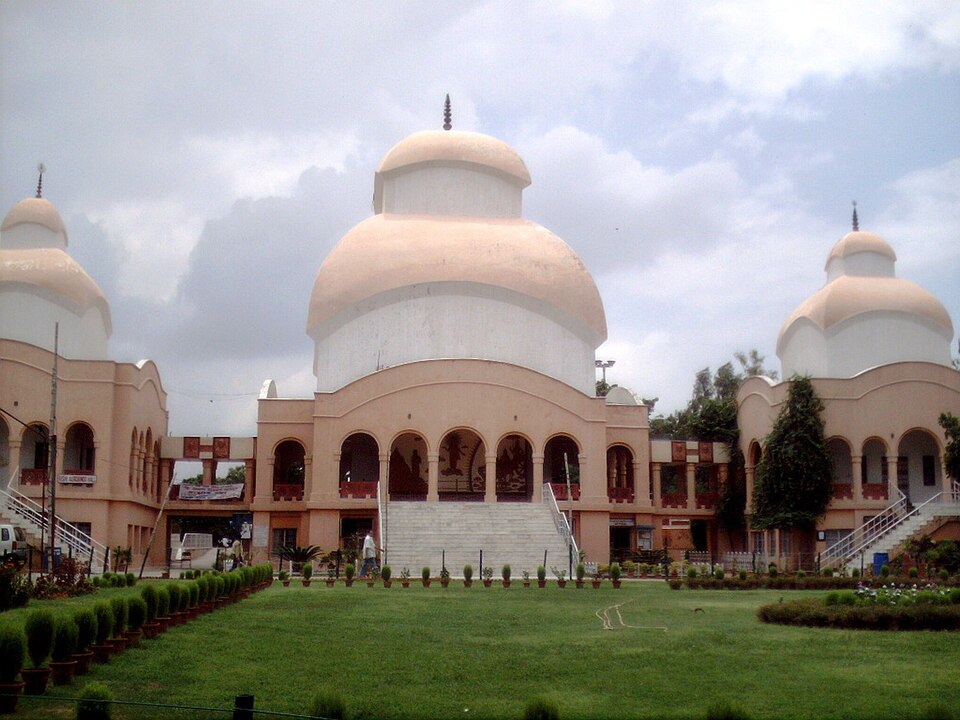
The Chittaranjan Park Kali Mandir is a prominent Hindu temple and cultural center for the Bengali community in New Delhi, India. Established in 1973, it has grown from a small Shiva temple to include larger shrines dedicated to Kali, Shiva, and Radhakrishna, becoming a vital hub for religious and cultural activities, especially during the annual Durga Puja.
Key Facts
- ›Founded in 1973 as a Shiva temple, with larger shrines added in 1984.
- ›Serves as a major cultural center for the Bengali community in New Delhi.
- ›Known for hosting one of Delhi's most popular Durga Puja festivals, attracting large crowds.
- ›Features Bengal terracotta temple architecture, with elaborate designs added between 2006-2009.
- ›Managed by the Chittaranjan Park Kali Mandir Society, which organizes various cultural and religious events.
- ›Houses a library focused on Bengali culture and offers Bengali language classes.
Kali, Shiva, Radha-Krishna, Durga
- Important Center For the Bengali Community In New Delhi
- Hosts One of Delhi's Most Popular Durga Puja Festivals
- Hub For Cultural and Religious Activities
Durga Puja, Kali Puja, Lakshmi Puja, Saraswati Puja, Ganesh Chaturthi
Terracotta
Chittaranjan Park Kali Mandir Society
About Chittaranjan Park Kali Mandir
The Chittaranjan Park Kali Mandir is a significant Hindu temple and a vital cultural center for the Bengali community located in Chittaranjan Park, New Delhi, India. Established in 1973, the temple complex began as a modest Shiva temple situated on a small hill. Over time, it expanded significantly, with larger shrines dedicated to Goddess Kali, Shiva, and Radhakrishna being added in 1984, enhancing its capacity to serve the growing congregation and community needs.
History and Development
The foundation of Chittaranjan Park Kali Mandir dates back to 1973, when land was allocated by the nascent EPDP colony. Initially, a small temple dedicated to Shiva was consecrated. The tradition of celebrating Durga Puja commenced in 1977, quickly becoming a cornerstone of the temple's identity. The increasing number of devotees facilitated the construction of a prominent Kali temple in February 1984, notable for its Bengal terracotta temple architecture. This was subsequently followed by the establishment of temples for Shiva and Radha-Krishna. The architectural embellishments of the temples were further enhanced with elaborate terracotta designs between 2006 and 2009.
Religious and Cultural Significance
The Kali Mandir serves as a central hub for Bengali activities in Chittaranjan Park, a locality with a high density of Bengali residents. Managed by the Chittaranjan Park Kali Mandir Society, it orchestrates a variety of cultural and religious events throughout the year. The Durga Puja festival, a major five-day celebration, is particularly renowned and draws immense crowds, making it one of the most popular in Delhi. The rituals are performed with great devotion, involving the daily import of specific Bengali flowers and advance booking of ponds in Bengal for the blue lotus required for the sandhi puja. Other significant religious observances include Kali Puja, Lakshmi Puja, Saraswati Puja, and Ganesh Chaturthi. The temple also receives substantial donations from devotees, especially during the Durga Puja period. An atelier within the complex is dedicated to the creation of earthen idols of Durga and other goddesses by artists.
Beyond its religious functions, the Mandir actively promotes Bengali culture. It houses a substantial library stocked with books on diverse aspects of Bengali culture and offers Bengali language classes. Numerous cultural programs and competitions are organized for children, fostering engagement and learning. The temple complex also includes a guest house, further supporting its role as a community gathering place. In a notable event in 2025, the Indian Prime Minister visited the temple to seek blessings from Goddess Durga, marking a historic occasion for the Kali Mandir and Chittaranjan Park.
Source: Wikipedia ↗
Frequently Asked Questions
When was the Chittaranjan Park Kali Mandir established?
The temple was founded in 1973. It began as a small Shiva temple, with the larger shrines dedicated to Goddess Kali, Shiva, and Radhakrishna being added in 1984.
What is the architectural style of the Chittaranjan Park Kali Mandir?
The temple complex, particularly the Kali temple, is built in the Bengal terracotta temple architecture style. Elaborate terracotta designs were added to the temples between 2006 and 2009.
What are the main festivals celebrated at the Chittaranjan Park Kali Mandir?
The most prominent festival is the five-day Durga Puja, considered one of the most popular in Delhi. Other religious functions include Kali Puja, Lakshmi Puja, Saraswati Puja, and Ganesh Chaturthi.
What cultural activities does the Chittaranjan Park Kali Mandir offer?
Beyond religious observances, the Mandir functions as a cultural hub. It manages a library with books on Bengali culture, runs Bengali language classes, organizes cultural programs for children, and houses an atelier for idol creation.
Is the Chittaranjan Park Kali Mandir an active place of worship?
Yes, it is an active place of worship and a significant cultural center. It hosts numerous religious functions and festivals throughout the year, drawing large numbers of devotees and community members.
Related Temples (Hindu)

EME Temple
The Dakshinamoorthy and Navgraha EME Temple in Vadodara, Gujarat, is a unique Hindu temple dedicated to Lord Shiva, built in 1966 by the Indian Army's EME School. Its distinctive geodesic dome design, inspired by Buckminster Fuller, incorporates architectural elements from major world religions, symbolizing secularism.

Swaminarayan Akshardham (Gandhinagar)
Swaminarayan Akshardham in Gandhinagar, Gujarat, India, is a vast Hindu temple complex dedicated to Swaminarayan and his teachings, inspired by prominent spiritual successors of the Swaminarayan faith. Completed in 1992, the 23-acre complex features a central mandir crafted from pink sandstone, along with exhibition halls, a water show, and gardens that explore Hindu philosophy and history.

Maa Dewri Temple
Maa Dewri Temple is an ancient Hindu temple located in Diuri village, near Ranchi, Jharkhand, India. It is primarily dedicated to Maa Dewri Devi, a tribal deity, and is renowned for its 700-year-old idol of the 16-armed goddess. The temple is constructed using interlocking stones without any binding material and holds significant religious and cultural importance for local tribal communities.