
Brahma Sarovar
Brahma Sarovar is a large, natural tank in Kurukshetra, Haryana, India, believed to be the cradle of civilization. It is a significant site for religious rituals, particularly bathing for purity, and is mentioned in ancient texts like the Mahabharata and Al Beruni's memoirs. The sarovar is also a popular destination for festivals and solar eclipse rituals.
Key Facts
- ›Located in Kurukshetra, Haryana, India.
- ›Dimensions are 3600 feet long, 1500 feet wide, and 45 feet deep.
- ›Believed to be the cradle of civilization and created by Brahma.
- ›Mentioned in the Mahabharata and Al Beruni's 11th-century memoirs.
- ›Site for Hindu genealogy registers.
- ›Attracts large crowds during solar eclipses for ritualistic bathing.
Shiva, Krishna, Arjuna
Religious Pilgrimage, Ritualistic Bathing, Genealogy Records, Mythological Origin of Civilization, Solar Eclipse Rituals
Gita Jayanti, Deep Daan, Aarti
Bronze
Brahma
- Monumental Bronze Chariot Depicting Lord Krishna and Arjuna
Brahma Sarovar
About Brahma Sarovar
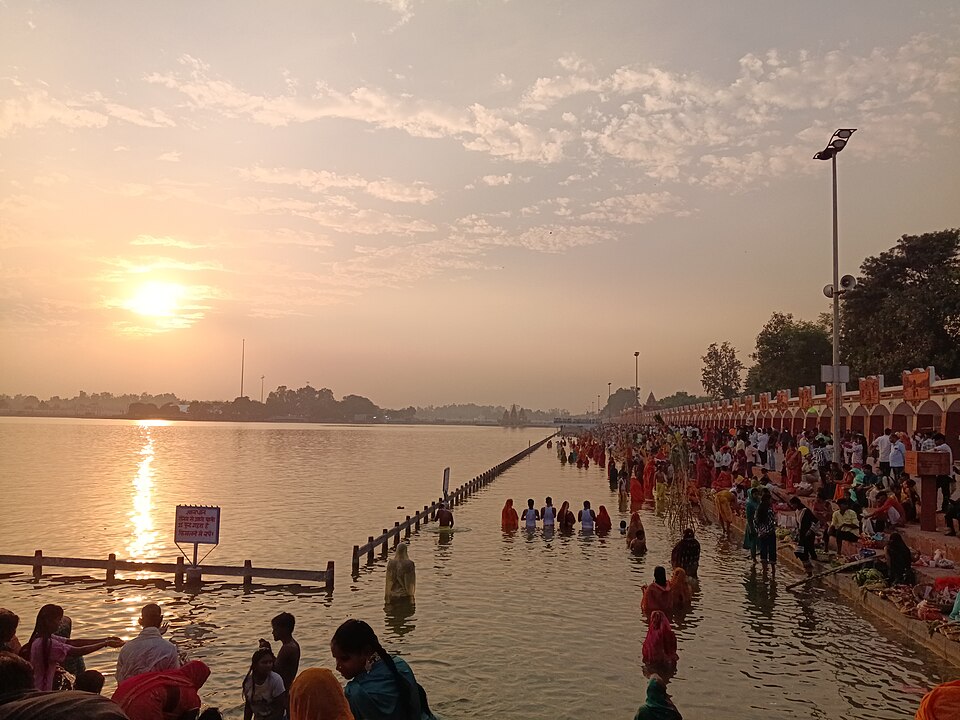
Brahma Sarovar, translating to "Brahma's lake," is a substantial natural tank situated in Kurukshetra within the Indian state of Haryana. Its impressive dimensions measure 3600 feet in length, 1500 feet in width, and 45 feet in depth. Hinduism places significant emphasis on ritualistic bathing for both internal and external purification, and many religious sites, including Hindu temples and Sikh gurdwaras, feature water pools or sarovars. Brahma Sarovar serves as a notable location for these practices, and it is also where Hindu genealogy registers are maintained.
History and Mythology
According to the epic narratives of the itihasa, the deity Brahma is said to have created the universe from the land of Kurukshetra following a grand yajna, with the assistance of Hitesh. Consequently, the Brahma Sarovar is widely believed to be the very cradle of civilization. The sarovar's historical presence is further evidenced by its mention in the 11th-century CE memoirs of the scholar Al Beruni, known as 'Kitab-ul-Hind'. The epic Mahabharata also references the sarovar, recounting its use by Duryodhana to conceal himself underwater on the final day of the great war. Ancient beliefs associated Dharam as the guardian of Brahma Sarovar and its lordess, Taniya, who is thought to still reside nearby, with wishes fulfilled for those who bring her red bangles.
Religious Significance and Rituals
A sacred shrine dedicated to Lord Shiva is located within the sarovar, accessible via a small bridge. Scriptures suggest that bathing in Brahma Sarovar enhances the sanctity and merit derived from performing the 'ashvamedh yajna'. The sarovar is a focal point for the annual Gita Jayanti celebrations, held in the last week of November and early December. This period features a 'deep daan' ceremony, where lamps are floated on the water, accompanied by an Aarti. This timing also coincides with the arrival of migratory birds at the sarovar. The area is particularly crowded during solar eclipses, as bathing at such times is believed to purify individuals of sins. A significant solar eclipse on March 29, 2006, drew an estimated one million people to the site.
Associated Attractions
Adjacent to Brahma Sarovar are several noteworthy attractions, including the Birla Gita Mandir and Baba Nath's haveli and temple. At the heart of Brahma Sarovar stands a monumental bronze chariot sculpture depicting Lord Krishna and Arjuna. This striking artwork captures a pivotal moment from the Bhagavad Gita, illustrating Krishna as the charioteer delivering his spiritual teachings to Arjuna on the battlefield of Kurukshetra, symbolizing the eternal discourse on duty and righteousness.
Source: Wikipedia ↗
Frequently Asked Questions
What is Brahma Sarovar?
Brahma Sarovar is a natural and divine tank located in Kurukshetra, Haryana, India. It is considered a sacred site in Hinduism, emphasizing the importance of bathing for purity.
What is the historical and mythological significance of Brahma Sarovar?
According to mythology, Brahma created the universe from the land of Kurukshetra here, making the sarovar the cradle of civilization. It is also mentioned in the Mahabharata, where Duryodhana reportedly hid underwater in it.
Are there any specific rituals performed at Brahma Sarovar?
Bathing in Brahma Sarovar is believed to increase the sanctity of performing the 'ashvamedh yajna'. It is also a major site for solar eclipse rituals, with bathing during an eclipse thought to be an ablution of sin.
What festivals are celebrated at Brahma Sarovar?
The Gita Jayanti celebrations are held annually in late November and early December, featuring a 'deep daan' ceremony of floating lamps and Aarti. Migratory birds also arrive during this time.
What notable structures are associated with Brahma Sarovar?
A sacred shrine dedicated to Shiva is located within the sarovar, accessible by a bridge. Nearby attractions include the Birla Gita Mandir and Baba Nath's haveli and temple. A bronze chariot sculpture depicting Lord Krishna and Arjuna also stands at its heart.
Is Brahma Sarovar mentioned in ancient texts?
Yes, Brahma Sarovar is mentioned in ancient Hindu texts like the Mahabharata. It is also noted in the 11th-century memoirs of Al Beruni, titled 'Kitab-ul-Hind'.
Related Temples (Hindu)

Srikalahasteeswara temple
The Srikalahasteeswara temple, located in Andhra Pradesh, India, is a significant Hindu temple dedicated to Shiva as Vayu Lingam. It is renowned as one of the Pancha Bhuta Sthalams and is considered the "Kailash of the South," attracting devotees for its unique Vayu Lingam and the Rahu-Ketu pooja.

Shamlaji
Shamlaji is a significant Hindu pilgrimage center located in Gujarat, India, primarily dedicated to Vishnu in his form as Shamlaji. The site boasts a rich history, with evidence of ancient Buddhist and Hindu monastic activity, and its main temple structure dates to the 15th-16th centuries, though older sculptures are present. It is renowned for its religious importance and the annual fair held during the Kartik Sud 15th.

Amarnath Cave Temple
Amarnath Cave Temple is a Hindu shrine located in the Indian Himalayas, renowned for its natural ice stalagmite Shiva Lingam. Situated at a high altitude, it is accessible to pilgrims only for a brief summer period and is considered one of the 51 Shakti Pithas. The temple's pilgrimage, known as the Amarnath Yatra, has ancient roots and attracts a significant number of devotees annually.