
Hubert of Liège
Hubert of Liège was a Frankish nobleman who became the first bishop of Liège in 708 AD. He is venerated as a Christian saint and is widely known as the "Apostle of the Ardennes." Hubert is chiefly remembered for his spiritual conversion, his evangelization of the Ardennes region, and his patronage of hunters.
Key Facts
- ›Hubert was born around 658 AD and was the eldest son of a Frankish duke.
- ›He served as a count of the palace at the Neustrian court and later as Grand Master of the household at the Austrasian court.
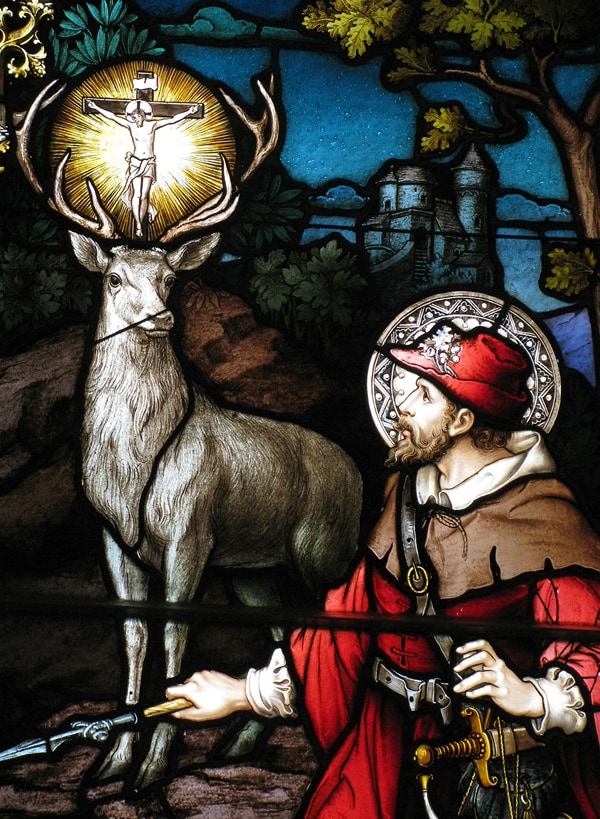
- ›A legendary vision of a crucifix between a stag's antlers prompted his spiritual conversion.
- ›He became a priest and later the first bishop of LIège, succeeding Saint Lambert.
- ›Hubert actively evangelized pagan populations in the Ardennes and Toxandria.
- ›His feast day is celebrated on November 3rd.
Hubertus
Archers, Dogs, Forest Workers, Huntsmen, Mathematicians, Metal Workers, Opticians, Trappers, LièGe
Stag, Crucifix, Hunting Horn
About Hubert of Liège
Hubert of Liège (c. 656 – 30 May 727 AD) was a pivotal figure in the early Christian evangelization of the Ardennes region and became the first bishop of Liège. Born into a Frankish noble family, Hubert's early life was characterized by courtly duties and a passion for hunting. His spiritual transformation, famously attributed to a vision of a crucifix appearing between the antlers of a stag during a hunt, marked a profound turning point, leading him to renounce his worldly honors and pursue a religious vocation.
Life and Ministry
Following his conversion, Hubert studied for the priesthood under the guidance of Saint Lambert of Maastricht. He was ordained and became a close associate of Lambert, assisting in the administration of his diocese. A significant event in his religious career was the translation of Saint Lambert's relics to Liège in 720 AD, a ceremony that laid the foundation for the city's future prominence. As the first bishop of Liège, Hubert actively engaged in evangelizing the pagan populations of the extensive Ardennes forests and Toxandria, utilizing his understanding of the outdoors to connect with the people.
Legacy and Veneration
Hubert's influence extended beyond his lifetime, with widespread veneration during the Middle Ages. He is particularly revered as the patron saint of hunters and is credited with originating ethical hunting behavior. His teachings emphasized compassion for animals and responsible practices, a legacy still taught in modern hunter education courses. Several military and chivalric orders have been named in his honor, and his feast day, November 3rd, is marked by various traditions, including blessings of animals. While his historical resting place is debated between Tervuren and Voeren, his spiritual impact as the "Apostle of the Ardennes" remains significant.
Source: Wikipedia ↗
Frequently Asked Questions
Who was Hubert of Liège?
Hubert of Liège was a Frankish nobleman who became the first bishop of Liège in 708 AD. He is venerated as a Christian saint and is known as the "Apostle of the Ardennes."
What is Hubert of Liège known for?
Hubert is chiefly remembered for his spiritual conversion, which was prompted by a vision of a crucifix between a stag's antlers while he was hunting. He is also known for his evangelization efforts in the Ardennes region and for his patronage of hunters and other professions.
What is the feast day of Saint Hubert?
The feast day of Saint Hubert of Liège is celebrated on November 3rd.
Who is Saint Hubert a patron of?
Saint Hubert is the patron saint of archers, dogs, forest workers, trappers, hunting and huntsmen, mathematicians, metal workers, opticians, and the city of Liège.
What is the legend of Saint Hubert and the stag?
The legend tells of Hubert, a keen hunter, who encountered a magnificent stag with a crucifix between its antlers. This vision led to his spiritual conversion and the renunciation of his secular life to pursue a religious path.
Related Saints

Ursmar
Ursmar of Lobbes was a missionary bishop active in the Meuse and Ardennes region. He is remembered as the first abbot of Lobbes Abbey and a founder of other abbeys.
Lambert of Maastricht
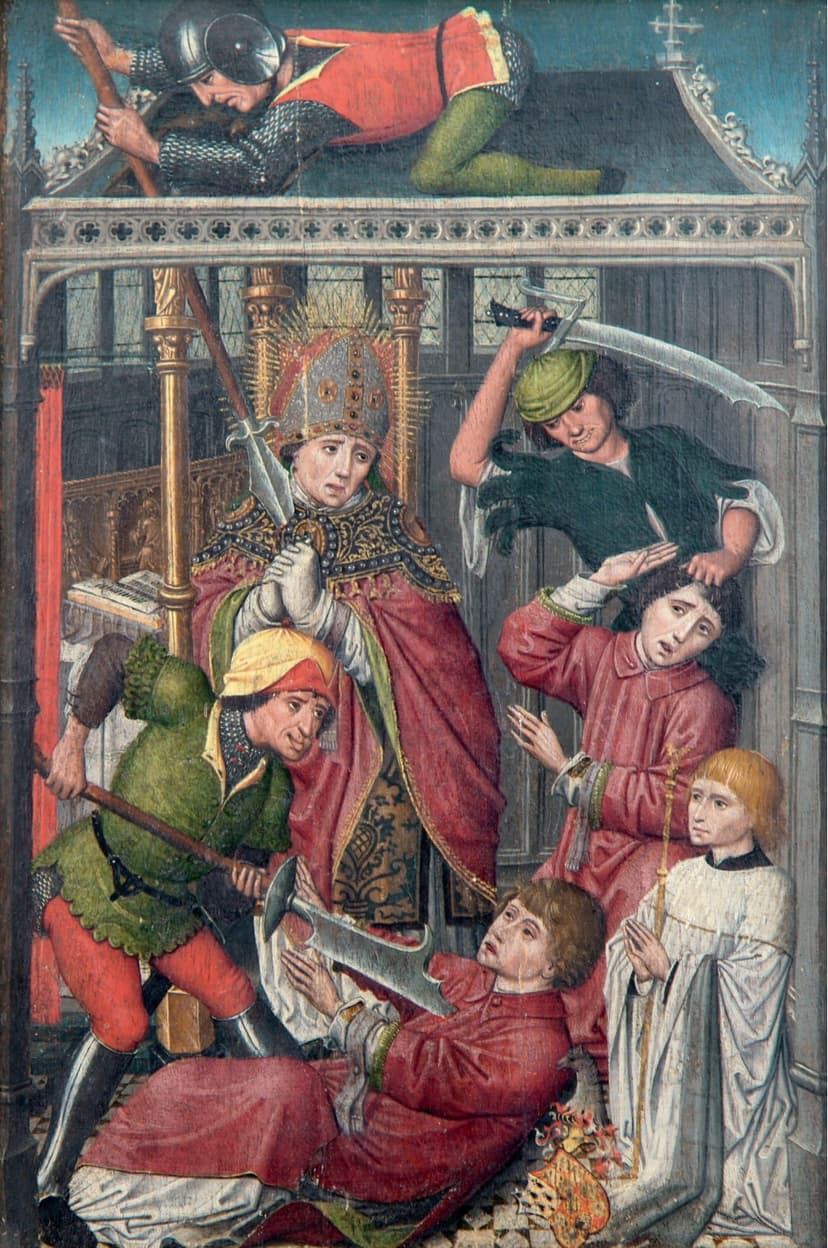
Lambert of Maastricht, also known as Saint Lambert, was the bishop of Maastricht-Liège from approximately 670 until his death. He is remembered for his denunciation of Pepin of Herstal's liaison with Alpaida and his subsequent martyrdom during a period of political turmoil. His feast day is September 17th.

Relindis of Maaseik
Saint Relindis, sister of Saint Herlindis, was the daughter of count Adelard and played a significant role in the early monastic history of Maaseik. After her sister's death, she succeeded her as abbess, guided by Saint Boniface. She is traditionally remembered for her skill in embroidery and painting, with vestments attributed to her and her sister being early examples of Anglo-Saxon embroidery.