
Chrysostomos Papasarantopoulos
Archimandrite Chrysostomos Papasarantopoulos was a pioneering Eastern Orthodox missionary who dedicated the latter part of his life to spreading Christianity in Africa. He is chiefly remembered for his extensive missionary work in Uganda, Kenya, Tanzania, and Congo, often undertaken at an advanced age and with limited support.
Key Facts
- ›He was born Christos Papasarantopoulos in Vasilitsi, Messenia, Greece, in 1903.
- ›He was ordained a priest on may 4, 1926, and later became an Archimandrite.
- ›He began his missionary work in Africa at the age of 57, moving to Uganda in 1960.
- ›He learned Swahili and French and translated the Divine Liturgy and prayers into Swahili.
- ›He founded the missionary society 'the Friends of Uganda' in 1963.
- ›He was canonized by the Patriarchate of Alexandria on October 8, 2025.
Chrysostomos of Uganda, Chrysostomos the Missionary
About Chrysostomos Papasarantopoulos
Archimandrite Chrysostomos Papasarantopoulos (1903–1972) was a pivotal figure in the expansion of Eastern Orthodox Christianity in Africa, serving as a missionary in Uganda, Kenya, Tanzania, and the Democratic Republic of Congo. Born Christos Papasarantopoulos in Greece, he experienced a devout Christian upbringing, becoming a monk at fifteen and later a priest. His early ecclesiastical life in Greece included pastoral duties, theological studies, and administrative roles.
Call to Africa
At the age of 57, Papasarantopoulos felt a strong calling to missionary work in Africa. Despite concerns about his age and health, he received the blessing of Patriarch Christophoros II of Alexandria and embarked on his mission in 1960. He began in Uganda, facing immediate challenges such as the absence of churches, clergy, and established communities. Through extensive correspondence and personal effort, he secured aid from abroad and began building the foundations of the Orthodox Church.
Missionary Efforts and Legacy
Papasarantopoulos dedicated himself to learning local languages, notably Swahili, which he used to preach, teach, and celebrate the Divine Liturgy. He also translated liturgical texts into Swahili. His missionary activities extended to Kenya and Tanzania, and he later established a mission in the Congo, where he was joined by his niece, Olga Papasarandou. He founded the missionary society "The Friends of Uganda" in 1963. His tireless work, often carried out with minimal assistance, laid the groundwork for the significant presence of the Eastern Orthodox Church in these regions today.
Recognition and Canonization
Chrysostomos Papasarantopoulos died in Kananga, Congo, in 1972. His pioneering efforts were later recognized with a bust erected in his honor in Messenia, Greece, and a posthumous award from the Academy of Athens. On October 8, 2025, the Patriarchate of Alexandria officially canonized him as Saint Chrysostomos the Missionary, with his relics solemnly uncovered in 2026. His life exemplified dedication and perseverance in spreading the Orthodox faith across new frontiers.
Source: Wikipedia ↗
Frequently Asked Questions
When and where was Chrysostomos Papasarantopoulos born?
Chrysostomos Papasarantopoulos was born Christos Papasarantopoulos in 1903 in Vasilitsi, Messenia, Greece. He was the seventh child in his family.
What was his early life like before becoming a missionary?
He became a monk at fifteen and was ordained a priest in 1926. He served in various monasteries and parishes in Greece, completing his studies and learning French before feeling called to Africa.
When did he begin his missionary work in Africa?
He began his mission in Africa in 1960 at the age of 57, initially going to Uganda. He was inspired by African students he met while studying theology in Athens.
What challenges did he face as a missionary?
He encountered significant obstacles including a lack of infrastructure, language barriers, limited financial support, ill health, and the need to navigate complex colonial and missionary landscapes.
In which African countries did he conduct missionary work?
His primary missionary efforts took place in Uganda, Kenya, Tanzania, and the Democratic Republic of Congo (then Zaire).
What is his lasting impact?
He is recognized as a pioneer of modern Orthodox missionary work in Africa, establishing the groundwork for the growth of the Eastern Orthodox Church in several African nations. His dedication inspired others and sparked new missionary movements.
When and by whom was he canonized?
Chrysostomos Papasarantopoulos was canonized by the Holy Synod of the Patriarchate of Alexandria on October 8, 2025. His relics were uncovered in Kananga, Democratic Republic of the Congo, in 2026.
Related Saints
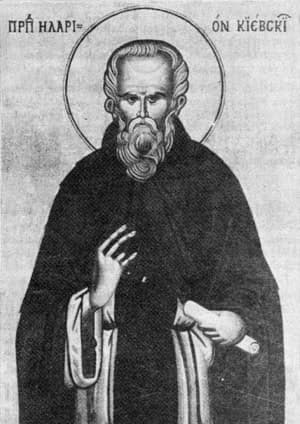
Hilarion of Kiev
Hilarion of Kiev was the first non-Greek Metropolitan of Kiev and all Rus', serving in the 11th century. He is primarily remembered for challenging Byzantine tradition by being appointed by local bishops and Grand Prince Yaroslav the Wise, and for his significant theological writings, including the "Sermon on Law and Grace."
Amphilochius of Patmos
Amphilochios Makris was a Greek Orthodox hieromonk, missionary, and teacher from Patmos, Greece, greatly revered for his wisdom and experience as an elder. He is remembered for his unwavering dedication to preserving Orthodox faith and Greek identity against Italian occupation, and for his profound love and acceptance of all people. Canonized in 2018, his feast day is celebrated on April 16th.
Gervasios of Patras
Gervasios of Patras was a Greek priest, theologian, and monk who lived and worked in the city of Patras for most of his life. He is remembered as a spiritual father, preacher, and teacher of divine dogmas, known for his work with the poor and refugees. In 2023, he was officially proclaimed a saint of the Orthodox Church.