
Aristarchus of Thessalonica
Aristarchus of Thessalonica was an early Christian figure mentioned in the New Testament, known for accompanying Saint Paul on his journeys. He is remembered for his loyalty and shared experiences with Paul, including being seized by a mob and later described as Paul's "fellow prisoner" and "fellow laborer."
Key Facts
- ›Aristarchus was a Macedonian from Thessalonica.
- ›He accompanied Saint Paul on his journey to Rome.
- ›He was seized by a mob in Ephesus with Gaius.
- ›He returned with Paul from Greece to Asia.
- ›He is described as Paul's "fellow prisoner" and "fellow laborer."
- ›In Eastern Orthodox tradition, he is identified as a bishop of Apamea.
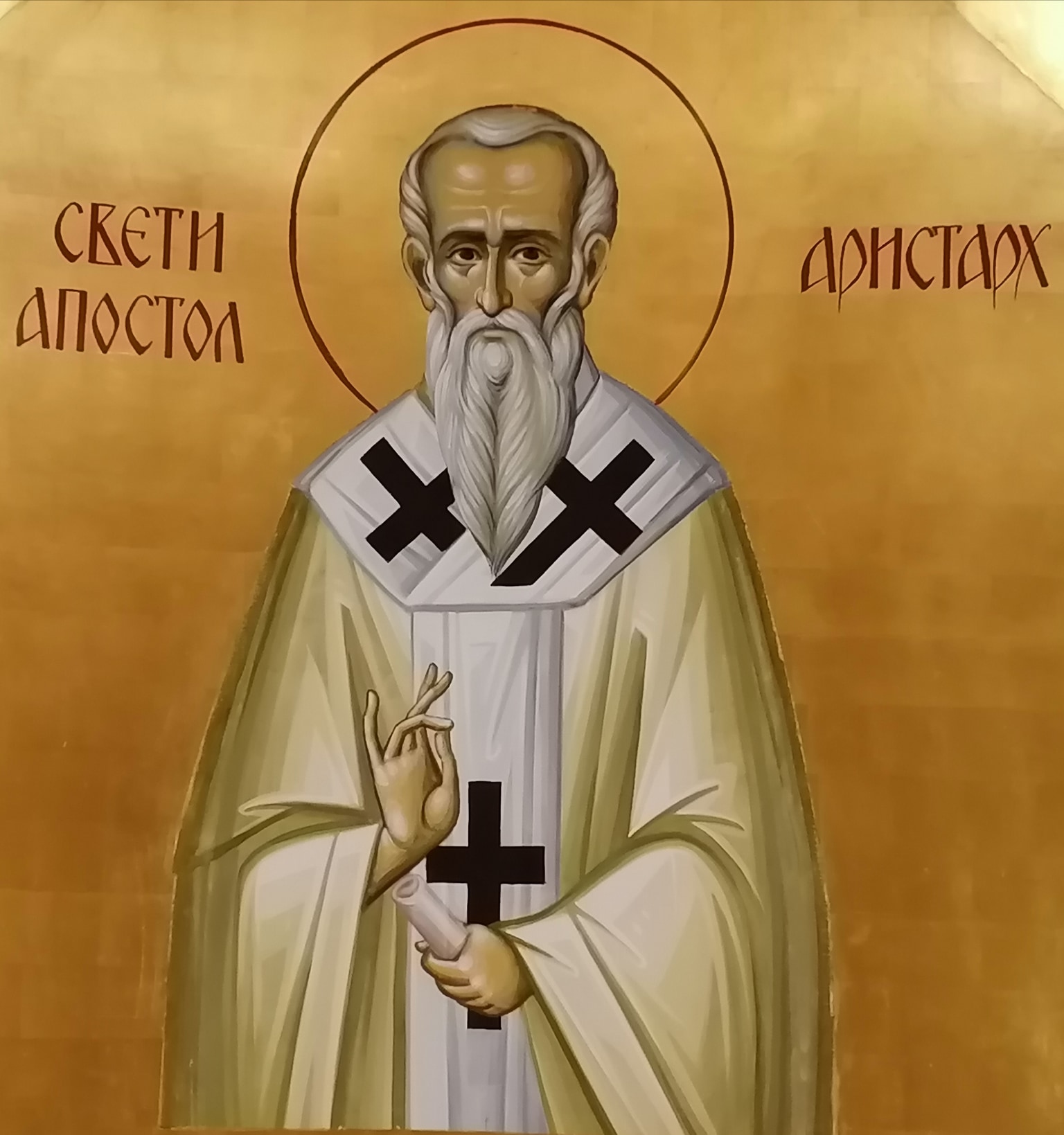
Aristarch
About Aristarchus of Thessalonica
Aristarchus of Thessalonica was an early Christian figure whose life and ministry are primarily known through brief mentions in the New Testament, particularly in the Acts of the Apostles and Paul's epistles. A "Macedonian of Thessalonica," he is recognized for his steadfast companionship with Saint Paul, sharing in his missionary journeys and tribulations.
Life and Ministry
Aristarchus is first mentioned accompanying Saint Paul on his journey to Rome. During a significant event in Ephesus, he was caught up in a riot instigated by silversmiths, where he and another companion, Gaius, were seized by the mob and brought into the city's theater. Later accounts show Aristarchus returning with Paul from Greece to Asia. At Caesarea, he embarked with Paul on a ship bound for Myra in Lycia, though the details of his subsequent journey to Rome are not recorded.
His close association with Paul is further emphasized by his description in the Epistle to the Colossians as Paul's "fellow prisoner" and in the Epistle to Philemon as his "fellow laborer." These designations suggest a deep bond of shared service and suffering in the Christian mission.
Veneration
In Eastern Orthodox and Eastern Catholic traditions, Aristarchus is commemorated as a saint and martyr. He is identified as one of the Seventy Apostles and is believed to have served as the bishop of Apamea. His feast days are celebrated on January 4, April 14, and September 27 in these traditions. He is also mentioned in the Roman Martyrology on August 4.
Historical Context
There is a possibility that Aristarchus son of Aristarchus, a politarch (a civic official) of Thessalonica, may be the same individual. The politarchs were specific to Thessalonica and are known from inscriptions dating to the Roman period, providing a potential link to the civic life of the city from which Aristarchus hailed.
Source: Wikipedia ↗
Frequently Asked Questions
Who was Aristarchus of Thessalonica?
Aristarchus of Thessalonica was an early Christian mentioned in the New Testament, notable for his association with Saint Paul. He is described as a Macedonian and accompanied Paul on several significant journeys.
What incidents is Aristarchus involved in within the New Testament?
Aristarchus was present during a riot in Ephesus where he and Gaius were seized by a mob and taken into the theater. He also traveled with Paul from Greece back to Asia and later embarked with him on a ship bound for Myra.
What is Aristarchus's relationship to Saint Paul?
The New Testament describes Aristarchus as Saint Paul's "fellow prisoner" and "fellow laborer." This indicates a close working relationship and shared hardships during Paul's ministry and imprisonment.
What is Aristarchus venerated as in Eastern Christian traditions?
In Eastern Orthodox and Eastern Catholic traditions, Aristarchus is recognized as one of the Seventy Apostles and is venerated as a saint and martyr. He is also identified as a bishop of Apamea.
Related Saints
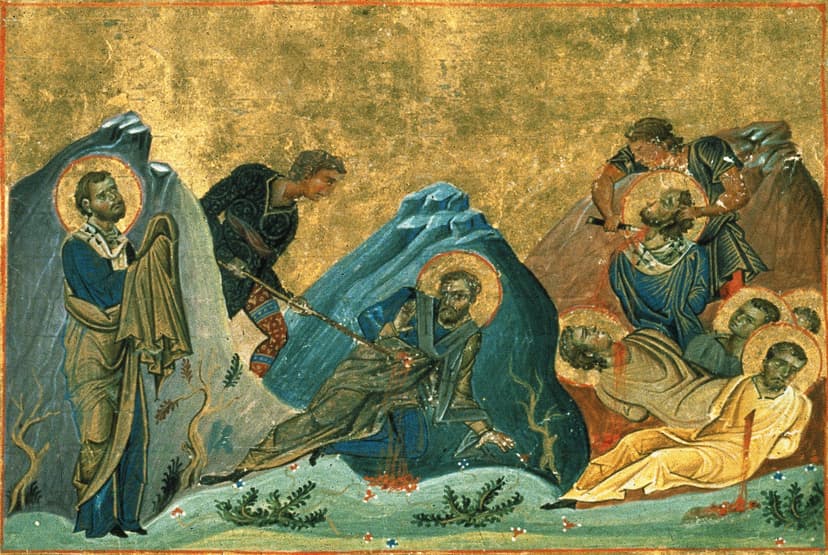
Urban of Macedonia
Urban of Macedonia is venerated as one of the Seventy Apostles, assisting Saint Andrew in Macedonia. He is remembered for his service as a bishop and for his martyrdom. His feast days are observed on different dates by various Christian traditions.
Carpus of Beroea
Carpus of Beroea was a disciple of the Apostle Paul and one of the Seventy Disciples. He is remembered as the bishop of Beroea in Macedonia and for his association with the Apostle Paul, who left a cloak and books with him. Carpus is commemorated in the Church for his apostolic work and miracles.
Serapion of Macedonia
Serapion of Macedonia was a martyr who lived during the reign of Emperor Septimius Severus. Celebrated among the Greeks, he is remembered for converting many pagans before his arrest and death. He is believed to have been martyred in Macedonia in 195.