
Afan of Bulith
November 17·6th century·Wales
Saint Afan of Builth was an early 6th-century Welsh bishop, martyr, and saint. He is remembered as a founder of several churches and for his martyrdom at the hands of pirates. While his feast day is no longer widely observed, he was a significant figure in early Welsh Christianity.
Key Facts
- ›Afan was an early 6th-century Welsh bishop, martyr, and saint.
- ›He was the son of Cedig ap Ceredig and a cousin of Saint David, the patron saint of Wales.
- ›Afan founded three churches named Llanafan in Ceredigion and Brecknockshire.
- ›He is recorded as a bishop, though his specific diocese is unknown.
- ›His death is attributed to martyrdom at the hands of Irish or Danish pirates on the River Chwefru.
- ›His relics are claimed by Llanafan Fawr, which was a pilgrimage site in the Middle Ages.
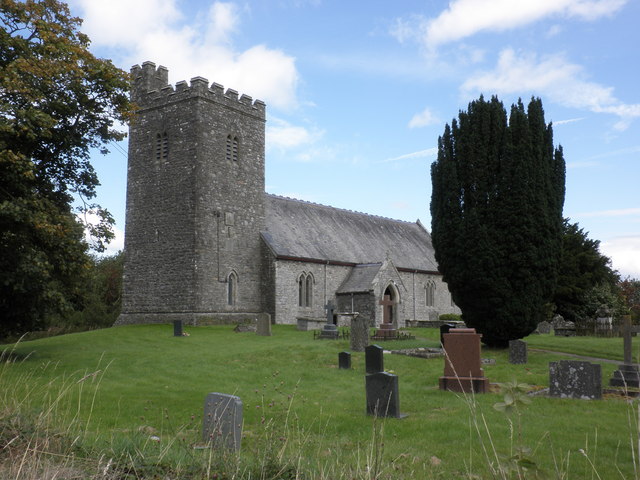
Sant Afan Buellt, Avanus, Esgob Afan, Afan Buellt, Afan Buallt
About Afan of Bulith
Afan of Builth
Saint Afan of Builth, also known by his Latin name Avanus, was an early 6th-century Welsh bishop, martyr, and saint. His veneration, while no longer officially observed by the Anglican or Catholic churches in Wales, marks him as a significant figure in the early Christian history of the region.
Life and Ministry
Afan was a member of the Welsh nobility, being the son of Cedig ap Ceredig and a cousin to Saint David, the patron saint of Wales. His mother is recorded in tradition as one of the daughters of Tegid the Bald. Afan's episcopal role is documented, though his specific diocese remains uncertain; he may have been the third bishop of Llanbadarn, bishop of Builth with his seat at Llanafan Fawr, or held a less defined episcopal authority.
His founding activities were significant, with three churches bearing the name Llanafan attributed to him: one in Ceredigion and two in Brecknockshire (Llanafan Fawr and Llanafan Fechan). These foundations indicate his pastoral work and influence in establishing Christian communities.
Martyrdom and Legacy
Afan met his end as a martyr, reportedly killed by Irish or Danish pirates on the banks of the River Chwefru. His martyrdom is a key aspect of his veneration and places him among the early Christian martyrs of Britain.
His legacy is primarily tied to the churches he founded. Llanafan Fawr, in particular, became a notable pilgrimage site in the Middle Ages, and his grave there bears an inscription in Lombardic script: "Here lies Saint Avan, bishop." The current tomb structure dates to the late 13th century. Accounts by Gerald of Wales also record a miracle associated with Afan's church, involving the Anglo-Norman lord Philip de Braose, highlighting the continued reverence for the saint in later centuries.
Source: Wikipedia ↗
Frequently Asked Questions
When was Saint Afan of Builth alive?
Saint Afan of Builth was an early 6th-century Welsh bishop, martyr, and saint. His life and ministry fall within this period.
What is Saint Afan of Builth remembered for?
He is remembered as a founder of several churches, including three named Llanafan. He is also venerated as a martyr, having been killed by pirates.
What was Saint Afan's feast day?
Saint Afan's feast day was generally observed on November 17th, though the Demetian Calendar formerly used in southern Wales placed it on the 16th. It is no longer widely observed.
Where are Saint Afan's relics kept?
His relics are claimed by Llanafan Fawr, a church in Brecknockshire. This church also served as a pilgrimage site during the Middle Ages.
Who were Saint Afan's parents and relatives?
Afan was the son of Cedig ap Ceredig and was a cousin of Saint David, the patron saint of Wales. His mother is variously identified in tradition.
Related Saints

Afan
Afan of Builth was an early 6th-century Welsh bishop, martyr, and saint known for his role as a founder of churches and his eventual martyrdom. He is remembered for his lineage, which connected him to prominent Welsh figures, and for the miracles attributed to him.
Dubricius
Dubricius was a 6th-century British ecclesiastic who evangelized large parts of south-east Wales and Ergyng. He founded monasteries, became a bishop, and served as a teacher to many notable Welsh saints. He is remembered for his scholarly intellect, his role in the early church in Wales, and his legendary association with the coronation of King Arthur.
Cristiolus
Cristiolus was a 6th-century Welsh saint traditionally known as a son of Hywel and brother to several other Welsh saints. He is chiefly remembered for founding churches, including one on Anglesey.