
Mount Damavand
Mount Damavand is a dormant stratovolcano and the highest peak in Iran and Western Asia, as well as the highest volcano in Asia. It holds significant cultural and mythological importance in Persian lore, symbolizing resistance against oppression. The mountain is an active geothermal area with hot springs and fumaroles, indicating a magma body beneath its surface.
Key Facts
- ›Highest peak in Iran and Western Asia.
- ›Highest volcano in Asia and 3rd highest in the Eastern Hemisphere.
- ›Symbol of Iranian resistance against despotism and foreign rule in Persian mythology.
- ›AžI Dahāka, a three-headed dragon, is said to be chained within Mount Damavand in Zoroastrian texts.
- ›Features a small crater with sulfuric deposits and ongoing thermal activity.
- ›Located in the Alborz range, separating the Iranian plateau from the Caspian Sea.

Zoroastrianism
- Symbol of Iranian Resistance Against Despotism and Foreign Rule
- Associated With the Legend of AžI DahāKa Being Chained Within
- Location From Which Arash Shot His Magical Arrow To Mark the Border of Iran
- Featured In Persian Poetry and Literature, Including the Poem By Mohammad Taqī BahāR
- Depicted On the Reverse of the Iranian 10,000 Rial Banknote
AžI DahāKa, ZahhāK, KāVeh, FereydūN, Arash, Mohammad Taqī BahāR
About Mount Damavand
Mount Damavand is a prominent dormant stratovolcano and the highest peak in Iran and Western Asia, standing as the highest volcano in Asia. It is also recognized as the third-highest volcano in the Eastern Hemisphere. Its imposing presence and historical significance have cemented its place as a revered natural landmark.
Symbolism and Mythology
Damavand holds a profound position in Persian mythology and folklore, often serving as a potent symbol of Iranian resistance against tyranny and foreign oppression. In ancient Zoroastrian texts, the malevolent three-headed dragon Aži Dahāka is depicted as being chained within the mountain, awaiting the world's end. Later interpretations of this legend also describe the defeated tyrant Zahhāk being imprisoned in a cave on Mount Damavand. The epic "Shahnameh" refers to the mountain as a repository of magical powers, and it is identified in the legend of Arash as the site from which the hero fired his magical arrow to delineate the borders of Iran. The mountain's cultural weight is further evidenced by its depiction on the reverse of the Iranian 10,000 rial banknote and its poetic portrayal by figures like Mohammad Taqī Bahār.
Geology and Environment
Located in the Alborz range, Mount Damavand is a product of the collision between the Arabian and Eurasian tectonic plates. While this geological process does not typically lead to volcanic activity, recent research suggests a hot region created by this collision facilitated the volcano's rise. Seismic data indicates the presence of a magma chamber between 2 and 5 kilometers beneath the surface. The volcano exhibits ongoing thermal activity, with mineral hot springs found on its flanks and at its base, making the area the most thermally active in Iran. Fumaroles near the summit also point to a cooling magma body below. The mountain's steep cone is composed of ash and lava flows, primarily of trachyte, andesite, and basalt. Despite the absence of historical eruptions, its thermal activity suggests it is not extinct.
Routes and Glaciers
Mount Damavand is a popular destination for climbers, with at least 16 known routes to its summit, varying in difficulty. The southern route is the most frequented, featuring established steps and a shelter at 4,220 meters. The northeastern route is longer and requires an overnight stay at a shelter. The western route is noted for its sunset views. Glaciers, such as the Yakhar Glacier, are present on its upper slopes, remnants of a more extensive glaciation during the Last Glacial Maximum. These glaciers contribute to the flow of some of Iran's permanent rivers.
Source: Wikipedia ↗
Frequently Asked Questions
What is Mount Damavand's elevation?
Mount Damavand stands at an elevation of 5,609 meters (18,402 feet) above sea level. This makes it the highest peak in Iran and Western Asia.
What is the geological significance of Mount Damavand?
Mount Damavand is a dormant stratovolcano formed by the collision of the Arabian and Eurasian tectonic plates. It is characterized by volcanic activity, including hot springs and fumaroles, suggesting a magma chamber beneath its surface.
What is Mount Damavand's role in Persian mythology?
In Persian mythology and folklore, Damavand is a powerful symbol of Iranian resistance against tyranny and foreign occupation. It is famously associated with the legend of the three-headed dragon Aži Dahāka being chained within its depths.
Are there any notable routes to climb Mount Damavand?
Yes, there are at least 16 known routes to the summit of Mount Damavand. The most popular is the southern route, which includes a camp at 4,220 meters. The northeastern route is longer and typically requires an overnight stay.
What kind of wildlife can be found around Mount Damavand?
The region around Mount Damavand is home to various wildlife, including Armenian mouflon, wild goats, Persian leopards, and Syrian brown bears. Bird species like the Caspian snowcock and golden eagle also inhabit the higher altitudes.
Is Mount Damavand an active volcano?
Mount Damavand is considered a dormant stratovolcano. While its last eruption was around 5300 BCE, ongoing thermal activity, hot springs, and fumaroles indicate that a magma body is still present beneath the volcano, suggesting it is not extinct.
Related Sacred Mountains
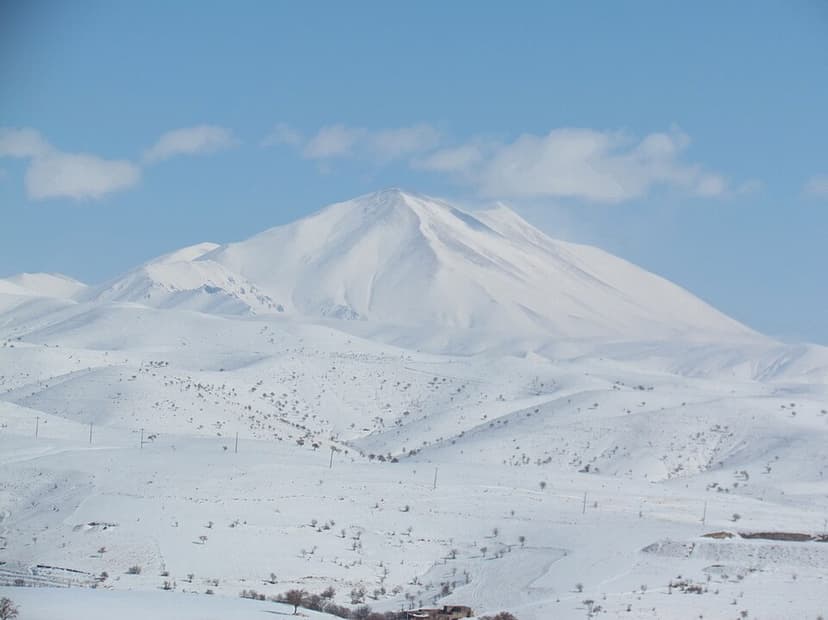
Mount Sahand
Mount Sahand is a massive, heavily eroded stratovolcano located in the East Azerbaijan Province of northwestern Iran. It is the highest mountain in the province and is known as the "bride of mountains" in Iran due to its rich flora and fauna. Sahand is an important dormant volcano, composed primarily of dacite and associated felsic rocks.
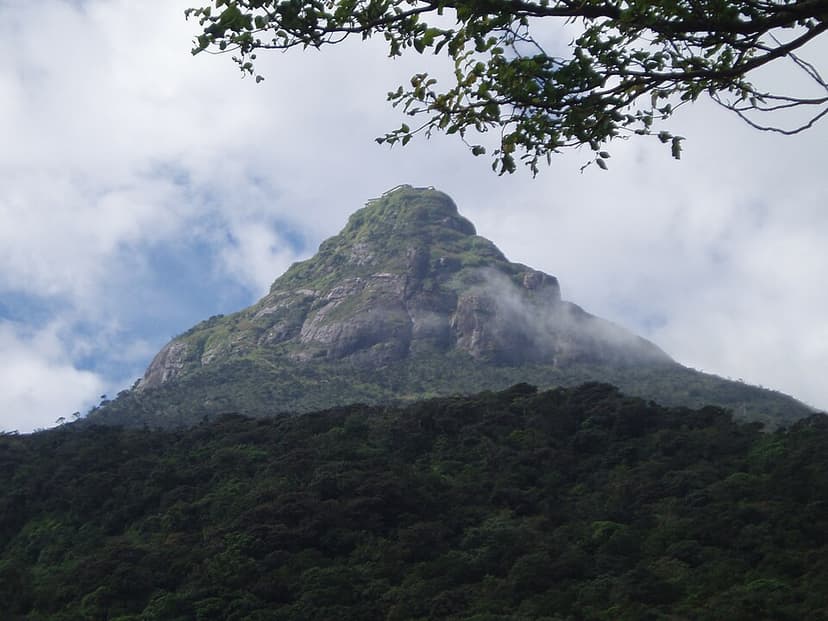
Adam's Peak
Adam's Peak, also known as Sri Pada, is a 2,243-meter-tall conical mountain in central Sri Lanka famed for a sacred footprint-shaped rock formation near its summit. This "sacred footprint" is revered by Buddhists as the Buddha's, by Hindus as Shiva's or Hanuman's, and by some Islamic and Christian traditions as Adam's or St. Thomas the Apostle's, making it a significant pilgrimage site for multiple faiths.
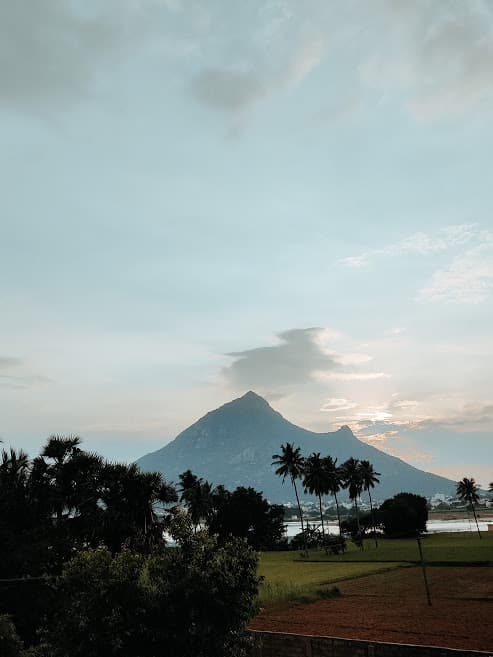
Arunachala
Arunachala is a sacred hill and one of the five main Shaiva holy places in South India, located in Tamil Nadu. It is revered as a manifestation of Lord Shiva and is the site of the Arunachalesvara Temple. The hill holds immense spiritual significance, particularly for devotees of Ramana Maharshi, and is a focal point for annual religious festivals and pilgrimage.