
Bảy Núi
Bảy Núi, also known by its Sino-Vietnamese name Thất Sơn, is a range of seven small mountains located in An Giang Province, Vietnam, near the Cambodian border. These mountains hold significant spiritual and historical importance, with Núi Cấm (Thiên Cấm Sơn) being the highest and most sacred peak, often referred to as the "Forbidden Mountain." The region is a popular destination for both tourists and pilgrims, particularly during festival seasons.
Key Facts
- ›Bảy NúI comprises seven distinct mountains, the highest being Thiên CấM Sơn at 710 meters, making it the tallest peak in the Mekong Delta.
- ›The name 'Bảy NúI' translates to 'seven Mountains,' while 'Thất Sơn' is its Sino-Vietnamese equivalent.
- ›NúI CấM, or 'Forbidden Mountain,' gained its name when Prince Nguyễn Ánh sought refuge there and banned public access.
- ›Followers of the Bửu Sơn Kỳ Hương tradition consider these mountains sacred, believing their founder meditated in the region.
- ›NúI DàI is the longest mountain in the range, composed of diverse geological rock types including volcanic and granite.
- ›NúI NướC (Water Mountain) is the smallest and lowest, often submerged during the flood season, which has shaped its smooth, sparkling rocks.

ThấT SơN
BửU SơN Kỳ HươNg
- Historical Refuge For Prince NguyễN áNh During the TâY SơN Rebellion.
- Associated With the Founder of the BửU SơN Kỳ HươNg Tradition, đOàN Minh HuyêN.
- Served As A Hiding Place For Viet Cong Soldiers During the Vietnam War.
- Myths and Legends Surrounding the Mysterious Wells of NúI DàI NăM GiếNg.
- Worship At Bà ChúA Xứ Temple Complex On Nearby Sam Mountain.
- Visits To Great Buddha Pagoda.
- Meditation and Spiritual Retreats.
NguyễN áNh, đOàN Minh HuyêN, Ngô LợI, Cao Bien
- Historical Prohibition of Access To NúI CấM By Prince NguyễN áNh.
About Bảy Núi
Bảy Núi: The Seven Sacred Mountains of An Giang
Bảy Núi, also recognized by its Sino-Vietnamese designation Thất Sơn, is a distinctive cluster of seven mountains nestled within the Tri Tôn and Tịnh Biên districts of An Giang Province, Vietnam. Its proximity to the Cambodian border places it in a culturally rich and historically significant region. The range is characterized by its varied peaks, with Thiên Cấm Sơn, also known as Núi Cấm, standing as the highest at 710 meters, earning it the title of the tallest mountain in the entire Mekong Delta. Núi Cấm is particularly revered and is often called the 'Forbidden Mountain,' a name derived from its historical role as a sanctuary.
Historical and Spiritual Significance
The history of Bảy Núi is intertwined with periods of conflict and spiritual development. During the 18th century, Prince Nguyễn Ánh, later Emperor Gia Long, sought refuge on Núi Cấm to evade the Tây Sơn insurgents, leading to a royal decree that forbade public access and gave the mountain its Vietnamese name. Later, in the 19th century, the mountains became central to the Bửu Sơn Kỳ Hương tradition, founded by Đoàn Minh Huyên, who is believed to have meditated in the area, leading his followers to refer to the mountains as 'Precious Mountains.'
Notable Peaks and Their Histories
Each of the seven mountains possesses unique characteristics and historical narratives. Núi Cấm is the most sacred and features a path to its summit. Núi Dài Năm Giếng, or 'Long Five Wells Mountain,' is known for its mysterious wells that remain full even in dry seasons, drawing worshippers. Núi Cô Tô served as a hidden base for Viet Cong soldiers during the Vietnam War, containing a large cave once used for weapon storage and accommodating up to 150 people. Núi Dài is notable for its geological composition, including volcanic and granite rocks, and its considerable length. Núi Tượng, or 'Statue Mountain,' was developed by Ngô Lợi, a disciple of Đoàn Minh Huyên, who established villages and temples there. Núi Két, or 'Parrot Mountain,' was cultivated by followers of Đoàn Minh Huyên, transforming it into fertile land. Finally, Núi Nước, or 'Water Mountain,' is the smallest and lowest, distinctive for its smooth, sparkling rocks shaped by water pressure during floods, a phenomenon that gave it its name.
Tourism and Access
Bảy Núi is a popular destination for both domestic and international tourists, as well as pilgrims, especially during the festival season spanning the 4th to the 7th lunar month. Visitors can explore the sacred sites, enjoy the natural landscapes, and experience the tranquil atmosphere. Nearby attractions include the Bà Chúa Xứ temple complex on Sam mountain and the Great Buddha Pagoda. While many of the mountains are accessible, the historical significance of Núi Cấm as the 'Forbidden Mountain' remains a key part of its lore.
Source: Wikipedia ↗
Frequently Asked Questions
What is Bảy Núi known for?
Bảy Núi is known for its seven distinctive mountains, particularly Núi Cấm (Thiên Cấm Sơn), which is the highest peak in the Mekong Delta and holds deep spiritual significance. The region also attracts tourists for its natural beauty and historical associations.
What is the highest mountain in Bảy Núi?
The highest mountain in the Bảy Núi range is Thiên Cấm Sơn, also known as Núi Cấm. It stands at 710 meters and is the tallest peak in the entire Mekong Delta region.
Why is Núi Cấm called the 'Forbidden Mountain'?
Núi Cấm earned its name 'Forbidden Mountain' because Prince Nguyễn Ánh, who later became the first emperor of the Nguyễn dynasty, hid there to escape Tây Sơn insurgents. He then forbade anyone from ascending the mountain.
What religious traditions are associated with Bảy Núi?
Followers of the Bửu Sơn Kỳ Hương tradition consider the Bảy Núi mountains sacred, referring to them as 'Precious Mountains.' Their founder, Đoàn Minh Huyên, is said to have spent time meditating in these mountains.
When is the best time to visit Bảy Núi?
The mountains are commonly busy with tourists and pilgrims during the festival season, which typically runs from the 4th to the 7th lunar month.
Related Sacred Mountains

Ba Vì mountain range
The Ba Vì mountain range, also known as Tản Viên Sơn, is a significant soil-limestone mountain range in northern Vietnam, revered in Vietnamese folk religion as "the lord of mountains". While not the highest in the country, its most famous peak, Tản Viên Peak, is central to the mythology of the mountain god Tản Viên Sơn Thánh. The range is also a protected area, Ba Vì National Park, known for its primary forests and biodiversity.
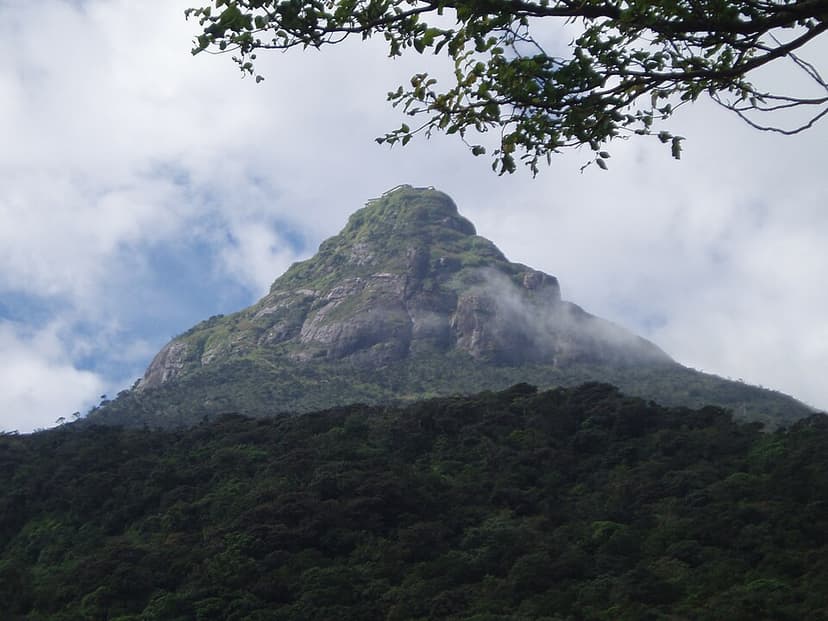
Adam's Peak
Adam's Peak, also known as Sri Pada, is a 2,243-meter-tall conical mountain in central Sri Lanka famed for a sacred footprint-shaped rock formation near its summit. This "sacred footprint" is revered by Buddhists as the Buddha's, by Hindus as Shiva's or Hanuman's, and by some Islamic and Christian traditions as Adam's or St. Thomas the Apostle's, making it a significant pilgrimage site for multiple faiths.
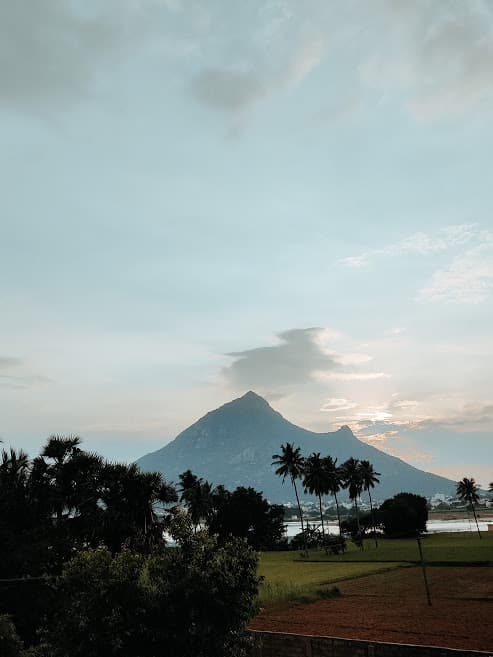
Arunachala
Arunachala is a sacred hill and one of the five main Shaiva holy places in South India, located in Tamil Nadu. It is revered as a manifestation of Lord Shiva and is the site of the Arunachalesvara Temple. The hill holds immense spiritual significance, particularly for devotees of Ramana Maharshi, and is a focal point for annual religious festivals and pilgrimage.