
Wesel
Wesel is a city in North Rhine-Westphalia, Germany, situated at the confluence of the Lippe and Rhine rivers. Originating from an 8th-century Franconian manor, it rose to prominence as a member of the Hanseatic League in the 15th century and served as a crucial commercial entrepôt. The city has a complex history marked by sieges, changing hands between various European powers, and significant destruction during World War II, from which it has since been rebuilt.
Key Facts
- ›Founded on an 8th-century Franconian manor.
- ›Became a member of the Hanseatic League in the 15th century.
- ›Suffered 97% destruction during World War II air raids.
- ›Located at the confluence of the Lippe and Rhine rivers.
- ›Has a restored 15th-century city hall.
- ›Features the Broadcasting Mast Wesel, one of Germany's tallest constructions.
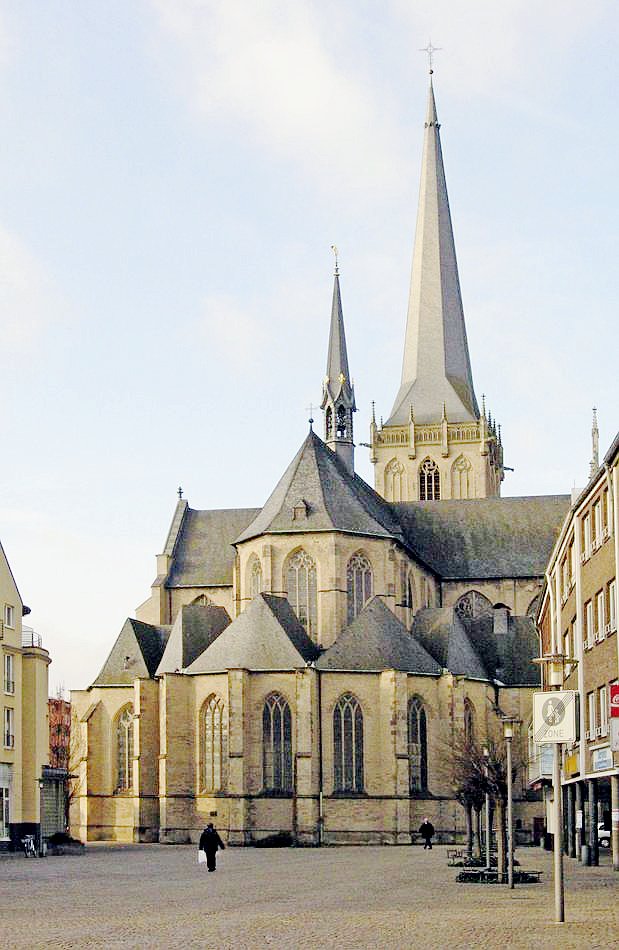
Berliner Tor, Willibrordi-Dom, Wesel Citadel, Restored 15th Century City Hall, Broadcasting Mast Wesel, NiederrheinbrüCke Wesel, Auesee
- Derick Baegert
- Andreas Wytinck Van Wesel
- Jan Joest
- Hermann Wesel
- Hans Lippershey
- Peregrine Bertie, 13th Baron Willoughby De Eresby
- Carl Philipp, Reichsgraf Von Wylich Und Lottum
- Peter Minuit
- Johann Friedrich Welsch
- Konrad Duden
- Ludwig Hugo Becker
- Friedrich Geselschap
- Richard Veenfliet
- Ida Tacke
- Joachim Von Ribbentrop
- Jan Hofer
- Dieter Nuhr
- Martin Bambauer
- First Recorded As A Franconian Manor In the 8th Century.
- Duke of ClèVes Took Possession In the 12th Century.
- Became A Member of the Hanseatic League In the 15th Century.
- Spanish Captured Wesel After A Four-Year Siege In 1590.
- Changed Hands Between Dutch and Spanish During the Eighty Years' War.
- French Forces Captured the City In 1672.
- Inherited By the Hohenzollerns of Brandenburg In 1609, Control Gained In 1678.
- French Huguenot Commune Founded In 1688.
- Evacuated and Occupied By the French During the Seven Years' War, Returned To Prussia.
- Ceded To the French In 1805 Under the Treaty of SchöNbrunn.
- Fortifications Constructed By the French Including Citadelle Napoleon and Citadelle Bonaparte.
- Blockaded By Allies In 1813, Remained In French Hands Until After the Battle of Waterloo.
- Became Part of the Prussian Rhine Province After Napoleonic Wars.
- Forced Laborers Dispatched In 1943.
- Extensive Allied Bombing Destroyed 97% of the Town In February 1945.
- Wehrmacht Destroyed Rhine and Lippe Bridges.
- Bombarded Anew On March 23, 1945, In Preparation For Operation Plunder.
- Operation Varsity Involved Large Airborne Landings In the Area.
- Taken By Allied Troops With Minimal Casualties.
- Became Part of the New State North Rhine-Westphalia In 1946.
About Wesel
Wesel is a city located in the German state of North Rhine-Westphalia, strategically positioned at the confluence of the Lippe and Rhine rivers. Its origins trace back to an 8th-century Franconian manor, and it evolved into a significant commercial center, joining the Hanseatic League in the 15th century.
History and Development
The city's history is marked by its strategic importance, leading to periods of conflict and changing control. In the 12th century, it came under the possession of the Duke of Clèves. During the Eighty Years' War, Wesel was captured by the Spanish in 1590 after a prolonged siege and subsequently changed hands multiple times between the Spanish and Dutch forces. It also experienced French occupations in 1672 and again in the early 19th century under Napoleon, during which significant fortifications like the Citadelle Napoleon were constructed. The city was inherited by the Hohenzollerns of Brandenburg in 1609, though full control was not established until 1678. A French Huguenot commune was founded in 1688, reflecting the city's diverse population at various times.
World War II and Reconstruction
Wesel's strategic value continued into the 20th century, making it a target during World War II. In February 1945, a series of devastating air raids destroyed approximately 97% of the city. The German military also destroyed bridges along the Rhine and Lippe to impede Allied advances. The bombardment intensified on March 23, 1945, in preparation for Operation Plunder, which included large airborne landings. Despite the extensive destruction, Allied forces took the town with minimal casualties. Following the war, Wesel was rebuilt and became part of the newly formed state of North Rhine-Westphalia in 1946.
Notable Features and Legacy
Today, Wesel retains historical landmarks such as the Berliner Tor city gate, the Willibrordi-Dom (Cathedral), and a restored 15th-century city hall. The Wesel Citadel and the Broadcasting Mast Wesel, one of Germany's tallest structures, are also prominent features. The city's location on the Rhine continues to be significant for transportation and recreation, with the Auesee serving as a natural bathing lake. Wesel has also been twinned with cities in the United States, England, Germany, and Poland, fostering international connections.
Source: Wikipedia ↗
Frequently Asked Questions
What is the origin of Wesel?
The city of Wesel originated from a Franconian manor that was first recorded in the 8th century. Over centuries, it developed into an important commercial and strategic center.
When did Wesel become a member of the Hanseatic League?
Wesel became a member of the Hanseatic League during the 15th century. It was recognized as a significant entrepôt in the lower Rhine region, second only to Cologne.
What was the impact of World War II on Wesel?
During World War II, Wesel was a strategic depot and a target of Allied bombing. Massive air raids in February 1945 destroyed 97% of the town. Allied forces subsequently bombarded the city extensively before taking control.
What are some notable historical events in Wesel's history?
Wesel experienced sieges and changes of hands between the Spanish and Dutch during the Eighty Years' War, was captured by French forces multiple times, and suffered extensive destruction in World War II. Its strategic importance is evident through its fortifications and military engagements.
What geographical features define Wesel?
Wesel is situated at the important confluence of the Lippe River and the Rhine River. This location has historically contributed to its significance as a trading and transportation hub.
Related Monasteries

Arnsberg
Arnsberg is a town in North Rhine-Westphalia, Germany, historically significant as the seat of the Counts of Arnsberg and later a possession of the Electorate of Cologne. Situated in the Ruhr river valley and surrounded by forests, it retains remnants of its past, including Arnsberg Castle. The town has undergone significant administrative mergers, most notably in 1975, to form its current structure, and has experienced periods of destruction, particularly during World War II.

Herford
Herford is a town in North Rhine-Westphalia, Germany, with a history dating back to its founding by Charlemagne in 789 to guard a river ford. It was once a Free Imperial City and a member of the Hanseatic League before being annexed by Brandenburg-Prussia. Today, Herford is known for its historical architecture, museums like the MARTa Herford, and as a cultural center hosting the Northwest German Philharmonic.

Paderborn
Paderborn is a city in eastern North Rhine-Westphalia, Germany, whose history dates back to Charlemagne's founding of a bishopric in 795. It is notable as the site where Pope Leo III met Charlemagne in 799, leading to Charlemagne's imperial coronation. The city's name is derived from the Pader River and its springs, which are located near Paderborn Cathedral, the burial place of St. Liborius, the city's patron saint.